
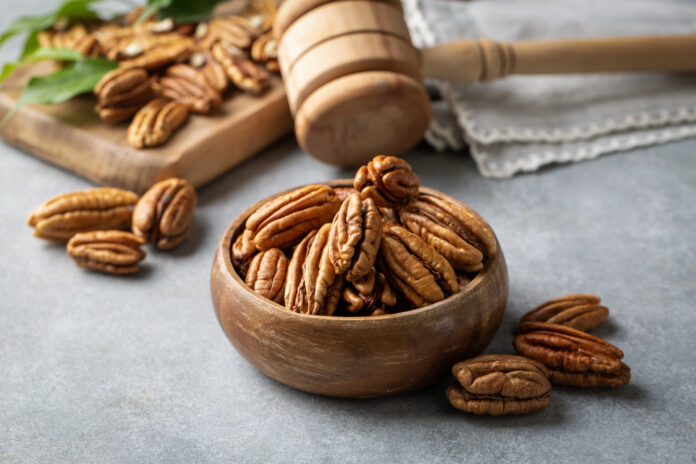
How healthful are pecans—and are they better for you than other nuts?
Similar to other tree nuts, pecans are rich in heart-healthy fats and phytochemicals and are a good source of various nutrients. A 1-ounce serving (15–19 halves) provides about 200 calories, 21 grams of total fat (most in the form of mono- and polyunsaturated fatty acids and little saturated fat), 3 grams of protein, 2–3 grams of fiber, and good amounts of copper and zinc, as well as some potassium, magnesium, manganese, iron, biotin, and other vitamins and minerals. Other nuts range in calories from about 160 to 205 per ounce, and in total fat from about 12 to 22 grams (macadamias).
The beneficial attributes of walnuts and almonds, in particular, have received more attention than pecans, but a recent review article in the journal Nutrients put the spotlight on the health benefits of pecans. The researchers looked at 52 clinical trials published between 2000 and 2025. The majority involved the effect of pecans on cardiovascular and metabolic health, but studies on brain health as well as satiety and weight control were also included. Of note, many of the studies—though generally of good research design—were small (sometimes fewer than 25 total participants) and short term (lasting just several weeks).
Several of the studies found that consuming moderate amounts of pecans in the context of an overall healthy diet helped lower total cholesterol, LDL (“bad”) cholesterol, and triglyceride levels. For instance, a large randomized controlled trial with 130 participants, published in the American Journal of Clinical Nutrition in 2025, found a significant decrease in these blood lipids in those who ate about 2 ounces of pecans a day for 12 weeks in place of snacks usually consumed, compared to a no-pecan control group.
An older study cited in the review, in the Journal of Nutrition in 2001, found significant reductions in apolipoprotein B (which is involved in arterial plaque production) and increased levels of apolipoprotein A1 (the major protein in HDL “good” cholesterol) among 23 individuals who replaced 20 percent of their total daily calories with pecans (that amounted to 480 calories’ worth of the nuts—about 48 pecan halves) for four weeks. Interestingly, the study also reported lower levels of lipoprotein(a), or Lp(a), in the pecan eaters. Lp(a) levels are considered to be genetically controlled and not affected by drugs such as statins or by dietary and other lifestyle interventions, so this finding would need to be replicated before any weight is given to it.
Some studies showed blood sugar benefits from pecans. For instance, in a study of 26 participants who were overweight or obese, published in Nutrients in 2018, consuming 1.5 ounces of pecans a day was associated with improvements in blood insulin levels, insulin resistance, and functioning of beta cells (cells in the pancreas that produce insulin) over four weeks, compared to consuming a control diet similar in calories, fat, and fiber but without pecans. Another trial, in Nutrition Research in 2021, found lower postprandial glucose levels among participants who ate 2.4 ounces of pecans a day for eight weeks in place of other foods, compared to participants who ate no pecans or who added pecans without removing other foods.
But not all the studies had such encouraging results, and even in the ones cited above, not all blood glucose markers improved with pecans.
Results from studies on pecans and obesity were mixed, but the overall findings indicated that incorporating moderate amounts of pecans (ranging from about 1 to 2.5 ounces a day) into one’s diet did not lead to increased risk of weight gain—similar as found with other nuts. Some studies showed that pecans increased satiety, often attributed to their fat, protein, and fiber.
Still, you shouldn’t eat pecans (or other nuts) indiscriminately. As with other healthy high-fat foods like avocados, olive oil, and seeds, if you regularly consume large amounts without compensating for the extra calories by cutting back on other foods or by increasing daily activity, you could gain weight over time.
More limited was the evidence for the role of pecans in brain health. Pecans contain several bioactive compounds that have plausible neuroprotective properties (including proanthocyanins and anthocyanins—the same polyphenols in berries that have been linked in studies to a reduced risk of neurodegenerative diseases such as Alzheimer’s and Parkinson’s). But because studies are scarce in humans—the data come primarily from preclinical studies and broader observational research on nut consumption in general—the authors of the review cautioned against drawing conclusions.
If you like pecans, consider substituting a handful (raw or roasted and unsalted) for your usual chips, crackers, or other high-fat (and salty) snacks. You can also crush up a few to use as a topping for oatmeal, yogurt, cottage cheese, salad, or just about anything else that might taste better with them sprinkled in. Of course, all health bets are off if you opt to regularly enjoy your pecans mixed with gobs of corn syrup and butter (“candied” pecans)—although we give the thumbs-up to an occasional slice of pecan pie.
To sum it up, all nuts are healthful, with some having more beneficial attributes than others. Walnuts, for instance, are richest in heart-healthy omega-3 fatty acids (in the plant form of alpha linolenic acid, or ALA), while almonds are the best nut source of calcium. Pecans may not outshine other nuts in nutrients (and, in fact, have less protein, for instance, than some others), but they are still worth adding to your diet—as long as you compensate for their calories elsewhere.