In 2024, the American Heart Association (AHA) published an article asserting that “there’s no reason to avoid seed oils and plenty of reasons to eat them.” In the Make America Healthy Again (MAHA) era, however, this advice seems to be falling on deaf ears. In recent years, social media influencers have pursued a campaign to present seed oils as toxic and dangerous products that should be avoided at all costs.
How should consumers evaluate the competing claims about the potential harms, or benefits, of these popular oils? We asked Christopher Gardner, PhD, a nutrition expert and professor of medicine at Stanford University School of Medicine—and a member of our editorial board—to weigh in on the matter and help sort out the controversy.
Wellness Letter: What’s the deal with seed oils? Why are we seeing so many articles warning us about them?
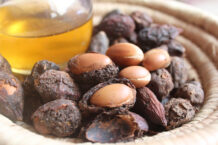
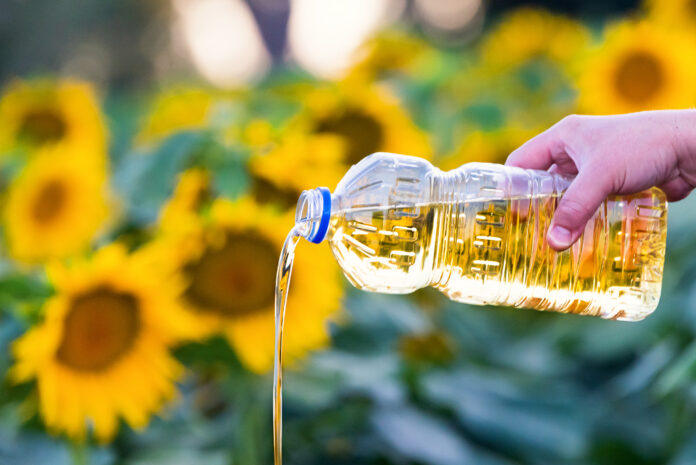
Christopher Gardner: It’s wackadoodle. There are very few things for which there is so much evidence of benefit as seed oils. Not harm—benefit. So it’s really odd. This movement against them seems to have started with social media influencers—and Robert F. Kennedy Jr. and his followers have escalated it. They have decided that seed oils are bad. A group of these oils are even called “the hateful eight.” These are oils made from corn, soybean, rice bran, canola, sunflower, safflower, cottonseed, and grapeseed.
If you hear the influencers talk about this, they say, “Oh, my God, at the same time the obesity epidemic and lots of chronic diseases have increased, so has seed oil consumption!” They’ve confused association with causation. All you have to do is take a step back and recognize that the seed oil increase has occurred because junk food intake has doubled or tripled. Besides seed oils, junk food has lots of added sugar, lots of added salt, and lots of saturated fat, which we know lead to chronic disease.
Now, if you google any chart of oils and fats, they will show that each one includes multiple categories of fat—saturated, monounsaturated, and polyunsaturated fatty acids, with the polyunsaturated group further split into omega-3s and omega-6s. Seed oils generally are rich in omega-6s. A lot of influencers say we’re getting too much omega-6, and that causes inflammation, which causes all kinds of things, and so we need to reduce seed oil consumption.
WL: What’s wrong with that argument?
CG: Plenty. Let’s review some of the facts about seed oils. Seed oils are used in three main ways. They can be used uncooked, to dress salads and vegetables. They can also be used in cooking—sautéing vegetables, for example.
The third use is in all the industrially processed foods that include an ingredient like “hydrogenated cotton seed oil.” If manufacturers are making a bazillion chips or cupcakes, it’s likely that they will use low-quality versions of seed oils, as opposed to what we would buy for using at home, so they can make tasty and unhealthy cookies and snack food at a lower cost.
For decades, the health profession has told the public, “Stop eating so many cookies and cupcakes and Twinkies, stop eating so much junk food!” We have evidence for the harms of all the excess sodium, excess added sugar, and excess saturated fat. But despite the data, those warnings haven’t really been that effective. If all of a sudden Americans stopped eating junk food because of concern about seed oils, I would do somersaults, even if the argument is misinformed.
WL: So, you’re making a clear distinction between use of seed oils at home and their use in commercial products, right?
CG: Right. I would hate to see people throwing away their sunflower and safflower oils and not making salad dressing with them. I would hate to see them not stir-fry vegetables in seed oils if it means they wouldn’t eat as many veggies and other foods with important nutrients. So I’m worried about that part of the anti-seed-oils campaign.
There are also some incongruities in this “hateful eight” list. For one, canola oil—sometimes referred to as rapeseed oil—is rich in omega-9s, mainly in the form of oleic acid. And oleic acid is what olive oil has that everybody likes so much, right? So why is it on the hateful eight list? (Bear in mind also that much of the criticism about this oil comes from confusing modern, safe canola oil with old industrial rapeseed oils, which were high in erucic acid—a fatty acid that can be harmful when consumed in large amounts.)
In regard to sunflower and safflower oils being on the hateful eight list, the food industry has found ways to produce high-oleic versions of them, making them more like olive and avocado oils—that is, higher in healthful omega-9s. These high-oleic sunflower and safflower oils are widely available for home use.
And in contrast, flax seed oil and sesame seed oil are not, for some reason, on the naughty list of hateful oils, even though they are also clearly “seed oils.” I haven’t heard the influencers explain that.
Consider also—what are the alternatives? Olive and avocado oils are not seed oils, and those are both healthy options. But olive oil has a strong flavor, and often something more neutral is needed when preparing food at home. And both olive and avocado oils are quite expensive relative to other cooking oils. The other choices are saturated fats like butter, lard, and beef tallow. We know saturated fats are bad for our cardiovascular system. But now we have RFK Jr. praising french fries made with beef tallow as a healthier option, so it’s all upside down.
WL: Do omega-6s get a bad rap compared to omega-3s?
CG: I think so, yes. It’s widely recognized that omega-3 fatty acids are good for you, especially because of their anti-inflammatory properties. But omega-6s are also essential fatty acids and play important roles in normal immune and inflammatory processes. While omega-3s tend to be more strongly anti-inflammatory, that doesn’t mean omega-6s are inherently pro-inflammatory or harmful, as many influencers claim. What matters most is overall diet quality and getting enough of both types of fats.
It’s true that Americans tend to consume much higher amounts of omega-6s than omega-3s. But addressing that imbalance doesn’t mean eliminating healthy omega-6 sources or demonizing seed oils. There are two very effective solutions here, and calling seed oils “hateful” is not one of them. The first solution is to reduce ultraprocessed and junk foods—which are major sources of excess omega-6s in the diets of many Americans. The second solution is to consume more fatty fish such as salmon, sardines, and mackerel, which are the best dietary sources of omega-3s. You can also include flax seeds in your diet, as they contribute a plant form of omega-3 known as ALA (or alpha-linolenic acid).
WL: Haven’t concerns been raised as well about possible dangers of cooking with seed oils?
CG: Yes, part of the concern raised by social media influencers is the notion that, at high heat, seed oils break down and become rancid and toxic and capable of killing you. Despite what some might claim, there’s no real evidence that this is happening if you’re preparing foods properly at home: That is, cooking and smoke point issues are really not a big deal—plausible, theoretical, but negligible in real life. Bear in mind that at very high temperatures, any cooking oil can degrade and produce small amounts of irritating or potentially harmful byproducts once it’s heated well past its smoke point. In practice this is easy to avoid—don’t leave oil unattended on high heat, lower the heat if it begins to smoke, and toss oil that’s been heavily overheated.
WL: So what’s the bottom line here?
CG: The Harvard School of Public Health has published a nutrition advisory headlined “No need to avoid healthy omega-6 fats.” The American Heart Association says you should reduce consumption of saturated fats and replace them with polyunsaturated fats, including the kinds that the influencers say are hateful.
So, the bottom line is that those seed oils are fine. Omega-6s are fine. The link to possible health harms is that industrially processed seed oils are often added to junk food. But the junk food was never fine, and if you take the seed oils out, it will still be junk food.