
Every five years since 1980, the federal government has issued an updated set of dietary guidelines. Robert F. Kennedy, Jr., the secretary of the Department of Health and Human Services (HHS), has vowed to transform Americans’ unhealthy eating habits. Given that he has expressed some unorthodox nutritional views, the release of the 2025–2030 version was hotly anticipated.
The new Dietary Guidelines for Americans, which were published in January, have caused quite a stir. They differ in key ways from the 2025 report of the government-appointed Dietary Guidelines Advisory Committee and have received mixed reviews from public health experts. The Wellness Letter asked Marion Nestle, PhD, professor emerita of nutrition and food studies at New York University, for her assessment of the new guidelines and how they compare to previous iterations.
Wellness Letter: You’ve seen a lot of these dietary guidelines over the years. What was your first reaction when you saw the new ones?
Marion Nestle: My first reaction was that they were much the same. Then I looked more closely. They still say to balance calories; choose vegetables, fruits, and whole grains; and limit sugar, salt, and saturated fat. They even keep some of the same upper limits: 10 percent of total daily calories from saturated fats and 2,300 milligrams of sodium per day. And they advise reducing highly processed foods, something the Biden-era Dietary Guidelines Advisory Committee decided not to do. So far, so good.
But then things get weird regarding the recommendations for protein, dairy, fat, and when you look closely, alcohol.
WL: We’ll get to the “weird” stuff, but first, what are the positives in the guidelines?
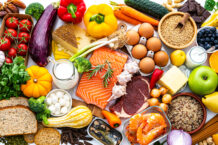
MN: I like two things about them. First, the overall message “eat real food,” which isn’t actually part of the guidelines but refers to the new food guide, the inverted pyramid. Second, the admonition to reduce intake of ultraprocessed foods—even though they call them highly processed—is well supported by research. The rationale for these two recommendations is that if you take them together, you will eat a satisfying, satiating diet and won’t want junk food calories. That could work. There is plenty of evidence that ultraprocessed foods induce people to overeat calories and not realize it.
WN: You’ve focused a lot on the political aspects of dietary guidelines. From the perspective of the food industry, what sectors are the winners and the losers here?
MN: Ultraprocessed foods are the clear losers here. The winners are the meat, dairy, and alcohol industries. I’ve gotten a lot of pushback on the idea that the meat industry influenced these meat-centric guidelines. It appears they didn’t have to. Kennedy eats a carnivore diet, along with fermented foods, so the guidelines express his ideology.
And although he complained about conflicts of interest in previous guidelines committees, and said that would not happen on his watch, four of the nine scientists who wrote the reviews that form the basis of the guidelines reported financial ties to meat and dairy trade associations. Three more have financial ties to other trade associations with vested interests in the guidelines. The guidelines appear to be a setup.
WL: As you suggest, the message to “eat real food” and “prioritize diets built on whole, nutrient-dense foods—protein, dairy, vegetables, fruits, healthy fats, and whole grains” sounds good. So what’s the catch?
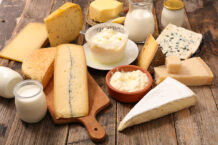
MN: As I said, I like the “eat real food” message. That part is consistent with previous nutrition advice. It sounds like Michael Pollan’s “Eat food. Not too much. Mostly plants.” The catch is that these guidelines seem more like “Eat food. As much as you like. Mostly meat.” The healthy fats advice is quite odd. The guidelines insist on full-fat dairy, which is weird because whole milk and skim milk are pretty much the same nutritionally—except for whole milk having more calories, more fat, and more saturated fat.
The guideline “consume healthy fats” has a blooper. It singles out three sources of essential fatty acids—olive oil, butter, and beef tallow. But none of these three is a good source of the essential fatty acids, called linoleic acid and linolenic acid. Seed oils are the best sources for these, but Kennedy thinks seed oils are poison. Again, we are dealing with ideology, not science.
WL: What are the problems or concerns with the recommendations on protein?
MN: The protein recommendation—a doubling of current intake to 1.2 to 1.6 grams per kilogram per day—is puzzling. Americans generally already eat that much protein, and protein is not a problem for anyone who eats enough calories. So this seems to be an “eat more meat” recommendation. For many people, protein is a euphemism for meat. The guidelines do mention plant sources of protein, but only as an “as well as” afterthought. Most nutrition scientists would argue that plant sources of protein are healthier.
WL: What about the recommendations for consumption of vegetables, fruits, and whole grains?
MN: They are there, fortunately, but not emphasized strongly enough, in my view. Whole grains appear at the bottom of the inverted pyramid, implying that it’s best to eat less of them. That too is part of the carnivore ideology.
WL: How have the recommendations on alcohol changed?
MN: The alcohol guideline is ambiguous. It just says consume less. But less than what? Previous guidelines specified no more than two drinks a day for men and one for women, and there has been a push to reduce the upper limit for men to one also. The alcohol industry lobbied hard on this one and got the upper limits removed.
WL: Why do you think HHS decided to bring back the food pyramid, and what is your assessment of this version of it? Are these graphic representations helpful?
MN: I can only speculate that they did not realize the pyramid was dropped in 2010 and replaced by a plate. Part of the Make America Healthy Again (MAHA) ideology is to dismiss prior guidelines as industry-driven, conflicted, and reflective of left-wing ideology, whereas the claim is that these new ones are based on gold-standard science.
WL: What is the bottom line for consumers? What lessons, if any, should they take from these guidelines?
MN: Eat real food and minimize ultraprocessed foods seems like good advice to me. I’d stick with that.