
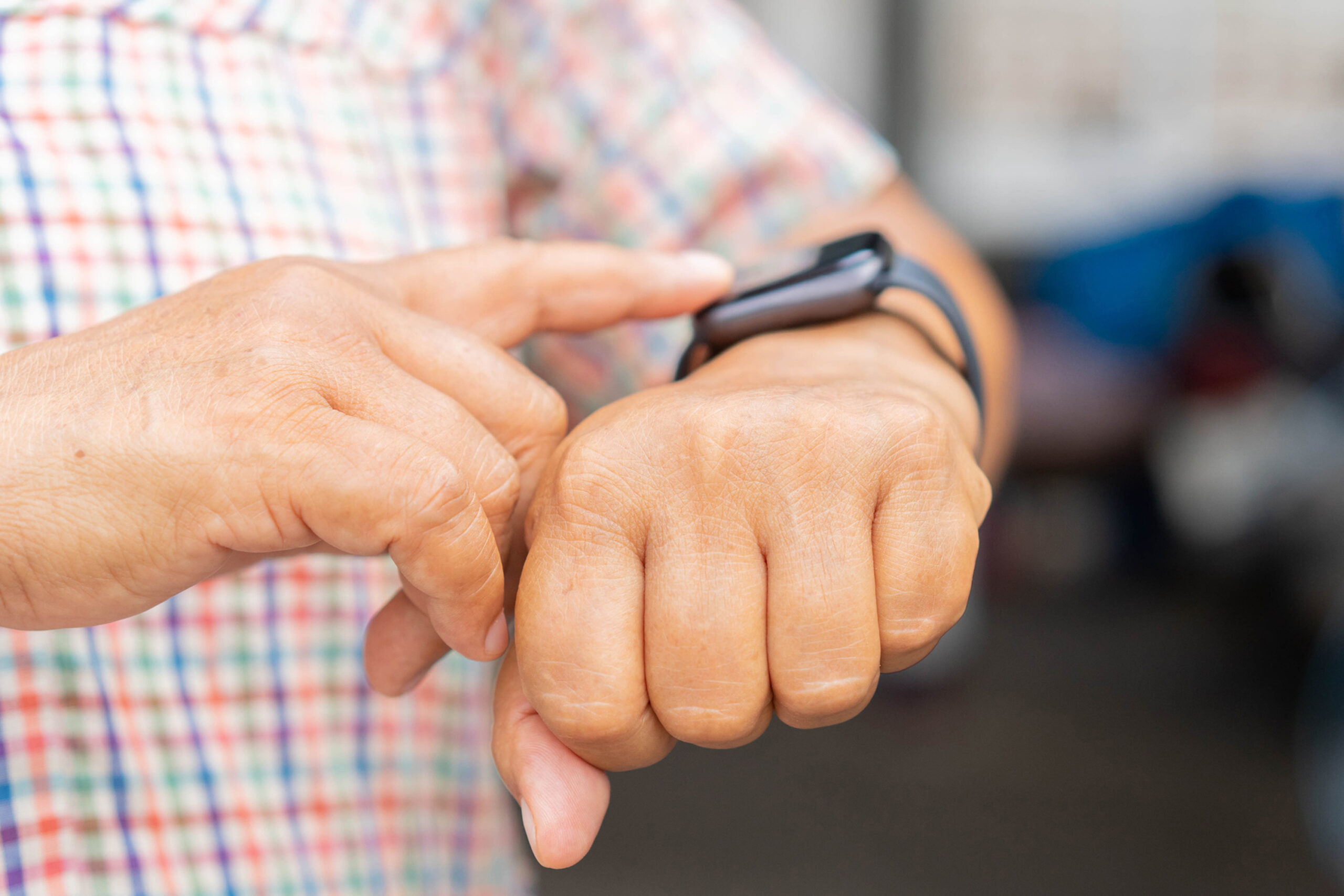
If you’re part of the 21 percent of American adults wearing a smart watch or similar device right now, you likely use it for more than just telling time. These devices can track your steps each day, log your workouts, remind you when it’s time to stand up, and let you receive calls like Dick Tracy did back in the 1940s and Maxwell Smart did on Get Smart in the 1960s with his so-called Wrist Communicator T-37.
Devices like the Apple Watch, Fitbit, Samsung Galaxy Watch, and others can provide an even deeper picture into your health by monitoring your breathing, sleep, heart rate, and blood pressure. One of the more publicized features in recent years has been the potential to passively detect episodes of atrial fibrillation (AFib) and alert wearers that something may be amiss with their heart. But is this information accurate? And if so—is it helpful?
What is AFib?
Atrial fibrillation is the most common type of treated heart rhythm abnormality (many common rhythm abnormalities don’t require treatment). In AFib, the beat of the upper chambers (the atria) is irregular. Blood does not flow properly from the atria to the lower chambers (the ventricles). As a result, AFib can increase the risk of blood clots, stroke, and heart failure.
Risk factors for AFib include advanced age (over 65), high blood pressure, obesity, European ancestry, diabetes, alcohol use, and smoking. An estimated 12.1 million Americans will have the condition by 2030. If left untreated, AFib doubles the risk of heart-related death and increases the risk of stroke fivefold.
What does AFib feel like?
Symptoms of AFib can include fatigue, the feeling of fluttering or “thumping” in the chest, shortness of breath, dizziness, anxiety, and weakness. (Chest pain or pressure is a medical emergency, so call 911 immediately.)
But for most people with AFib, the condition causes no symptoms. They may only learn they have the arrhythmia after a routine medical exam—or perhaps when a wearable device suggests that something might be wrong.
Medications such as blood thinners can help prevent stroke—but the first step is knowing who has AFib, according to Gregory Marcus, MD, professor of medicine and a cardiologist at UC San Francisco.
“There’s long been an interest in potentially screening for AFib among asymptomatic people with the hope that they can receive very effective therapy to prevent stroke and maybe even death,” he says. “However, despite multiple studies examining the various ways to screen for AFib, there’s not yet a standard of practice nor a strong recommendation from any serious professional society to screen the general population for the condition.” The reason? The potential downsides of too much information.
How does a smart watch detect AFib?
The gold standard for diagnosing AFib is a 12-lead electrocardiogram (ECG), a tool that directly evaluates the rhythm and strength of your heartbeat from 12 different angles. Devices like the Apple Watch and Fitbit use a 1-lead ECG through the light sensor on your wrist to indirectly infer AFib based on irregularities in your pulse.
“Pulse is not a perfect surrogate for AFib, although evidence suggests that it’s pretty reliable,” Dr. Marcus says.
These devices work in conjunction with an ECG app on your phone. Together, they can continuously monitor your heart rhythm and alert you to any abnormalities.
Dr. Marcus and his colleagues at UC San Francisco were involved in the first large study to evaluate the accuracy of the Apple Watch’s AFib detection feature. Published in JAMA Cardiology in 2018, the study looked at 9,750 remote participants (347 of whom had diagnosed AFib) who wore an Apple Watch and used a special app. Compared with the gold-standard 12-lead ECG, this combination was 97 percent accurate in detecting AFib.
The following year, an even larger study was conducted by researchers at Stanford University. The Apple Heart Study, published in the New England Journal of Medicine, looked at more than 400,000 participants who wore the Apple Watch and used the built-in phone app. During the study, 0.52 percent of participants received a notification of an irregular pulse. They were instructed to wear an ECG patch for one week. During this evaluation, 34 percent of this group were found to have AFib.
The Fitbit Heart Study, led by a team at Massachusetts General Hospital, was published in Circulation in 2022. It examined AFib detection in more than 450,000 participants without known AFib who wore a Fitbit paired with an app on an Android or Apple phone. Irregular heart rhythm detection occurred in 1 percent of participants overall and 4 percent of those 65 or older. Follow-up testing with an ECG patch detected AFib in 32 percent of those participants. Overall, testing was 98 percent accurate (97 percent in those 65 or older).
What do we do with this information?
Dr. Marcus has focused his concerns on those whom the device flagged for abnormal heart rhythm but did not actually have AFib: the false positives. He’s published several editorials on the subject, including one in Circulation in 2022 and one in Nature Reviews Cardiology in 2019.
“It’s just simple math that even given a highly accurate test, there’s going to be a lot of false positive results,” he says.
The issue with false positives is that they can lead to unnecessary anxiety, healthcare utilization, and medical testing, along with potentially inappropriate prescription of drug therapy. Dr. Marcus points out that while anticoagulants are absolutely recommended for older adults with diagnosed atrial fibrillation, their use—and the associated risk of bleeding—may not be recommended in younger, healthy adults without other risk factors for stroke or heart failure.
Dr. Marcus suggests that the best role for smart watches and fitness trackers may not be in the detection or monitoring of AFib, but in the lifestyle factors that could help in its treatment.
“There’s evidence that in the general population, being more physically fit probably reduces AFib. So this sort of attention could be leveraged to help motivate exercise. If you’re working out, especially doing endurance exercise, these devices can be used to make sure you’re achieving and maintaining an elevated heart rate.”
BOTTOM LINE: So who would benefit most from a wearable device that monitors their heart rhythm? “Ideally, these devices would be used by people at highest risk for AFib,” says Dr. Marcus. “Those who are most likely to benefit from knowing that they have asymptomatic AFib are older individuals, generally over 65, especially those with other risk factors for developing AFib, including diabetes, high blood pressure, heart failure, or a history of stroke. We have not yet figured out precisely how to counsel individuals in the general public to self-identify as optimal candidates for use of these devices, but that is an active area of research.”
Dr. Marcus says it’s important to remember that an episode of AFib, with no chest pain or pressure or difficulty breathing, is not an emergency. While untreated AFib can affect your health in the long term, in the short term it merely warrants a call to your primary care provider to make an appointment. If your device has a dedicated ECG app, you can also use that to make a recording to show to your doctor.
And if you do have diagnosed AFib, it still may not be necessary to monitor it at all times—“especially if doing so causes anxiety or an obsession with your physiological parameters,” says Dr. Marcus. “In the absence of symptoms, as long as you’re feeling okay, there’s no reason to know what your state of health is all the time.”