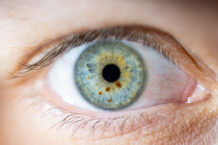
The eyes are said to be the windows to the soul, but do they also offer a glimpse into your risk for certain health problems? Some research suggests that your eye color may help predict your chances of developing some skin, eye, and mental health conditions.
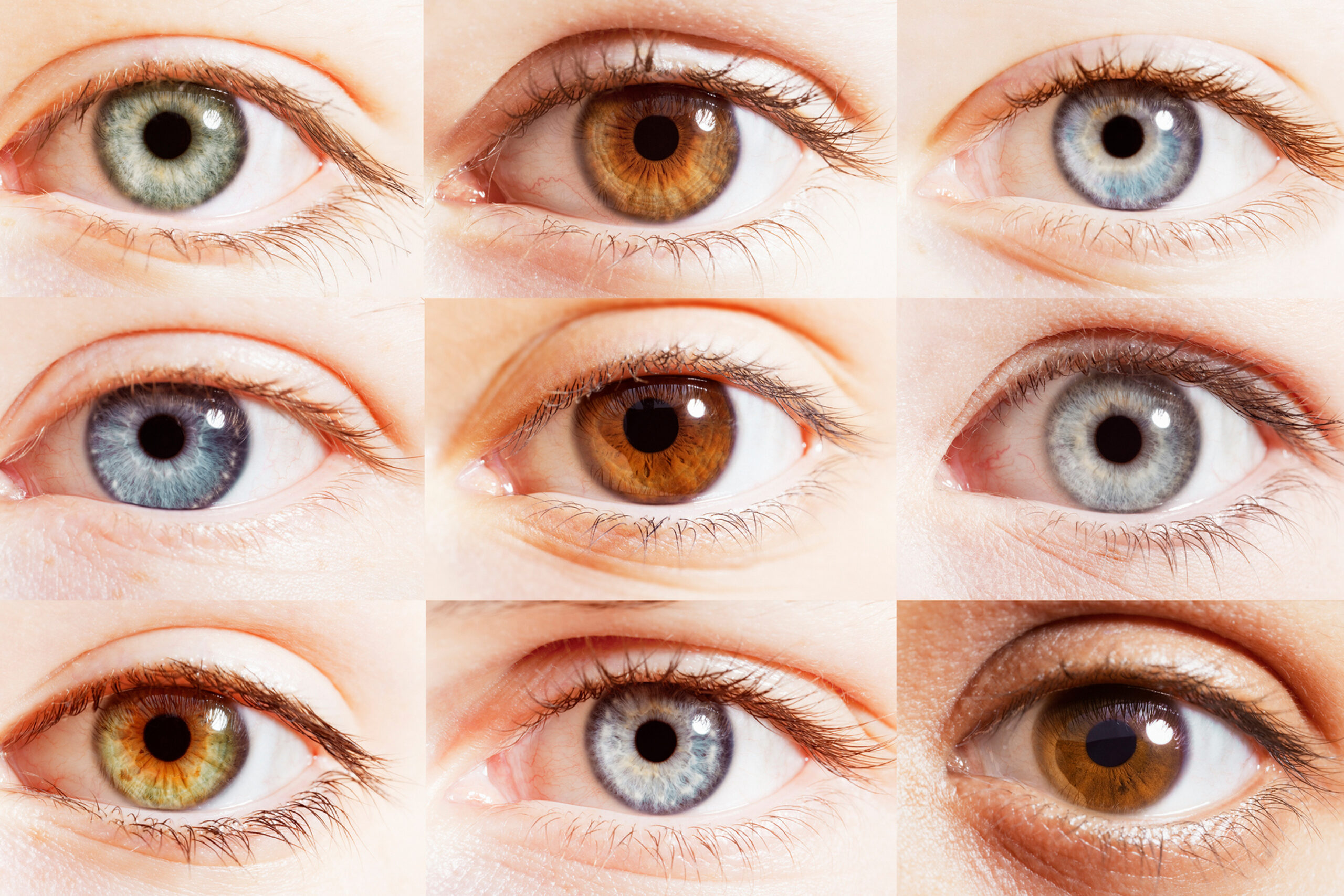
But first, why do eyes come in different colors? As with all physical traits, our eye color is determined by genetics. The colored part of the eye is known as the iris, and the color can range from very light blue through gray, green, and hazel, and up to dark brown. Brown is the most common eye color, with more than half the people in the world having some shade of brown eyes.
Just as with our skin, the pigment melanin determines our eye color and offers varying levels of protection from ultraviolet (UV) light. Interestingly, all eyes have brown pigment in the back layer of the iris. The front layer (called the stroma) determines the appearance of your eye color. People with brown eyes have brown pigment in the stroma; people with green or hazel eyes have light brown pigment; and people with blue eyes have no pigment at all in the stroma. Blue eyes appear blue for the same reason that water and the sky do—the stroma absorbs some of the light coming in, and the light coming back out is more blue than any other color.
Here are some conditions that have received attention lately for their association with eye color.
Seasonal affective disorder (SAD)
This type of depression occurs during a four- to five-month period of the year, usually the winter months. People with SAD often feel, well, sad during the darker, colder days. Symptoms include persistent sadness, anxiety, or emptiness; loss of interest or pleasure in activities that you normally enjoy; changes in sleep or appetite; physical aches or pains with no apparent cause; and social withdrawal.
Approximately 5 percent of Americans experience SAD every year. The condition is more common in women, and, according to the latitude hypothesis, in people who live farther from the equator, due to weaker sunlight and shorter days in the winter.
But the results of a 2018 study in Behavioural Science & Psychology—which looked at the rate of SAD in people living in a northern latitude (in Wales) versus those living closer to the equator (in Cyprus)—ran counter to this hypothesis: Latitude was not associated with the risk of SAD, but eye color was. People with blue or light eyes were significantly less likely to experience a seasonal change in their mood, compared with people with brown or dark eyes.
The researchers theorize that as humans first moved to more northern latitudes, they adapted to produce less melatonin (meaning lighter skin and eye color) to enable them to absorb more of the weaker sunlight. Resistance to SAD may have developed as a survival trait in people with light eye color living in these areas—and it persisted, no matter where those people live now.
Skin cancer
It’s long been recognized that people with lighter skin color, lighter hair, and a tendency to sunburn easily are more prone to developing skin cancer. The link between eye color and skin cancer risk has been more difficult to prove. But a large 2021 study in Cancer Causes & Control suggests that people with light eye color do need to be more concerned about some types of skin cancer.
Researchers looked at data from the Health Professionals Follow-up Study, which involved 35,662 men. Over a period of 19 years, participants with green/hazel eyes were 24 percent more likely to develop squamous cell carcinoma than people with brown/dark eyes. Those with blue/light eyes had a 19 percent higher risk. For basal cell carcinoma, the risk increase was 16 percent higher for people with green/hazel eyes and 17 percent higher for blue/light eyes. Interestingly, people with green/hazel or blue eyes were not at increased risk for melanoma, which is responsible for 70 percent of all deaths due to skin cancer and may occur in places on the body not exposed to the sun.
Since melanin is protective against skin cancer, and people with light eye color (along with lighter skin and hair color) have less melanin, it makes sense that skin cancer can be more of a concern in people with these traits. However, it’s important to remember that anyone can develop skin cancer, so everyone needs to protect themselves by using sunscreen, limiting time in the sun, and avoiding sunburns.
Eye conditions
The pigment in your eyes may play a role in your overall eye health as well. For example, eyes with more pigment (brown eyes) need to absorb more sunlight for information to reach the retinal cells than blue and green eyes. Exposure to UV light is a known risk factor for cataracts, which could explain why brown eyes are more likely to develop them—more than twice as likely, according to an Australian study.
The opposite may be true for age-related macular degeneration (AMD), although research has been mixed and not updated much in recent years. One small study from Michigan did show a significantly higher risk of AMD in people with light eyes compared to people with dark eyes. It’s possible that the amount of pigment in brown eyes itself is protective, or it could signal a genetic component that is providing the benefit instead.
Our eye doc weighs in
“While certain eye colors are associated with varying risks for specific health conditions, it’s essential for individuals to be mindful of their overall health rather than focusing solely on eye color,” says Marlon Maus, MD, DrPH, FACS, adjunct professor at the UC Berkeley School of Public Health and a member of our editorial board.
“For instance, people with lighter eye colors, such as blue or gray, may indeed be at lower risk for seasonal affective disorder due to how their eyes handle light. However, they should be even more vigilant about UV protection to mitigate the higher risk of the most common types of skin cancer, while individuals with darker eye colors should be aware of their potentially increased risk for cataracts.”
BOTTOM LINE: Regular eye exams are crucial for everyone, and eye color should be one factor among many that guide preventive care and early detection of vision problems and skin cancer.
If you notice any alteration in your eye color or appearance, you need to be evaluated by an ophthalmologist. Changes can occur due to various reasons, including aging, eye trauma, certain medications, or underlying health conditions such as Horner syndrome or Fuchs heterochromic iridocyclitis. For instance, a sudden darkening or lightening of the iris, or the appearance of dark spots or rings, could indicate an underlying issue. While some changes might be benign, it’s always better to consult with a doctor to rule out any serious conditions, says Dr. Maus.
What about deliberately altering the color of your eyes? The American Academy of Ophthalmology issued a warning against using eye drops that claim to change eye color. These products are not approved by the FDA, there’s no evidence that they’ve undergone safety and efficacy testing, and using unregulated products could lead to inflammation, infection, or even vision loss.
What about decorative contact lenses that come in all sorts of colors? One company provides alluring descriptions of them, such as Versailles Royal Blue, Barbie Blue, Ocean Grey, Wildcat Green, Ice Pear Green, and Smoky Marble Brown. Another company combines blues, light grays, and hints of yellow for a “striking” look, among other “unique” eye colors. The lenses can be safe, but only if they’re prescribed by an ophthalmologist or optometrist and used as instructed. Never buy them from a store or vendor without a prescription, as contact lenses that are not FDA-approved or not properly fitted for you can damage your eyes.