As you get older, doing even simple tasks around your home that once came so easy, without thought, may start to become more challenging—like reaching for something in a kitchen cabinet, opening a jar, even just putting on your socks. If you have arthritis or other conditions that limit your mobility or range of motion, such ordinary activities of daily living can become especially difficult—and possibly dangerous. Fortunately, there are lots of inexpensive (or relatively inexpensive) gadgets out there that can help make your life more manageable—and safer.
Some people, of course, need more help as they age. It’s not uncommon to need a cane or other walking aid, as well as hearing and visual aids—but here are 15 adaptive living aids* that many older (and even some younger) people can benefit from, no matter where they fall on the health spectrum.
In the kitchen
Grabber. Instead of stretching or standing on a chair or step stool to grab plates and glasses off high shelves—risking dropping them or falling yourself—this low-tech and inexpensive device can reach them for you. To use a grabber, simply place the open jaws around the item you want to pick up, then squeeze the trigger to tighten around the object and pull it toward you. Not just handy in the kitchen, a grabber can also help you take small items down from a closet or bookshelf.
Pull-down shelves. This higher-tech and more costly option brings hard-to-reach items down to your level. The shelves have a lifting and lowering mechanism with a handle that makes them easy to lower and then lift back into place. The downside: They require installation—if you’re not “handy,” you may need help.
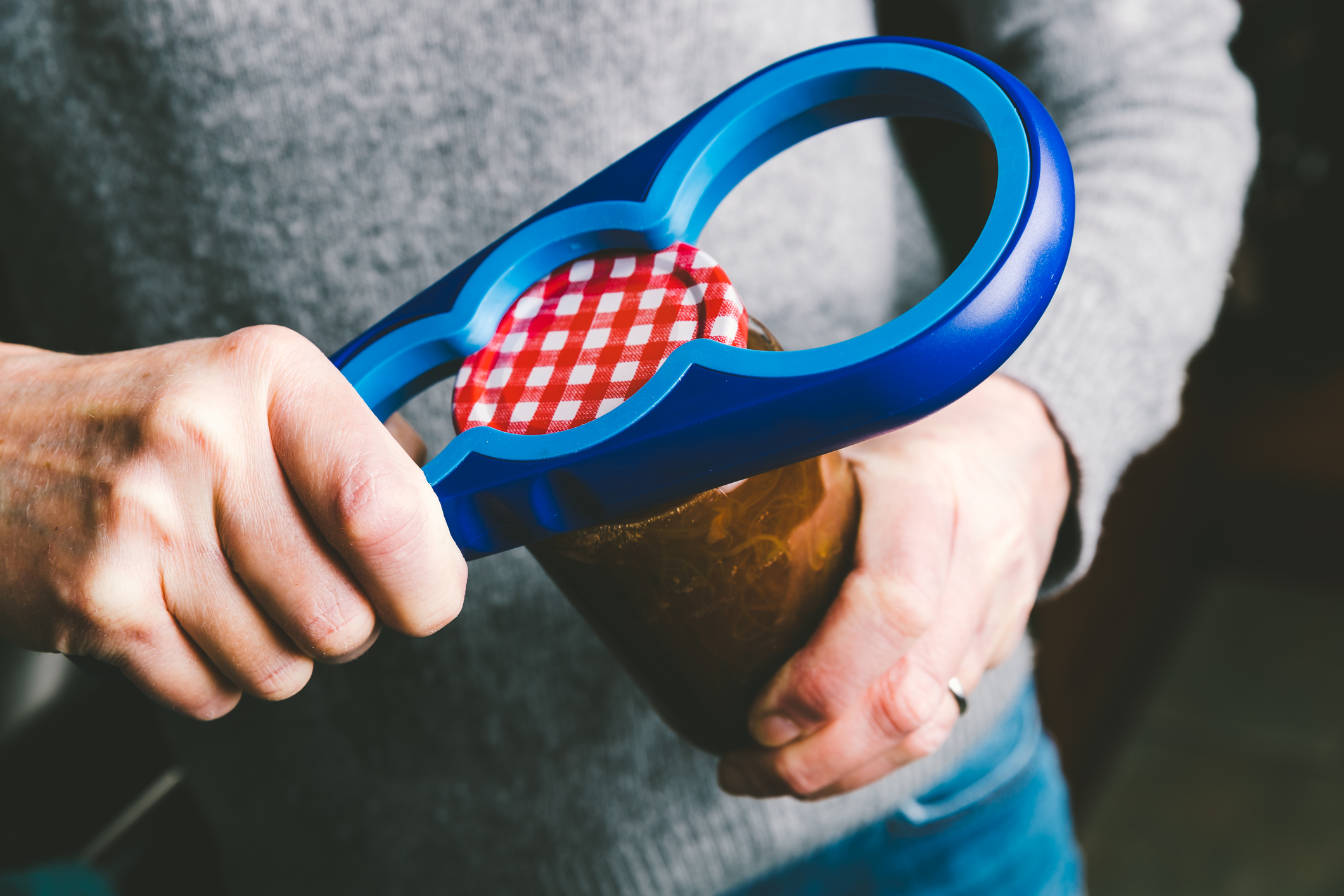
Bottle and jar opener. Arthritis in your hands or wrists can make twisting open a tight bottle or jar lid almost impossible. An opener grips the top of the bottle and provides enough leverage to make twisting it off a snap.
Adaptive utensils. These forks, knives, and spoons are designed with wide, ribbed rubber handles that are easier and more comfortable to grip. They’re ideal for people who have conditions that affect hand strength and mobility, such as arthritis, Parkinson’s disease, and essential tremor. Some adaptive utensils are bendable, so you’ll no longer have to bend your wrists to pick up food. Rocker knives allow you to cut with a rocking motion that requires less force than slicing.
Spill-proof dishes. Several companies sell dishes that have a suction cup or nonskid surface on the bottom to keep them anchored to the table. Made of plastic, they won’t break easily, and their high edge on one side prevents spills.
In the bedroom
Button hook/zipper pull. Opening and closing buttons takes a lot of dexterity and fine motor skills. If you have joint or coordination issues, this device will make it easier to get dressed because it hooks onto buttons and pulls them through the hole for you. Many button hooks also feature a zipper pull. Look for a device with a large, ergonomic handle that’s easy to grip.
Sock aid. Something as easy as putting on your socks can become a challenge if you have a stiff or sore back. With this tool, you wrap a sock around the slider, put your foot in, and pull up on the string to release the sock from the slider.
Dressing stick. This is one of the simplest yet most helpful tools in your bedroom arsenal. A dressing stick is just a long handle with a double hook on one end. If you have difficulty bending or limited mobility in your arms, the stick makes it easier to put on pants and button-up shirts and coats, or remove socks. If that sounds a bit complicated, this short video shows how easy it can be to use.
In the bathroom
Long-handled bath scrubber. Reaching your back while showering or bathing requires a contortionist’s flexibility, even if you’re young. Scrub brushes with extra-long handles make those hard-to-reach areas easier to clean and are available in various styles: Some have curved handles; others are made of silicone and are bendable, so you can contour them as needed. Some products combine a back and hair scrubber, so you can also wash your hair without having to stretch and reach. And some come with interchangeable heads, including a sponge, a brush, and even a loofah or pumice stone.
Wall-mounted back scrubber. Even better than a handheld back scrubber is a wall-mounted one! Not only does it get your back clean as you rub across it, it gives you a nice back scratch at the same time. Inexpensive ones are made of silicone and have suction cups to attach to your shower wall at the desired height. Others have replaceable exfoliating brushes. More expensive wall-mounted electric back scrubbers do the exfoliating for you; they can be set at different speeds and are detachable for recharging.
Lotion applicator. Speaking of having to reach, have you ever tried to rub lotion or sunscreen on your back? If you don’t have someone around to help, it’s virtually impossible to do at any age, but especially if you have limited mobility in your shoulders and arms. Similar to back scrubbers (and sometimes combined with them), lotion applicators have a long curved handle with a pad or roller on the end; simply put the lotion on the pad or roller, and the curved handle makes it easy to reach your upper and lower back.
Shower chair or bench. Sitting takes pressure off arthritic knees and prevents falling on the slick shower floor. You can buy a freestanding chair or bench or mount a seat on the shower wall. Even if you don’t need to sit while bathing, a bench can make shaving your legs easier and safer.
Raised toilet seat. Weak core and thigh muscles—along with pain from arthritis in your hips, knees, or back—can make it hard to lower yourself far enough to sit on a toilet and get back up. Adding this accessory on top of your existing toilet increases the seat height for easier sitting and standing. A seat with a handle on each side will also give you more leverage to push yourself up.
On the go
Adaptive living aids are also available for use in your car. Here are two that make getting in and out easier.
- Car door handle assist. Insert this device into the door latch, and you’ll have a handle to hold on to for leverage while getting in or out of your vehicle.
- Swivel seat. This round rotating cushion goes on top of the car seat. When you sit on it, you can easily swivel your body into the car or outward to exit, without having to use your hips and back.
BOTTOM LINE: It’s probably never too early to start adapting your home to your changing needs as you get older. That is, you might consider buying some of these aids before you actually need them, just to be prepared. In addition to the ones described above, you can make other home modifications as needed, like installing lower shelves, under-sink pull-out organizers, and a walk-in tub or shower. For advice on adaptive living aids or modifying your home to age in place, you can consult a Certified Aging in Place Specialist (CAPS) or use the eldercare locator from the Administration for Community Living.
More than 14 million, or 1 in 4, older adults fall each year, according to the Centers for Disease Control and Prevention. Falls are the leading cause of fatal and nonfatal injuries in the over-65 age group, and most happen in or near the home.
Simple modifications like these around the home could prevent you or a loved one from taking a nasty spill:
- Install motion-sensor lights at the entrance to your home, along stairways, and in hallways. There are also nightlights you can plug into electric outlets that turn on in dim light and turn off in bright light.
- Remove clutter from stairs, hallways, and any other areas where you walk frequently (such as the path from your bed to the bathroom).
- Add contrasting color strips to the top and edge of each stair.
- Secure cords and keep them out of the way.
- Replace area rugs and mats with rubber-backed ones—or put nonslip pads under existing rugs.
- Put a nonslip rubber mat in the bottom of the shower or tub.
- Install grab bars next to the toilet and bathtub.
- Store often-used items in low cabinets for easy access.
One last note: Be aware of where your pet is! It’s no joke that tripping over your dog or cat (or your pet’s food bowl or toys) can cause severe injuries—and such accidents are more common than you may think. By one (older) estimate, more than 80,000 people in the U.S. stumble over their pet every year (either at home or more often while walking them) and land in the emergency room with broken bones, contusions, cuts, sprains, and other injuries.