If you frequent a gym, you’ve likely seen, or perhaps even tried, kettlebells—those cannonball-shaped weights with a handle, made of cast iron or steel. Or maybe you’ve wanted to try them but have felt a bit intimidated, especially by the bigger, heavier ones. Their use dates back at least to the 1700s in Russia as a way to build strength—and when used with care, they can be a valuable, convenient, and inexpensive addition to your regular modern-day workouts.
Get in shape
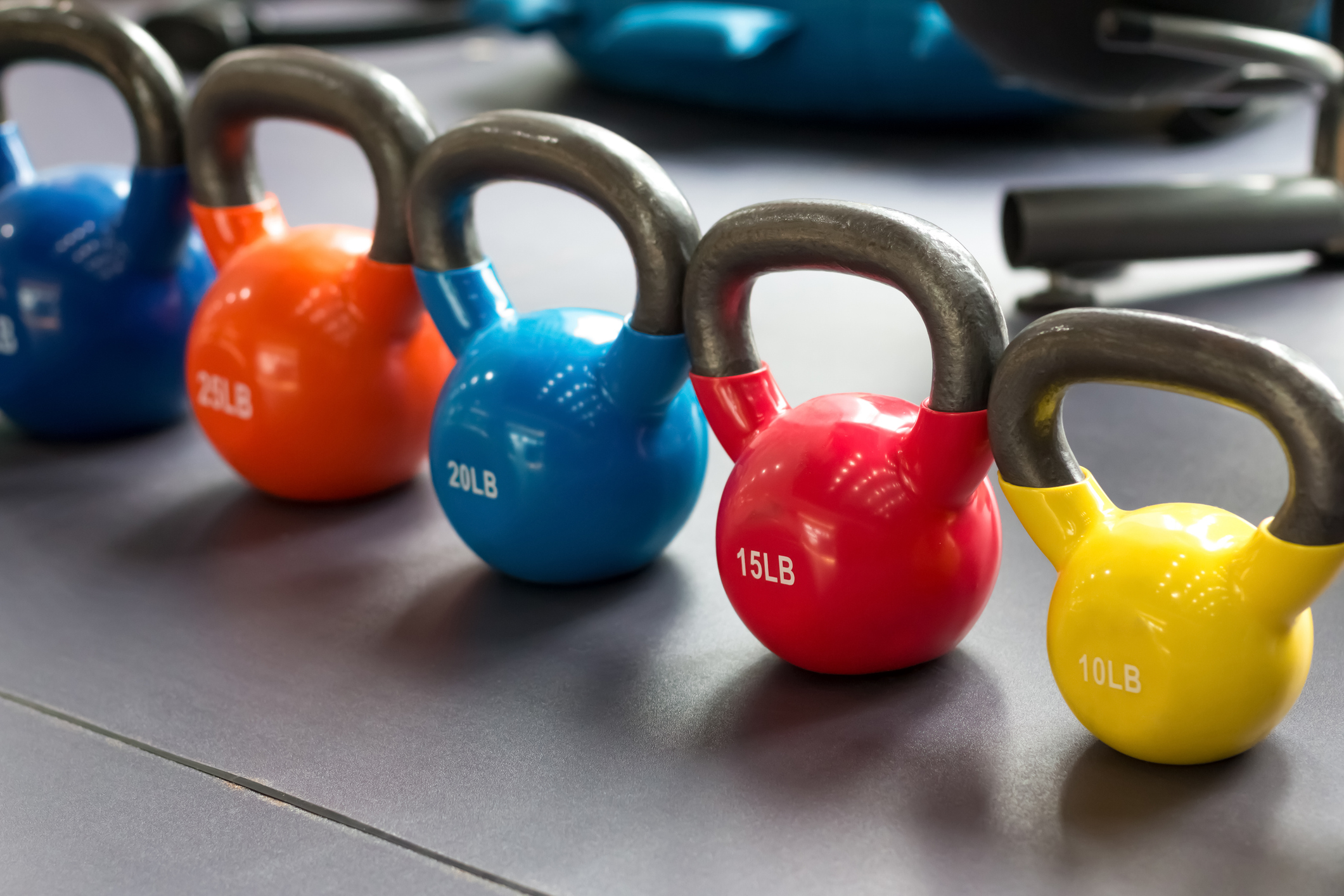
Kettlebells come in a range of weights, typically 5 to 15 pounds for most people just starting out and not especially fit strength-wise, and as much as 50 to 100 to 150 or even 200 pounds (for serious lifters or professional athletes). A workout typically consists of lifting or swinging a kettlebell in one or both hands over your head or between your legs, for example (as described in the box below).
Thanks to their unique shape, which makes for an uneven distribution of the weight (compared to regular hand weights, where the weight is evenly distributed), working out with kettlebells can bring about multiple benefits. When using them, your center of gravity is constantly shifting, which engages your stabilizing core muscles and can help improve your balance.
One small study, in the Journal of Human Kinetics in 2020, found that five months of kettlebell training improved balance and jump performance in young female ballet dancers. An older study, in the Journal of Fitness Research, also found improvements in balance (as well as other aspects of physical fitness) in a small number of young participants who did kettlebell workouts twice a week for two months, compared to a control group that didn’t exercise.
In addition, exercising with a kettlebell activates many muscles at once, like how you use your muscles in activities of daily living, such as when you lift or move something. This contrasts with standard weight training, where you are isolating and using just one muscle at a time, like your triceps or biceps. That is, a kettlebell workout better mimics real-life actions, making your muscles, including your core, stronger for carrying out your daily tasks.
Regular kettlebell workouts can also improve aerobic capacity, when done intensely enough, as was found in a small 2015 study in the Journal of Strength and Conditioning Research that included 17 women soccer players. Those assigned to high-intensity kettlebell training three days a week for four weeks had increases in maximum oxygen consumption (VO2 max, a measure of aerobic fitness), compared to no change in those assigned to circuit weight-training.
Never too late to kettlebell?
Some research supports benefits of kettlebell workouts for older people, too. In a study in Experimental Gerontology in 2018, 33 older women (ages 65 to 75) who had sarcopenia (age-associated loss of muscle mass and strength) either trained using kettlebells twice a week for an hour each time (the intervention group) or went about their regular activities (the control group). After two months, those in the intervention group showed improvements in muscle mass, handgrip strength (considered an indicator of overall health and vitality), and back strength, compared with a reduction in these measures in the control group.
Another small study, in BMC Geriatrics in 2022, included 32 independently living but “insufficiently active” older men and women (ages 59 to 79) who participated in a five-day-a-week kettlebell workout (three days supervised, for 45 minutes each session) that progressed to moderate- to high-intensity workouts over three months. There was no separate control group; rather, the participants acted as their own control, with results during the training period compared with a three-month period when they simply went about their usual activities. Improvements in grip strength were seen after the kettlebell workout phase, along with small to moderate improvements in aerobic capacity, leg muscle strength, and muscle endurance.
Shopping for kettlebells
If you don’t have access to kettlebells at a gym or recreation or community center, you can buy them online or in a sporting goods store (an advantage being that you may be able to test them there). Some come as a set of three—for example, 5, 10 and 15 pounds. Look for ones that offer a good and comfortable grip, whether you use chalk on your hands or not. Handles that are plastic-coated may be slippery. Some kettlebells have softer coatings that make them easier on the hands and quieter if you drop them on the floor. Online reviews can help you find what suits your needs and budget.
It’s important to choose the right load for your current fitness level. If you haven’t done much weight training before, begin with a lighter weight—generally 10 to 15 pounds—as you get familiar using this piece of equipment. You can then gradually increase the weight over time as you get stronger.
Kettlebell cautions
If you have any biomechanical issues (including scoliosis or hyperextension of the knees or elbows), current or past injuries (such as rotator cuff issues), or health conditions (including poorly controlled hypertension), talk with your healthcare provider before proceeding. If you have concerns regarding your balance, stand close to a wall or heavy chair that you can use for support if needed. Make sure you have enough space around you so you can do the exercises without bumping into anything—or anyone. Make sure, also, that the floor is clear of any objects so you don’t trip.
If you’ve not used the equipment before, strongly consider taking a small class (at a gym, health club, community center, Y, or private training facility) or do several one-on-one sessions with a personal trainer, athletic trainer, or physical therapist, to make sure you are performing the exercises with proper form or modifications as needed to avoid injury.
In general, if you are out of shape or have any significant musculoskeletal issues, be especially sure to handle the kettlebell gently (lift and lower the weight rather than swing it). To ensure proper form, you may even want to practice the functional movement pattern before adding the kettlebell.
When doing these (or other) kettlebell exercises, don’t lock your knees or elbows, and work slowly and in a controlled manner. If, for example, you are doing an exercise that requires you to pick up the weight from the floor, don’t rely completely on your shoulders to pull on the weight. Instead, after bending down at the hips and knees, allow your legs to take up a lot of the force as you pick up the weight.
For each exercise, start with one set of six to eight repetitions (reps). Over time, you can add in more reps and/or sets, with a 30-second or so rest in between sets. Make sure to maintain proper form throughout (as you continue your reps or repeat sets, you may tire and lose your form). You should not feel muscle or joint pain when doing them. If something doesn’t feel right, stop.
- Goblet Squat to Overhead Press. This works your hamstrings, glutes, quads, upper and lower back, abs, shoulders, biceps, and forearms.
Holding the kettlebell with both hands close to your chest, stand with your feet in a wide stance—a bit wider than hip width. Lower yourself into a squat by pushing your hips back and bending at your knees (making sure your knees don’t extend past your toes). Then use your legs, hips, and abs to stand up as you press the kettlebell over your head with your arms extended. Bring the kettlebell back to your chest. For more details on the goblet squat, see this link.
- Single-Arm Clean. This works your hamstrings, quads, glutes, abs, back, biceps, and triceps.
Standing with your feet shoulder-width apart and with the kettlebell on the floor between your feet, bend at the hips and knees and grasp the kettlebell by its handle in your right hand. Using your hips and engaging your abs, pull the kettlebell to your shoulder, keeping it close to your body. Do this in one continuous motion, twisting your wrist so the kettlebell sits between your biceps and forearm with your elbow close to your body. Then reverse these motions to set the kettlebell back on the floor. After you have finished doing reps on your right side, do the exercise on your left side. For more details, see this link.
3. Deadlift. This works your quads, hamstrings, glutes, abs, shoulders, and back.
Standing with your feet shoulder-width apart and the kettlebell on the floor between your feet, bend at the hips and knees and use both hands to grasp the kettlebell by its handle. Then use your legs, hips, and abs to stand up as you lift the kettlebell, keeping your arms extended and the kettlebell close to your thighs. Your back should be in the neutral position, with a slight curve in the low back, and shoulders level and not hunched or slumped forward. Reverse the motion back to your starting position. For more details, see this link.