Q. What are capers, and are they nutritious?
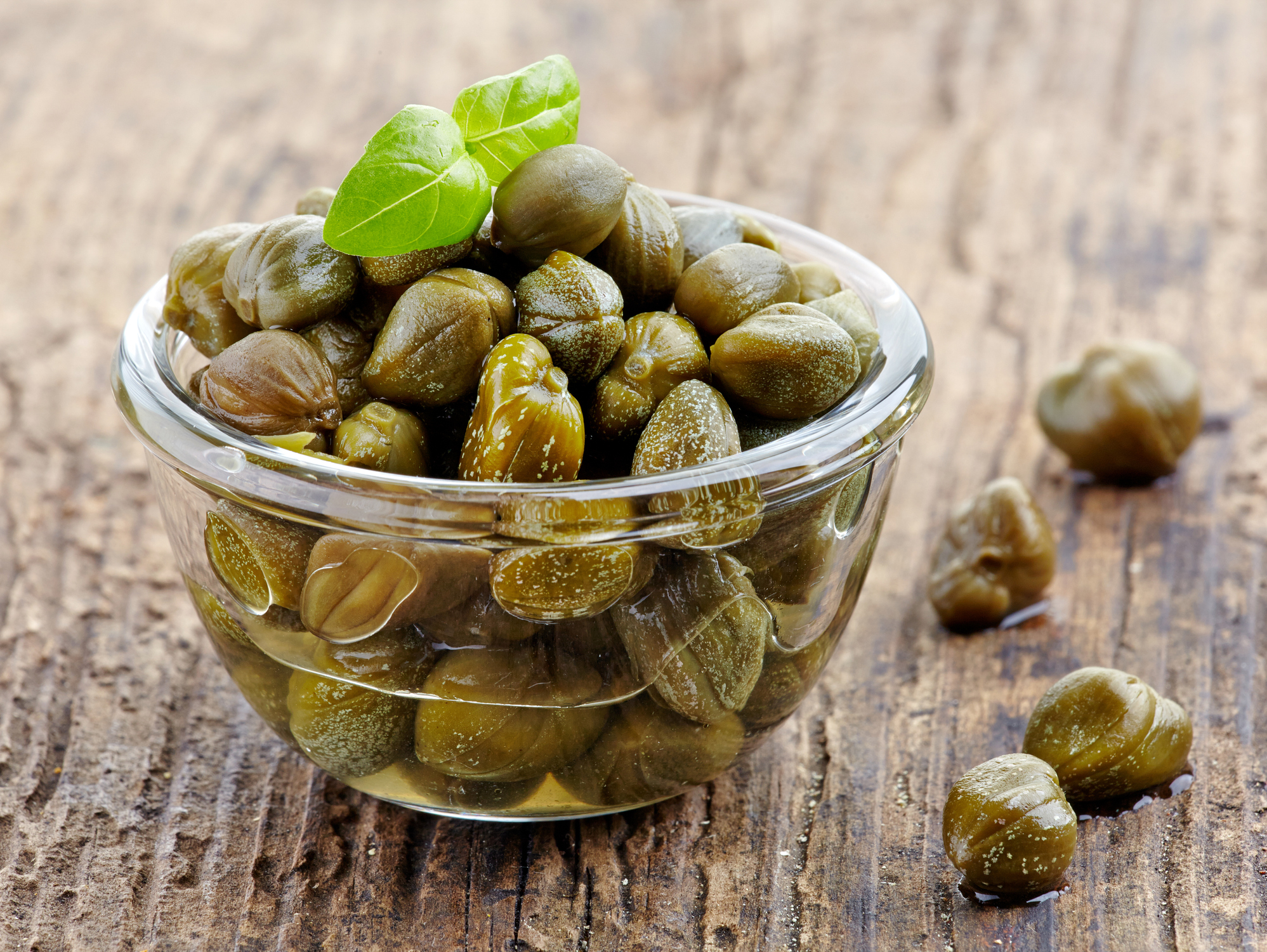
Capers are the immature green flower buds of the caper bush (Capparis spinosa), a thorny plant that grows wild throughout the Mediterranean region and is also cultivated there and in neighboring areas. They are handpicked, sun-dried, and then pickled, typically in salted vinegar, or else packed in salt. Capers come in different sizes with the smallest (nonpareilles from France) most valued.
One tablespoon of canned capers has only two calories and tiny amounts of nutrients. They do contain some potentially beneficial compounds, including isothiocyanates (similar to what’s in mustard and horseradish), but you’re not likely to eat enough to get appreciable amounts.
As a condiment, capers spice up a variety of dishes, from meat, fish, and poultry to pastas, sauces, and salads. Like other pickled or salted foods, however, they’re high in sodium—about 200 to 250 milligrams in a drained tablespoon. Fortunately, you don’t need many capers to get a lot of flavor. And rinsing them in water reduces the sodium.
By the way, caper berries are the fruit from the same caper bush, harvested when near mature and also pickled, with their stems attached. They are larger than capers but have less intense flavor and are eaten like olives.