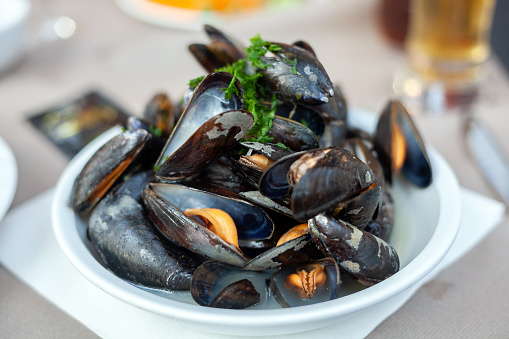
Don’t overlook mussels as an excellent source of marine omega-3 fats (EPA and DHA). They supply anywhere from about 300 to more than 800 milligrams of omega-3s per 3.5 ounces (shelled), and the general recommendation is to aim for 250 to 500 milligrams a day, an amount that may help protect against heart attacks and strokes.
A small study in the journal Nutrients found that eating a serving of mussels three times a week for two weeks as the main lunchtime protein source increased blood levels of omega-3s in 12 healthy participants. The mussels provided the equivalent of about 300 milligrams of omega-3s a day.
These bivalves are also low in fat and rich in protein, vitamin B12, iron, selenium, and other nutrients. Moreover, most commercially sold mussels are farmed in environmentally sustainable ways—in suspension systems in open oceans or bays, with few or no chemicals used—and they have a low carbon footprint compared to meat and poultry production.
Monterey Bay Aquarium’s Seafood Watch program gives farmed mussels a “best choice” rating, which should be “bought first.” Wild-caught mussels certified by various organizations can be good alternatives depending on the method and location.
To minimize the risk of foodborne illness, mussels that don’t open during cooking should be discarded. And, in general, to minimize your exposure to any toxic substances that may be present in a particular type of seafood, it’s best to eat a variety over the week.