
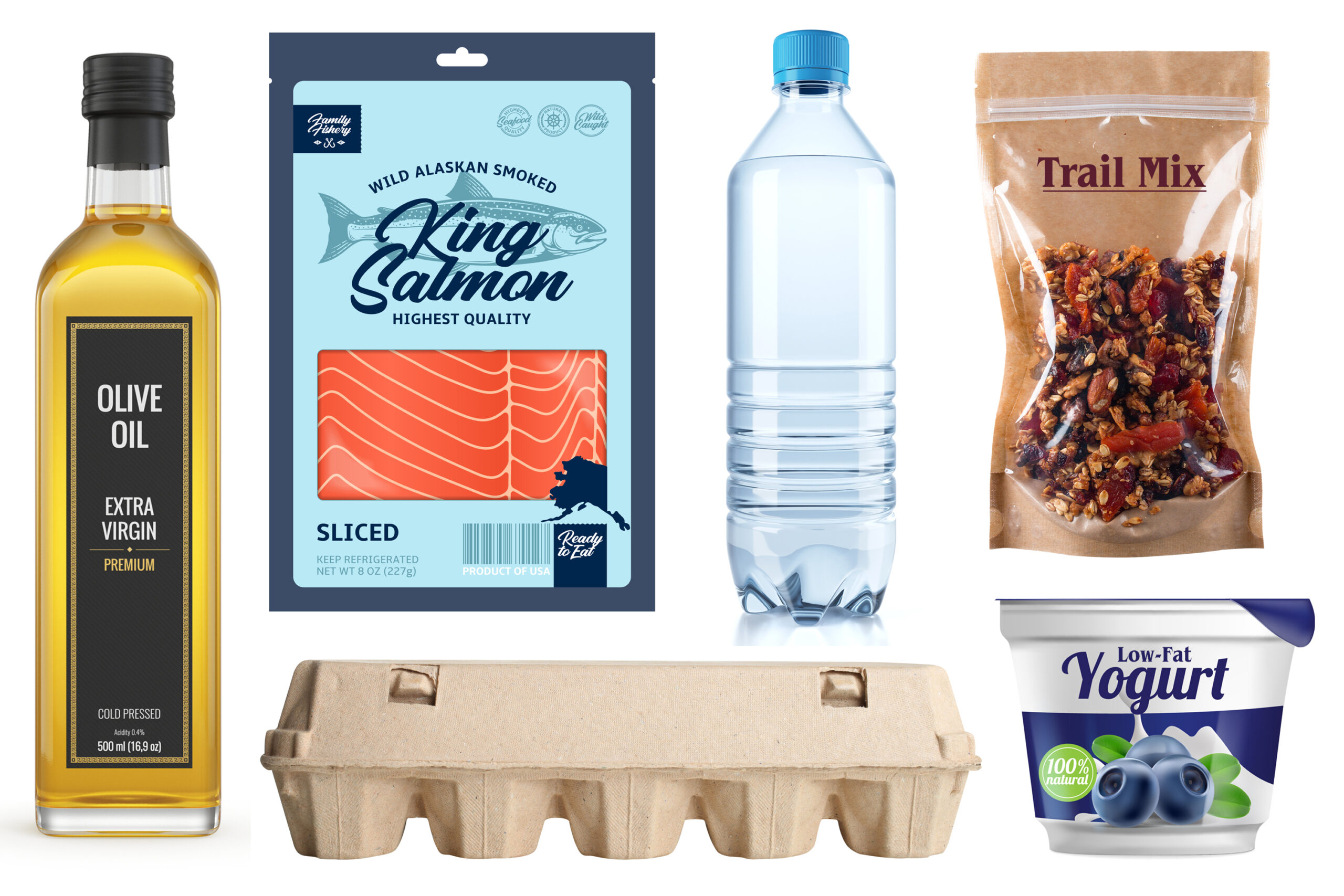
The U.S. Food and Drug Administration is revamping its standards for which foods can be labeled as “healthy”—welcoming some new additions, like salmon and nuts, while stripping some others of their long-held status.
For over 30 years, food manufacturers have been able to put the term “healthy” on products that meet certain criteria laid out by the FDA. Under the original standards, a product had to meet specific limits on fat, sodium, and cholesterol content, and contain a certain amount of protein, fiber, calcium, iron, vitamin A, or vitamin C. (Ticking just one of those nutrient boxes was enough to qualify.)
The new FDA rule, finalized this past December, tosses most of those criteria, based on the wealth of nutrition research that’s been done since the 1990s. Now food manufacturers can tag a healthy claim onto products that:
- meet particular limits on added sugars, sodium, and saturated fat specifically
- contain a minimum amount of food from at least one of the food groups recommended in the Dietary Guidelines for Americans—such as vegetables/fruits, grains, low-fat or fat-free dairy products, and proteins (like meat, seafood, legumes, and nuts). A snack bar, for example, might qualify if it contains whole grains and nuts in the required amounts.
If that sounds clear as mud, here’s one basic way to see the changes: The old definition of healthy focused solely on individual nutrients, while the update puts more focus on foods, and how they can contribute to a generally healthful diet. Under the old FDA rule, for example, there were some nutrient-packed foods that didn’t qualify for a healthy claim simply because they have a fair amount of total fat—even if it was the unsaturated, “good” type of fat.
“So avocados couldn’t be a healthy food, salmon couldn’t be a healthy food” under the old definition, said Christopher Gardner, PhD, a professor and nutrition researcher at Stanford University and member of our editorial board.
On the flip side, he explained, a loaf of white bread or a sugar-laden breakfast cereal could be labeled as healthy, just because the manufacturer added a required vitamin or mineral to it.
“So now they’re moving the focus from nutrients to foods, and it’s a good shift,” Gardner said. It brings the healthy claim in line with the current Dietary Guidelines, he noted, as well as recommendations from groups like the American Heart Association. In general, those guidelines encourage people to strive for a healthy dietary “pattern,” rather than obsessing over individual nutrients.
What counts as ‘healthy’?
First, there’s a slew of foods recommended by the above groups that automatically qualify for a healthy claim, as long as they have no added ingredients other than water: vegetables and fruits (fresh, canned, or frozen); whole grains such as oatmeal, quinoa, and barley; lean meat; seafood; beans and other legumes; nuts and seeds; eggs; and reduced-fat dairy products. Some formerly excluded foods (like eggs, nuts and seeds, and the aforementioned salmon and avocados) now make the cut—as do some vegetable oils, including olive oil.
Those foods now qualify for a healthy claim because the FDA no longer considers the amount of total fat (or cholesterol) in a product. As Gardner put it, “we’ve evolved” since the 1990s and the fat-free snack craze to better understand the differences among dietary fats. The unsaturated fats found naturally in foods like fish, nuts, and olive oil play an important role in a healthy diet. They are, in fact, staples of the famous Mediterranean diet that has been tied to a range of health benefits, including decreased risks of type 2 diabetes, heart disease, and certain cancers.
Rather, the healthy claim standards now focus on capping only saturated fat, found largely in foods like beef and full-fat dairy products, as well as tropical oils, like coconut and palm. Consuming too much saturated fat may raise LDL (“bad”) cholesterol levels in the blood, which can contribute to heart disease. Under the new rules, most individual foods must contain no more than 1 or 2 grams of saturated fat per serving to qualify for a healthy claim—though the limits are effectively higher for certain foods (like nuts and fatty fish) that naturally contain some saturated fat. Vegetable oils, meanwhile, must be no more than 20 percent saturated fat.
In addition to the above, some processed products may qualify to bear the “healthy” descriptor (such as nut butters with little to no added sweeteners). The specific limits on added sugars, sodium, and saturated fat do vary for them, depending on the product type: “mixed” food products, like trail mix or frozen dinners, for example, are allowed higher limits than individual foods.
What’s out?
The caps on added sugar represent a big change in the healthy claim rules, and they’re coming not a minute too soon. According to the FDA, nearly two-thirds of Americans regularly consume too much added sugar, and those nutrient-free (“empty”) calories quickly add up. Under the new standards, most foods must contain no more than 1 gram of added sugar per serving, though the thresholds are higher for grain products (5 grams) and dairy (2.5 grams).
The positive upshot is that many popular processed foods that previously qualified for a healthy claim no longer do—including fortified white breads and highly sweetened breakfast cereals, yogurts, fat-free puddings, and snack bars.
Interestingly, Gardner noted, it was a snack bar controversy that helped get the ball rolling on the healthy-claim makeover. Back in 2015, the maker of KIND snack bars received a letter from the FDA requesting that it remove the word “healthy” from some of its products. The issue was that the bars, packed with fruit and nuts, surpassed the official fat limits. KIND complied with the FDA request but also decided to dig into the agency’s definition of healthy foods. After learning that nuts were a no-go but products like puddings and toaster pastries were up to snuff, KIND petitioned the FDA to update its standards.
That was a decade ago. “So they didn’t move fast,” Gardner pointed out, “but here we are. And I think it’s definitely an improvement.”
Not in full effect, yet
The updated healthy definition was to go into effect on February 25 but has been postponed under the Trump administration until April 28—the date that food manufacturers can start using the new standards. The FDA is giving companies three years to fall in line. That means, until 2028, things could get confusing if some products are using the new definition while others are still playing by the old rules. The FDA is also working to devise a “healthy” symbol for food labels, to make it easier for shoppers to spot products that qualify for the claim. But it’s not clear when that will be available. In the meantime, it’s a good idea to continue checking the Nutrition Facts labels and ingredients to help guide your healthy food choices.
Ultimately, though, Gardner thinks the redefined healthy claim will be a practical tool for many consumers—particularly those who feel overwhelmed by the sea of choices at their local supermarket. “Those people are looking for some guidance, and I think this will be useful in terms of choosing among similar products. If you’re looking at two breakfast cereals, two tomato sauces, or two yogurts, and they look similar in many ways but one earned the healthy claim—that’s helpful.”
The bigger picture
What’s critical, though, is to keep sight of the bigger picture. Just because a tub of nuts bears the word “healthy,” that doesn’t mean you should eat the whole thing in one sitting. And a diet chock-full of processed snack foods is never a good idea, even if they meet the new FDA standards.
As always, it’s about balance, Gardner said: Keep striving to eat a variety of nutritious foods at mealtime, along with some “reasonable snacks” in between. But don’t get too rigid about labels. “If you ate healthfully all day—a great breakfast, great lunch, great dinner—and now you want a snack that’s not so healthy, I say go for it. It’s okay to eat something for the sheer delight and pleasure of it.”