Lion’s mane has been lighting up all over social media—thanks in part to Amazon’s hit British show Clarkson’s Farm, in which the celebrity presenter, Jeremy Clarkson, cultivates this edible mushroom in one episode as part of his three-season journey to find success as a rural farmer. Google searches for lion’s mane reportedly increased by 450 percent the week after the episode aired last May. In it, Clarkson’s wife says she adds the powdered mushroom every day to her morning coffee to clear and open her “whole mind”—and that “anyone who’s anyone takes lion’s mane.”
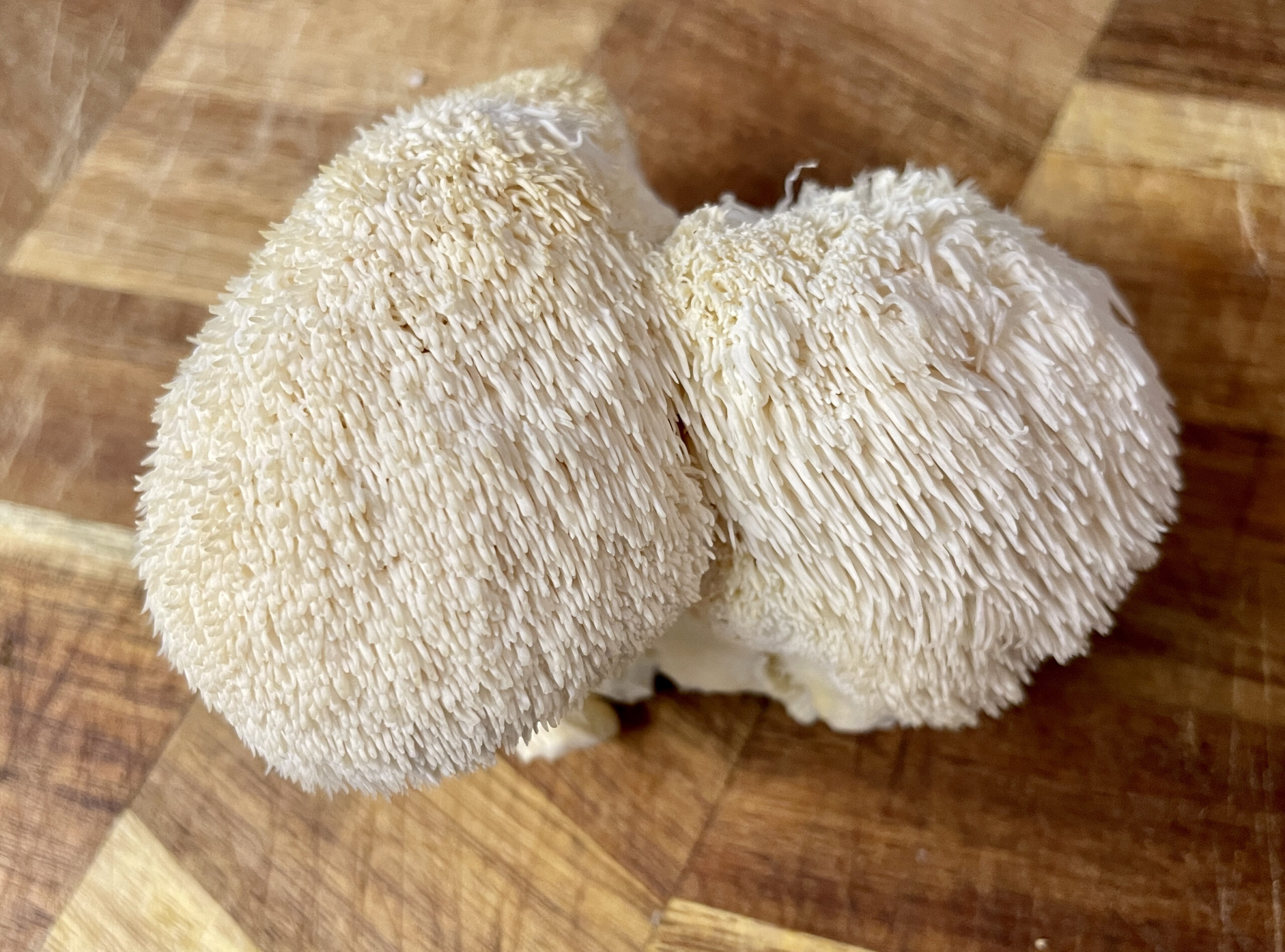
Scientifically called Hericium erinaceus, lion’s mane gets its common name from its long white spines that (sort of) resemble … a lion’s mane. Other names for it are old man’s beard and hedgehog mushroom because the spines also look like, well, an old man’s beard or a hedgehog.
Why such hype? Lion’s mane has been used in traditional Chinese medicine for centuries. Promoters assert that it protects the heart, liver, gut, brain and nervous system, and other body organs, and that it can help fight Alzheimer’s, Parkinson’s disease, depression, cancer, arthritis, and more. But can it really do all that? Here’s a peek behind the mane.
A purr-fect mushroom?
Many kinds of edible mushrooms—which are fungi (not plants)—have long been considered to have wide-ranging potential health benefits, attributed to their array of bioactive chemicals, such as erinacine terpenoids, sterols, polysaccharides (like beta glucan), and phenolic acids. Lab studies have detected antioxidant and anti-cancer activity in the extracts of lion’s mane, as well as antimicrobial, antihypertensive, immunomodulating, hypolipidemic, and other possible biological properties.
Some chemicals, such as erinacines, appear to cross the blood-brain barrier—at least in animal studies—which suggests there is potential for it to exert some effects on brain activity. More specifically, these bioactive chemicals may act as a nerve cell protector by promoting the synthesis of nerve growth factor (NGF), a protein in the body that decreases with age and especially with Alzheimer’s disease—although NGF itself may also be an indicator of adverse health developments, such as multiple sclerosis, lupus, and arthritis.
It’s not clear, however, which, if any, chemicals are responsible for any potential benefits. Further complicating the picture, different parts of the mushroom (the main fruiting body of the mushroom versus the root-like structure called the mycelium) vary in the chemicals they contain.
Moreover, there are relatively few studies in humans to back up the claims. And many of those that have been done—mostly in Asia—are relatively small and short-term (typically only a few months long). The methodologies have varied in the dose, frequency of consumption, and formulation of lion’s mane used, making it difficult to compare results.
Your brain on lion’s mane
As noted, one particular area of interest has been the effect of lion’s mane on the brain—with a potpourri of positive, negative, and mixed results, including:
- In a 2009 Japanese study of 30 participants with mild cognitive impairment (MCI), those who took a lion’s mane supplement for four months showed improvement on a cognitive test (with no changes seen in those who took a placebo)—though their scores dropped four weeks after stopping the supplement.
- A one-year pilot study from Taiwan in 2020 that included 41 people with mild Alzheimer’s disease found more improvement on cognitive tests in those who took lion’s mane compared to those given a placebo.
- A 2019 Japanese study of 34 people tested the effects of lion’s mane versus placebo in older people (over 50) without cognitive issues. After three months, the results were equivocal: Improvements were seen on some types of memory tests in the lion’s mane group—such as being able to name and draw objects and being able to remember words said aloud—but not on others.
- In a 2023 study of 41 healthy younger people in the UK, ages 18 to 45, no differences were seen in cognition in those taking lion’s mane versus placebo over 28 days. The cognitive tests included reaction time, memory, and attention. Of note, age-related cognitive decline is not typically seen in people in this age group.
- A 2019 Italian study of 77 people who were overweight or obese and had a mood or sleep disorder found improvements in anxiety, depression, and sleep in those taking a lion’s mane supplement for two months, compared to not taking one.
- In a 2010 study of 30 postmenopausal women in Japan who reported a variety of “indefinite” health complaints such as anxiety but no specific diseases, those who ate cookies containing lion’s mane for four weeks had improvements, compared to those given placebo cookies.
The mane thing
Lion’s mane supplements can be found online and in health food stores in a variety of forms including capsules and liquid extracts. But because of a scarcity of large, well-controlled, long-term clinical trials, we don’t recommend taking them. Plus, some of the supplements are derived from the main fruiting body of the mushroom, while others contain the mycelium—and, as noted above, there are differences in bioactive compounds between the two parts.
As with all dietary supplements, there’s no FDA regulation, either, so you don’t know what you’re getting in the bottle. Keep in mind also that studies have observed gastrointestinal symptoms (abdominal discomfort and diarrhea) to be a common adverse effect of concentrated lion’s mane supplements.
If you like mushrooms, however, you can include lion’s mane as part of a healthy diet—but don’t expect it to cure any ailments. You can find the mushrooms in some supermarkets (including Whole Foods), Asian markets, and some health food stores, as well as online. One company tags them as “exotic and delicious.” The mushrooms are popular in Asian recipes—for example, they can be cooked with ramen noodles or stir fried on their own until they caramelize. Or you can substitute lion’s mane in recipes that call for other mushrooms such as shiitake or white button mushrooms. With their mildly sweet and earthy flavor (less pronounced than shiitake), they have been described as having a taste and texture similar to crabmeat and lobster. You can also consume lion’s mane mushrooms dried or raw.