
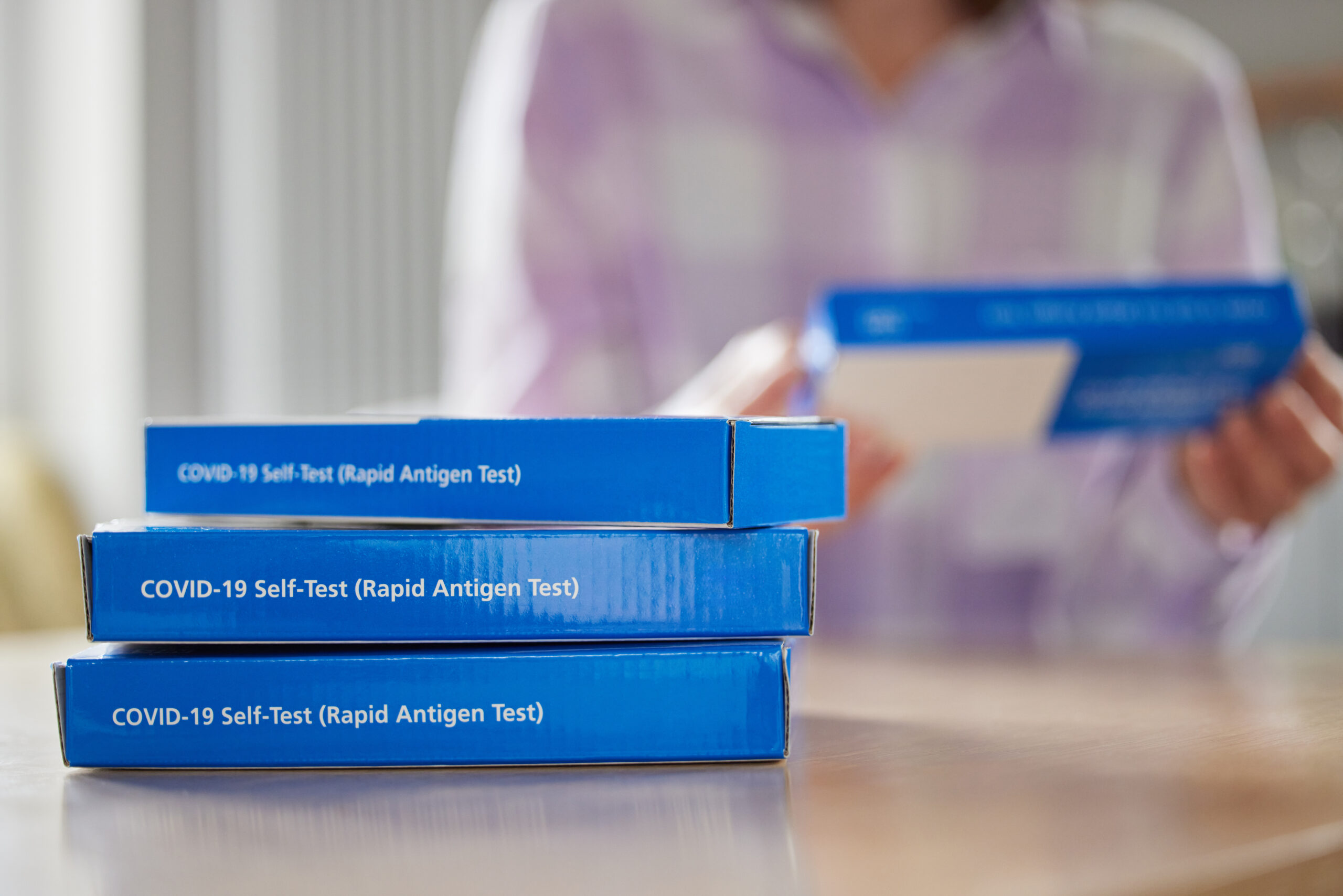
If you have expired Covid-19 tests on hand, don’t toss them just yet: The FDA has authorized extended expiration dates for some of them, including Abbott BinaxNOW, CareStart, Flowflex, Detect, and iHealth. How long an extension these at-home tests have gotten—between three and six months—depends on the lot number.
To determine expiration dates, manufacturers do stability testing to see how long the tests perform as expected and give accurate results. Because “real-time” testing takes some time (a test may be good for 12 months, for instance, but manufacturers won’t know that for sure until the year is up), to be on the safe side, the FDA typically sets shorter expiration dates, typically four to six months from date of manufacture based on accelerated testing (which can only estimate a true expiration date). As more data come in from longer-term testing, the expiration date may be pushed back several more months.
To see whether your test has been granted an extension, scroll down to the chart on this FDA page and check the “Expiration Date” column; if there has been an update, click the link there to check what the new date is for the lot number of your product. For instance, the CareStart Covid-19 test with a lot number of 169206 and an original expiration date of 2022-06-25 now has an expiration date of 2022-09-25.
If your home test does not have an updated expiration date—or if an extended date has already passed—go by the date on the box. When your test does expire, it’s time for it to go. It’s not recommended that you use a Covid test beyond its shelf-life because its components degrade over time, increasing the risk of invalid results and false negatives.
For all tests within their expiration dates, be sure to keep them under proper storage conditions—not in extreme heat or cold or dampness. And, whatever the expiration date of the test, if the results don’t make sense—say, you have symptoms but get a negative result—keep testing regularly or go to a lab for a PCR test.