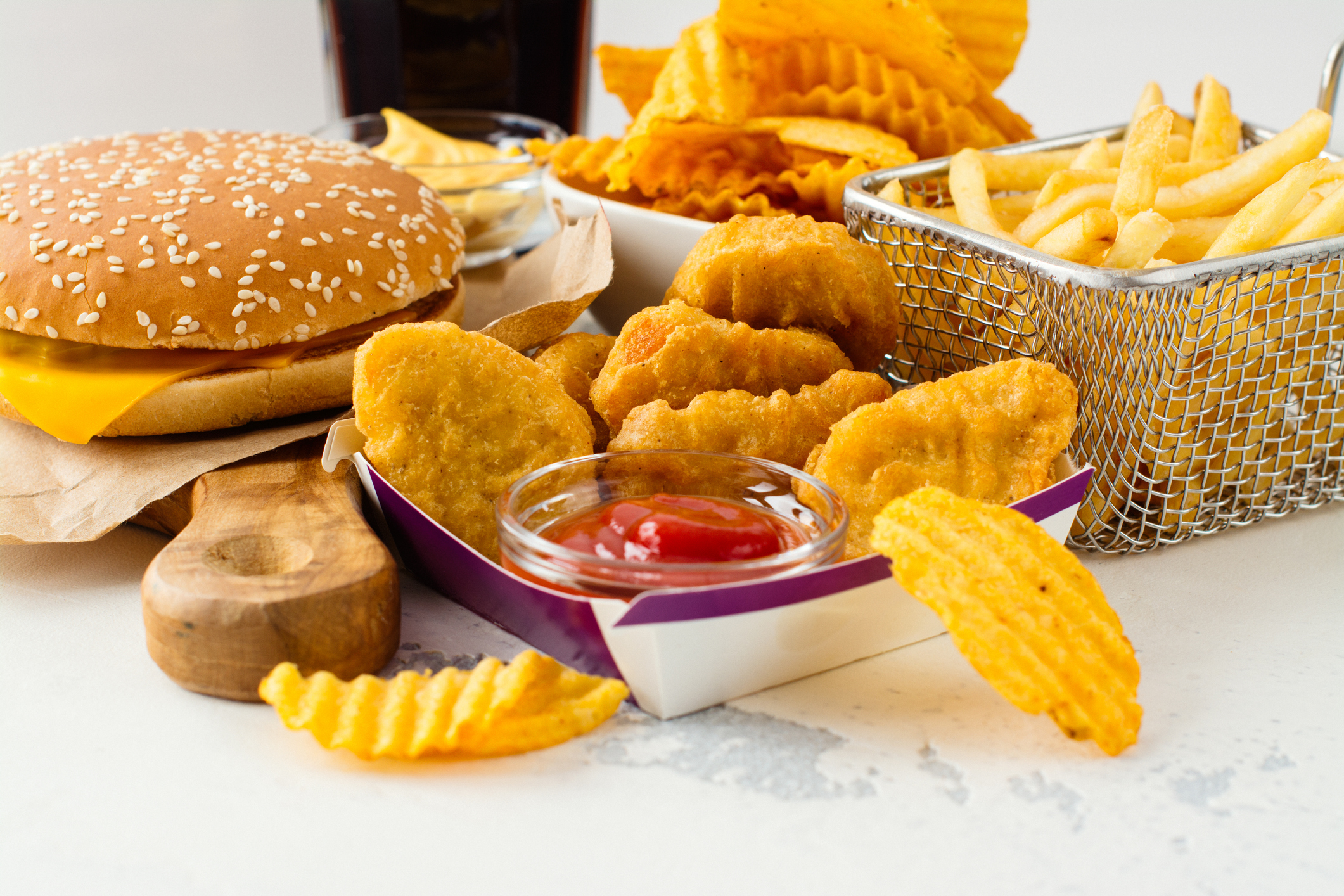
U.S. fast food is an unwelcome source of phthalates and other endocrine-disrupting “plasticizer” chemicals that leach from the packaging and food processing equipment, according to a study in the Journal of Exposure Science & Environmental Epidemiology in October. Researchers at George Washington University and other institutions obtained 64 samples of hamburgers, chicken nuggets, chicken burritos, fries, and cheese pizza from six different fast food chain restaurants (Burger King, Chipotle, Domino’s, McDonald’s, Pizza Hut, and Taco Bell) and tested them for 11 of those chemicals.
The phthalates DnBP and DEHP were found in 81 percent and 70 percent of the samples, respectively. DEHT, a non-phthalate “replacement plasticizer,” was found in 86 percent of them. Meat items had the highest concentration of chemicals overall, pizza the lowest. All in all, only one of the 11 chemicals was not present in any of the samples. Plasticizers were also detected on three unworn pairs of food handling gloves.
Phthalates and other plasticizers are used to make fast food packaging softer and more flexible and durable; they are also found in thousands of other consumer and industrial products from which they can migrate into our food and the environment and eventually into our bodies. As so-called endocrine disruptors, these chemicals are known to interfere with our hormones—mimicking or blocking their effects, for instance—with the potential to cause adverse health effects including reproductive, developmental, behavioral, and immune and nervous system disorders, as well as increase the risk of cancer, obesity, and cardiovascular disease.
Previous research has linked fast food consumption to higher phthalate levels in the body, but the researchers note that their study is the first to measure the levels of these chemicals in the foods themselves. While some phthalates have been banned by the Food and Drug Administration and supposedly phased out of products, other plasticizer chemicals used in their place haven’t been adequately studied and may present similar health hazards.
WHAT TO DO: The government needs to better regulate the industrial use of phthalates and other plasticizers. In the meantime, since food is a major source of those leached chemicals, the best way to reduce your exposure is to avoid heavily processed foods, including fast foods, most of which are high in fat, sodium, and calories anyway. That means eating out less often and cooking at home more using fresh whole foods (something many of us have already been doing since the pandemic). If you do step up to the fast food counter on occasion, your exposure will likely be lower if you order non-meat items.