There’s nothing wrong with plain old pasta made from refined wheat flour—on occasion. With about 180 to 200 calories per cup, cooked (2 ounces, dry), it contains some protein, virtually no fat, a minuscule amount of sodium (if any), and even a couple of grams of fiber and a small amount of iron and other nutrients. And, despite the cries of carb haters, the complex carbohydrates in pasta still play an important role in the diet, as a source of energy to fuel the body. What tends to muck up pasta is what it’s served with—often lots of butter, salt, and heavy cream, cheese, or meat sauces.
Still, traditional pasta is hardly a nutrition superstar, since the semolina wheat used (milled from durum wheat) is stripped of its fiber-rich bran and nutrient-rich endosperm, and thus it contains lower amounts of fiber, vitamins, and minerals than if it were made from whole wheat. Refined wheat flour is typically enriched to restore some of the vitamins and minerals removed from the whole grain, including folate and iron, but most other nutrients are not brought back to whole-grain levels or even added back in any amount.
Whole wheat and beyond
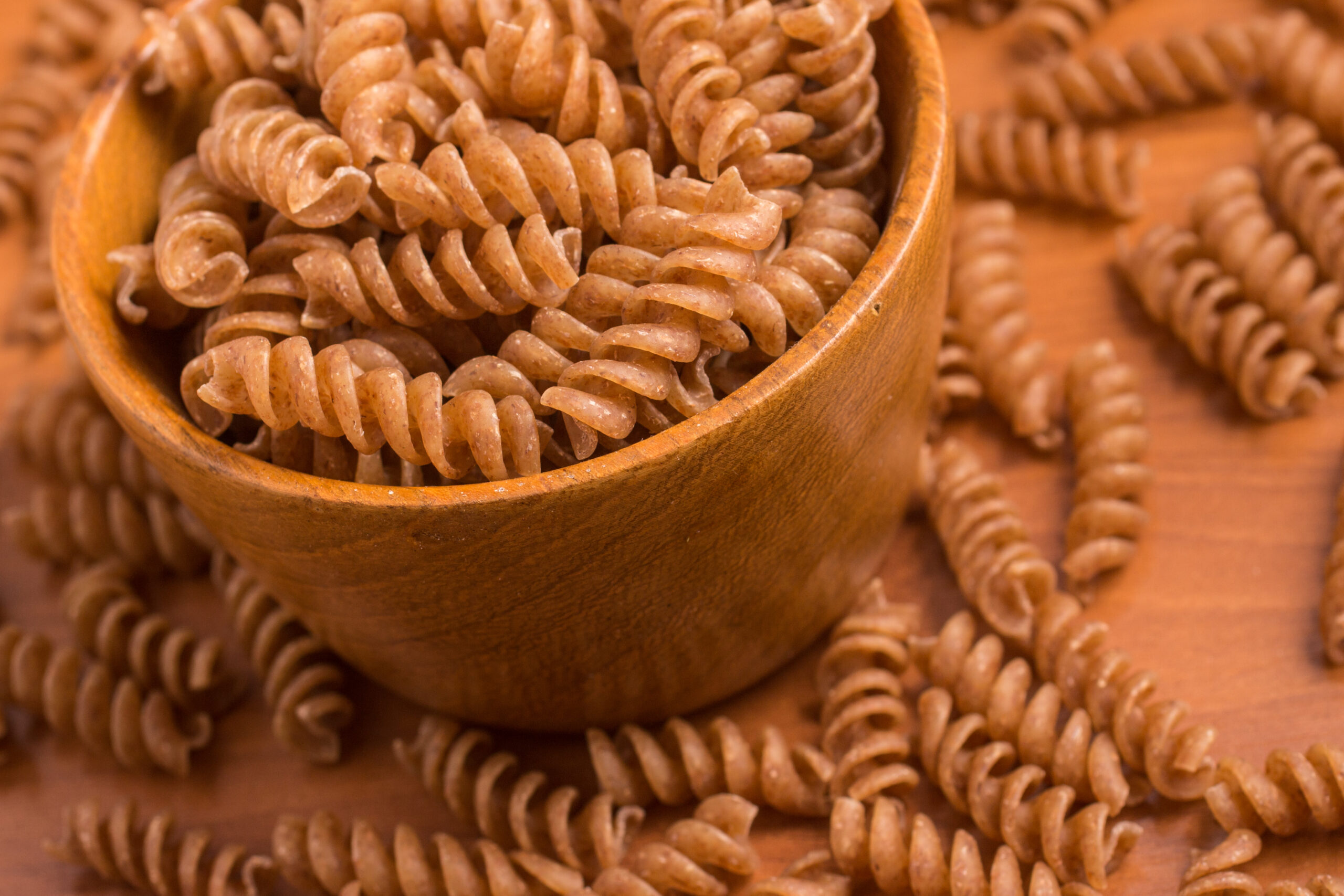
To get the most out of your pasta, go for whole-grain versions. Now easily found in the pasta aisle of many supermarkets as well as health food stores, these include not just whole-wheat pastas (which are not as chewy and gummy as they once were) but also pastas made from brown rice, kamut, and spelt, for instance. In addition, there are pastas made from quinoa, amaranth, and buckwheat (soba), which technically are seeds, not cereal grains—and even legumes, including chickpeas, red lentils, black beans, and mung beans. These pastas come in all shapes, too, from elbows and shells to penne, rotini, and fusilli. And even major brands are getting in on the trend—Barilla, for instance, has a line of chickpea and red lentil pastas.
Among their benefits, these pastas tend to have significantly more fiber than regular pasta—many have at least double, or even triple, the amount. Whole-wheat pasta, for example, has 4 to 7 grams of fiber per cup, cooked, though others, like brown rice pasta and buckwheat noodles, are more comparable to regular pasta in fiber (2 to 3 grams; see chart). Pastas made from legumes are especially rich in protein and fiber. Many of these pastas are also wheat- and gluten-free and therefore an option for people who have wheat allergy, celiac disease, or a gluten sensitivity; some are “certified gluten-free.”
Epidemiological research links eating more whole-grain foods, including whole-grain pasta, to a reduced risk of various conditions, including heart disease, diabetes, and several types of cancer. Some research suggests that whole grains may even help in weight control—not surprising, since their fiber increases satiety.
The 2020-2025 USDA’s Dietary Guidelines for Americans recommend that at least half the grains you eat be whole-grain—which translates into at least three servings of whole grains a day if you are consuming a 2,000-calorie daily diet. Just one cup of cooked pasta equals two servings from the grains group, so if you incorporate whole-grain pasta into your diet, it can be pretty easy to reach your whole-grain goal (the rest can be met by eating such foods as whole-grain breads and breakfast cereals, as well as cooked whole grains and oatmeal).
Shopping and prep tips
- When buying whole-grain pasta, check the ingredients to see if all the grains listed are “whole” (for a 100% whole-grain pasta). Some pastas are blends of grains, not all of which may be whole; or they may be all or primarily 100% whole grain but not of the grain listed in the name. For instance, one brand that boldly states “quinoa” in its name on the front of the box is made from whole-wheat flour, refined semolina flour, and quinoa flour; other “quinoa” pastas list rice flour or white rice as the first ingredients. This is not necessarily a deal breaker, but such products may not contain as much fiber, protein, or other nutrients as fully whole-grain ones. On the other hand, these blends may be a good way to ease into whole-grain pastas if your taste buds are not yet up to their often heartier tastes and textures
- Note that wheat flour is often added to soba (buckwheat) noodles. The higher the percentage of buckwheat, the higher the quality—and price—of the noodles.
- Be aware that some pastas have added fiber (such as inulin). Added fiber can boost your overall fiber intake, but it may not have the same range of benefits as fiber found naturally in foods.
- Don’t assume that pastas at health food stores—or those with a more “natural” image—are necessarily whole grain, even if their ingredients sound more healthful. Same for organic brands. You still have to read (and decipher) the ingredients list carefully. A pasta that says “100% durum semolina” or “golden amber durum wheat,” for instance, is made from refined wheat flour.
- Don’t expect much from most “vegetable” pastas, like red-colored “tomato pasta” or green-hued “spinach pasta.” Unless they list puréed vegetables near the top of the ingredients (as do Barilla’s veggie pastas), they are no different nutritionally from regular pastas and are more about vegetable coloring than actual vegetables. Ronzoni Garden Delight contains a mere half serving of veggies per 2-ounce portion, dry. Others may contain the equivalent of less than a tablespoon of spinach per cup, cooked.
- If you don’t like one brand of whole-grain or legume pasta, try another, since flavors and textures vary. The shape of the pasta can make a difference, too. For a lighter texture, choose a thin spaghetti, say, over rotini. And don’t overcook—some of these pastas can get mushy fast.
- Consider your sauce. Whole-grain and legume pastas, with their often deeper, more assertive flavors, tend to pair better with more robust sauces rather than lighter sauces. Try heartier ones such as a chunky vegetable or puréed bean sauce, or perhaps a thicker pesto. Using a vegetable or bean-based sauce will increase the nutritional value of your meal even more.
A Pasta Comparison
This chart lists the nutrition content of a sampling of whole-grain and legume pastas, compared to regular, refined pasta and based on a 2-ounce serving (about 3⁄4 cup dry, roughly 1 cup cooked). Information is from the manufacturers (as indicated); nutrition numbers vary by brand.
| Pasta type | Calories | Fat (grams) | Protein (grams) | Fiber (grams) |
| Traditional (refined) pasta | 200 | 1 | 7 | 2 |
| Black bean (penne, Wegmans brand) | 170 | 1 | 12 | 10 |
| Brown Rice (rotini, Lundberg) | 210 | 2 | 4 | 2 |
| Buckwheat (soba noodles, Eden Foods) | 200 | 1.5 | 7 | 2 |
| Chickpea (penne, Banza) | 190 | 3.5 | 13* | 5 |
| Chickpea (rotini, Barilla) | 190 | 3.5 | 11 | 8 |
| Kamut (spirals/elbows, Eden Foods) | 210 | 1.5 | 10 | 6 |
| Red lentil (penne, Barilla) | 180 | 1.5 | 13 | 6 |
| Spelt (ribbons, Eden Foods) | 210 | 2 | 7 | 5 |
| Whole wheat (penne/fusilli, De Cecco) | 200 | 1.5 | 8 | 5 |
| Whole wheat (penne/rotini, Ronzoni) | 180 | 1.5 | 9 | 5 |