Q. Do you recommend ear candling for removing earwax?
No. Ear candling is promoted as an ancient healing practice and a “natural” way to remove earwax. Many websites sell inexpensive kits, and some beauty salons and spas offer it as a “relaxation” service. But it’s neither natural nor safe.
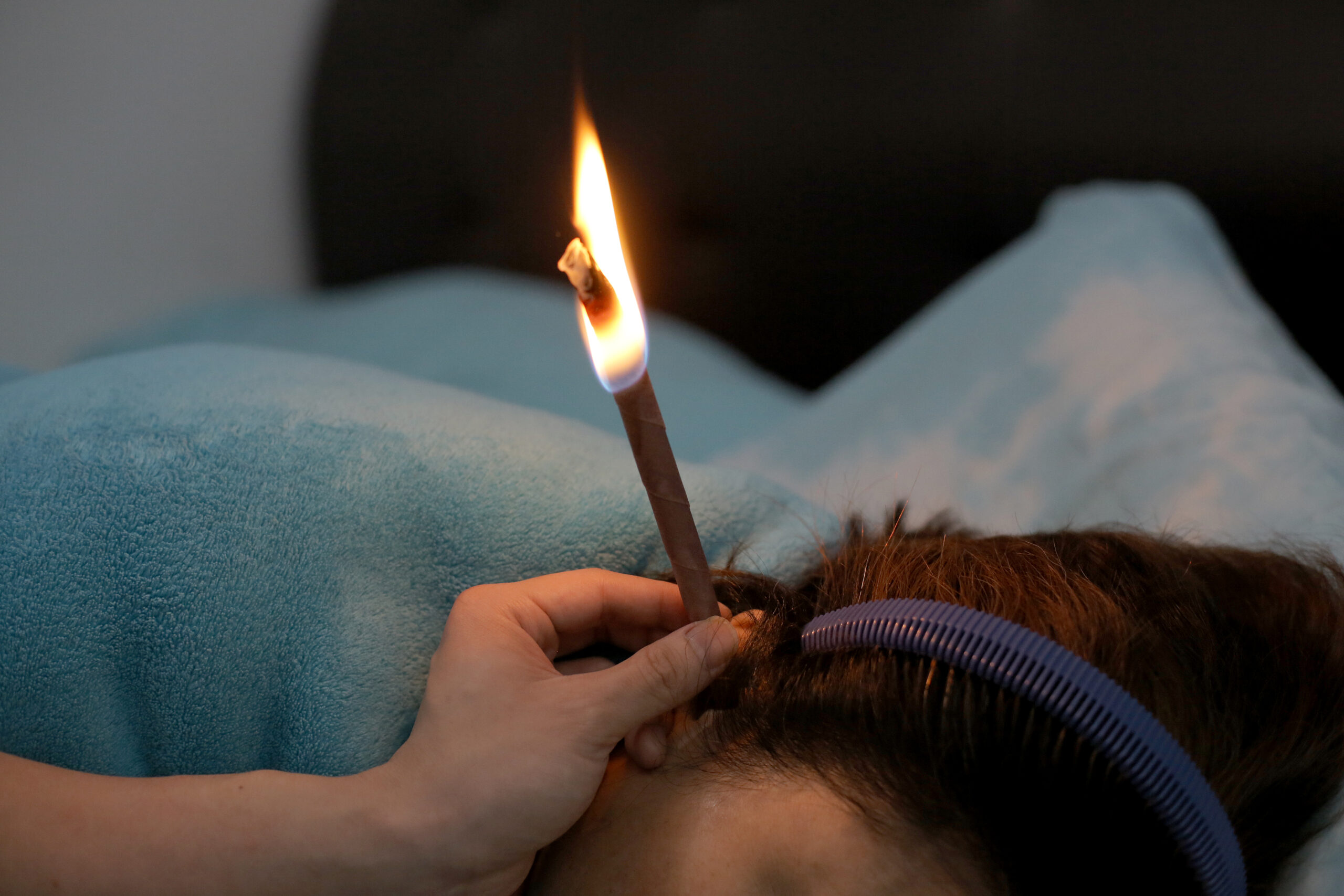
Also called ear coning, the procedure involves inserting the narrow end of a hollow cone, which is impregnated with paraffin or beeswax, into the ear canal and lighting the other end with a flame. This supposedly softens or melts the earwax and creates a vacuum that draws it out of the ear. Proponents claim it also treats tinnitus, vertigo, migraines, postnasal drip, sinus infections, allergies, coughs, and many other ills.
There’s no evidence to support any such medical benefits. According to limited studies, ear candling does not create enough suction to remove earwax—and it can leave candle wax behind. Worse, it can burn the ear canal, perforate the eardrum, and cause infection.
And it’s a fire hazard. Serious injuries have been reported to the FDA and Health Canada, and the FDA, which has called the practice “ineffective and risky,” has taken legal action against marketers and seized products. An older review in the Journal of Laryngology & Otology concluded that ear candling “clearly does more harm than good” and should be banned.
Earwax (cerumen) is secreted by glands in the outer ear canal, and it serves a purpose: It prevents debris from entering deeper into the ear canal. And the ear is self-cleaning anyway, meaning that the wax is carried out- ward by the normal migration of skin cells to the entrance of the ear canal. But impacted earwax (typically from improper use of cotton-tipped swabs that push the wax deeper into the ear) can block hearing and cause other symptoms.
What to do: If you have excess wax buildup—and you know you do not have a perforated eardrum—you can try removing it with warm (not hot) mineral or vegetable oil. Put a drop or two in your ear with an eyedropper, and wait 10 to 15 minutes. Then, using a bulb syringe, flush the ear with warm water, holding your head upright and then tilting it to allow the water to drain. Repeat as necessary over a few days until the wax comes out.
Over-the-counter wax softeners are generally safe but no more effective than mineral or vegetable oil. Though hydrogen peroxide is often recommended as a remedy, it doesn’t do much and may cause problems; don’t use it. If home treatments don’t work, your doctor can remove the earwax.