
Over the past year, we have lost some giant figures in the scientific world—including the revered anthropologist and conservationist Jane Goodall, and the accomplished and controversial geneticist James Watson, who co-discovered the double-helix structure of DNA. They were among a fairly small group of scientists who have ever gained fame outside of their fields. But while scientists usually don’t become household names, that doesn’t diminish the importance of their work. So as 2025 comes to a close, just as I have in previous years, I’d like to remember some of the lesser-known researchers we lost this year, including a few members of the UC Berkeley community. Their contributions to public health will live on.
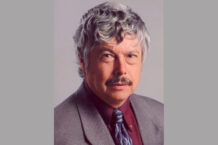
Leonard Syme, PhD, professor emeritus of epidemiology and community health, UC Berkeley School of Public Health, age 92. During his time at UC Berkeley, Dr. Syme conducted groundbreaking research on the social determinants of health—the many non-medical factors that affect people’s health and well-being, including access to affordable housing and healthy food, education level, and social isolation. That concept has since become central to our thinking on public health, and Dr. Syme is widely considered the “father of social epidemiology.” We at the Wellness Letter knew him as Len, as he served on our editorial board for more than 40 years. Len and I were good friends. Among many things, we enjoyed robust, wide-ranging discussions over long lunches and at Cal football games (even though we were often disappointed by the outcomes of those games). He will be missed, as a scientist and a friend.
David Baltimore, PhD, molecular biologist, president emeritus, California Institute of Technology, age 87. Over his long career, Dr. Baltimore made discoveries that would prove critical to our understanding of the immune system, HIV, and cancer. In 1975, he and his colleagues were awarded the Nobel Prize in physiology/medicine for their work demonstrating the molecular mechanisms that drive a group of viruses called retroviruses. The importance of that finding would soon become apparent, as the AIDS epidemic took off in the 1980s. It helped scientists identify HIV, a retrovirus, as the cause of AIDS, and would eventually be key in developing antiretroviral drugs to treat the disease. Dr. Baltimore later focused his work on immune function and the mechanisms that go awry in the development of cancer and autoimmune diseases.
Atul Butte, MD, PhD, professor, director, Institute for Computational Health Sciences, UC San Francisco, age 55. Dr. Butte did his early training in pediatrics before eventually receiving a PhD in health sciences and technology. That set the stage for what would become his major research focus: using technology advances to efficiently analyze huge amounts of data (so-called big data) to better understand a host of major diseases and identify new treatments. Dr. Butte is credited with pioneering methods for mining publicly available databases to pinpoint existing drugs that can potentially be “repositioned” to treat additional health conditions. He is also remembered as a central proponent of data sharing among researchers—launching, in 2010, a data repository called ImmPort, which has enabled more than 1,200 studies to be conducted.
Phyllis Gardner, MD, professor of medicine, Stanford University, age 75. Dr. Gardner was a physician and clinical pharmacologist whose research focused on heart arrhythmias and, later, the genetic disorder cystic fibrosis. Her discoveries involving a gene that causes cystic fibrosis, called CFTR, led to a greater understanding of how the disease affects the immune system and helped lay the groundwork for gene therapy programs for cystic fibrosis. At Stanford Medicine, Dr. Gardner used her varied expertise to treat patients with complex heart disease and help manage transplant patients. In the 1990s, she was appointed to a leadership role at the medical school, where she spearheaded reforms that modernized the curriculum. Dr. Gardner is remembered by her colleagues as having a “bigger-than-life” personality and boundless energy. Outside of academia, she founded or was involved in several biotechnology startups, and served as a mentor to other women pursuing careers in science and business.
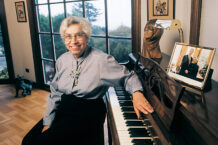
Ruth A. Lawrence, MD, pediatrician, founder, Breastfeeding and Human Lactation Study Center, University of Rochester Medical Center, age 101. In the early 1950s, Dr. Lawrence became the first woman offered an internship at the Yale School of Medicine; it was during this time—when formula feeding was all the rage—that Dr. Lawrence became interested in the health benefits of breastfeeding, for both infants and mothers. Today she is recognized as the main force behind the promotion of breastfeeding as a topic of scientific research and a public health priority. In 1979, after years of research and firsthand experience as a mother (she breastfed each of her nine children), Dr. Lawrence authored what is considered by many to be the breastfeeding bible, Breastfeeding: A Guide for the Medical Profession. The book gained media attention, which gave her a platform to criticize formula companies for marketing their products as better than breast milk. In 1984, she was chosen by Surgeon General C. Everett Koop to head an expert committee to address low rates of breastfeeding. One of her children, Barbara Asselin, MD, also a pediatrician, remembered her as a devoted mother who “did all the mom things,” including serving as PTA president. In Dr. Asselin’s words, “She didn’t miss a beat.”
Malcolm Potts, MD, reproductive health scientist, UC Berkeley School of Public Health, age 90. Dr. Potts was considered a trailblazer in women’s reproductive health—emerging in the 1960s as one of the first advocates for widespread access to contraception and safe abortion. His views took shape early in his career, when Dr. Potts worked as an obstetrician in a busy London hospital, at a time when abortion was illegal. He later wrote that he routinely cared for women suffering blood loss from self-induced abortions. Dr. Potts would become instrumental in liberalizing England’s abortion law before turning his attention to women’s healthcare on a broader scale. He served as medical director of the International Planned Parenthood Federation, led groundbreaking maternal mortality studies, and helped establish the first HIV prevention programs in Africa. In 1992, Dr. Potts joined the UC Berkeley faculty, where his achievements included co-founding OASIS—an organization dedicated to educating girls, expanding access to family planning, and reducing maternal mortality in the Sahel region of Africa.
Zakaria Sabry, PhD, professor emeritus, UC Berkeley School of Public Health, age 92. Dr. Sabry was a leading nutrition scientist whose work shed light on the connections between diet and chronic disease. Originally from Egypt, Dr. Sabry held positions at the American University of Beirut, and the University of Guelph and University of Toronto. In the early 1970s, he led the development of the first comprehensive national study of health and nutrition in Canada. Dr. Sabry joined the faculty at UC Berkeley in 1984 and remained there until his retirement 20 years later. Beyond his work in research, Dr. Sabry was a beloved teacher and mentor—particularly to international students, having experienced that path himself. His son James Sabry said that when his father moved from Cairo to the University of Massachusetts, Amherst, to pursue a master’s degree, the football coach there gave him a place to live and took him under his wing: “He always had gratitude for that and tried to pay that forward.”
Parting note: As we honor the legacies of these researchers, we also confront a sobering reality: Science in America is under siege. The Trump administration has slashed billions of dollars from government grants, terminated hundreds of active studies, fired thousands of personnel, reduced funding for the backbone of university research, and disrupted the very infrastructure that supports discovery and nurtures future scientists. If not checked, these cuts will undermine decades of progress and stifle the next generation of scientists, which will only further erode the foundation of medical and public-health advances that save lives. I can only hope that the scientific community can take back the reins from this wayward administration to safeguard the future of the nation’s health.