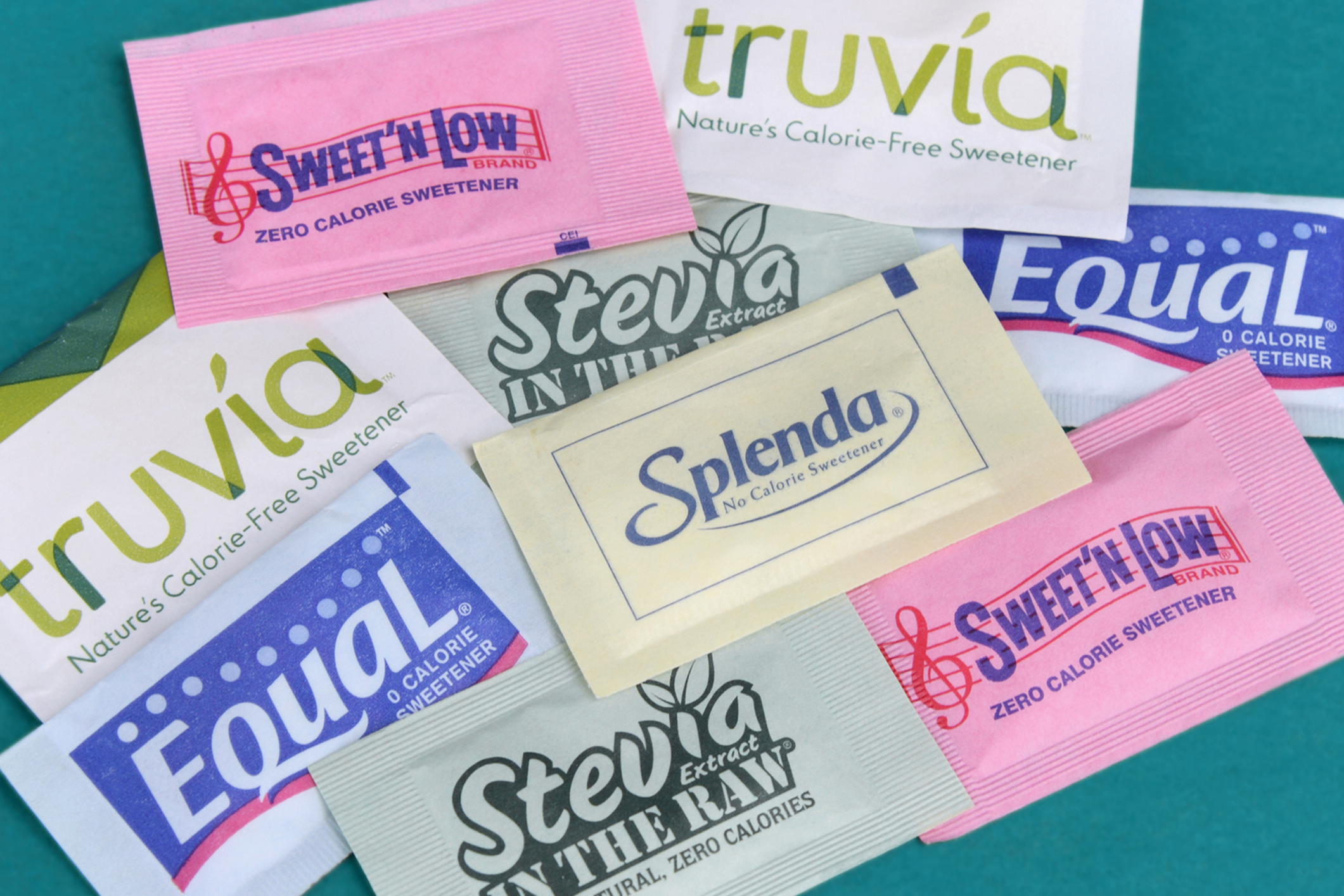
Long marketed as substances that don’t promote tooth decay (“9 out of 10 dentists recommend…”) or as safe alternatives to high-glycemic sweeteners for people with diabetes, sugar substitutes (also called non-sugar sweeteners or non-nutritive sweeteners) may be best known for their role in foods and beverages promoted as “diet,” “low-calorie,” or “no-calorie”—descriptions that imply they can help people lose or maintain weight. But if this is the sole motivation behind the Splenda (sucralose) in your morning coffee or your afternoon Diet Coke, you might want to reconsider: The World Health Organization (WHO) recently advised against using sugar substitutes for weight control after finding little to no evidence that they benefit adults or children seeking long-term weight loss.
The new recommendations apply to everyone except individuals who have diabetes (a population not represented in the studies on which the recommendations are based), and they include all sugar substitutes—whether natural or synthetic—that are found in commercial foods and beverages or are packaged for individual use to be added to food and drinks at home. These include aspartame, sucralose, stevia and stevia derivatives, cyclamates, saccharine, acesulfame K, advantame, and neotame. The recommendations do not apply to sugar substitutes found in personal care items, such as toothpaste and some medicines, nor to sugar alcohols (like erythritol) or low-calorie sugars (like allulose), which still have some calories.
In 2015, the WHO released guidelines on free sugars (which include table sugar and high-fructose corn syrup, among many others). A high intake of sugar is strongly linked to overweight and obesity, conditions that now affect nearly 40 percent of the world’s population and contribute to a host of chronic illnesses like heart disease and diabetes. Since that time, there’s been increased interest in the use of sugar substitutes to reduce sugar intake—which is why the WHO considered it important to now review what evidence exists on these sugar replacements and issue guidance on their uses.
Study stats and caveats
The recommendations are based on a systematic review and meta-analysis of 283 studies, including 50 randomized controlled trials (RCTs, the “gold standard” of studies); the rest were prospective cohort and case-controlled studies. The RCTs, with follow-ups ranging from eight days to three years (most less than six months), found a slight, short-term weight-loss benefit associated with intake of sugar substitutes. But the RCTs did not find that intake of sugar substitutes or associated weight loss had any effect on other measures of weight-related health, such as insulin, fasting glucose, blood lipids, or blood pressure. Moreover, in trials where sugar-sweetened beverages were swapped with those containing sugar substitutes, the weight-loss effects were even smaller.
Results from the longer-term prospective cohort studies were even less encouraging. They linked higher intake of sugar substitutes to higher body weight and greater risk of type 2 diabetes, cardiovascular disease, and even death. They also found an association between sugar substitutes and bladder cancer (driven almost entirely by saccharine). The researchers acknowledged that the reason for the discrepancy between the RCTs and cohort studies is unclear and that there may be a number of explanations, such as reverse causation (that people who consume more sugar substitutes may be at a higher weight to begin with) and other confounding factors. Keep in mind also that prospective cohort studies are observational and can only find associations between two things; they do not prove cause and effect.
Also important to note: The recommendations are conditional. WHO issues recommendations as either “strong,” meaning there’s a high level of confidence that the benefits of implementing the recommendations outweigh potential undesirable effects, or “conditional,” meaning there’s more uncertainty that the benefits will be tremendously meaningful. While strong recommendations can be adopted as policy, conditional ones require in-depth discussion among policymakers before being implemented.
Lastly—and not surprisingly—not everyone agrees with the WHO’s report. Some organizations and regulatory agencies around the world, including the Calorie Control Council, strongly maintain that these sweeteners remain effective and safe for the general population.
More at play in the pursuit of weight loss
It may seem counterintuitive that sugar substitutes do not help in weight loss. After all, it’s logical to think that replacing caloric sweeteners with non-caloric ones would lower calorie intake and thus help people lose weight, or at least not gain weight. But weight loss is rarely so simple, and there are a lot of factors at play that could counter any benefits that may come from replacing sugary foods and beverages with non-caloric ones.
One is the possibility that people may consume more fat and protein to make up for lost sugar. It’s also possible that consumption of very sweet sugar substitutes alters taste receptors, leading to an increased appetite for sweets in general, or that people compensate for their “virtuous” choices by rewarding themselves with high-calorie treats. When people who consume a diet high in sugar substitutes do lose weight, they may be taking a number of other steps to create the negative energy balance necessary to do so.
BOTTOM LINE: To date, it hasn’t been proven that sugar substitutes help people control their weight—and the WHO report dashes hopes of that even more. In fact, as these products have grown in popularity—with an estimated 141 million Americans consuming them in 2020—our waistlines have only continued to expand. That doesn’t necessarily mean that sugar substitutes are to blame (much has changed in the American diet and other lifestyle factors over the decades)—or that no one can benefit from them (when used in combination with other calorie-cutting or weight-control measures)—but sugar substitutes are not likely the global antidote to obesity.
If you use these products, we advise moderation, because they may not be as effective as hoped, because of debatable safety, and because their use can be a marker for an unhealthy diet. And, given that it’s hard to dispute the many health risks associated with a high intake of added sugar—including obesity, diabetes, and heart disease—the best alternative all around is to cut down on sweetened foods and beverages across the board, however they’re sweetened.