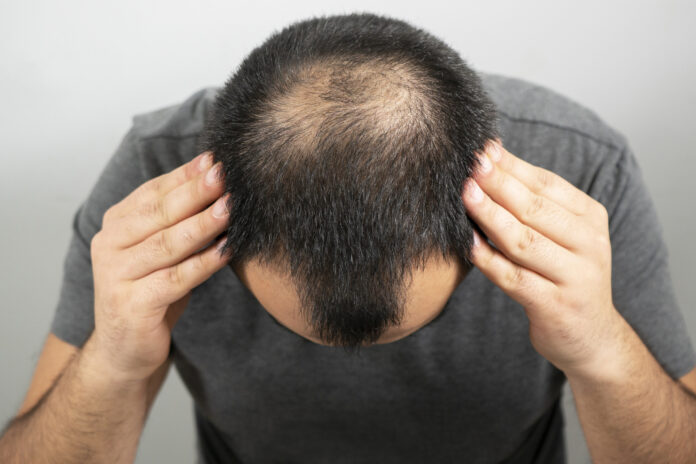
For men with androgenetic alopecia (male-pattern baldness), a new analysis in JAMA Dermatology suggests that dutasteride is the most effective drug overall among the three drugs commonly used to treat this common type of hair loss. Investigators evaluated 23 prior studies that looked at the use of varying doses and forms of minoxidil (Rogaine and generics, topical; Loniten, oral), dutasteride (Avodart, oral), and finasteride (Propecia, oral) in men ages 22 to 41. Treatment with 0.5 milligrams (mg) per day of oral dutasteride for 24 weeks resulted in the most total hair growth.
Next in the ranking was 5 mg/day of oral finasteride (the dose used to shrink enlarged prostates), followed by 5 mg/day of oral minoxidil, 1 mg/day of oral finasteride (the dose used to treat hair loss), 5% topical minoxidil (the dose recommended for men), 2% topical minoxidil (the dose recommended for women), and 0.25 mg/day of oral minoxidil. Not surprisingly, higher doses of finasteride and minoxidil were more effective than lower doses.
Oral finasteride and topical minoxidil are FDA approved for the treatment of androgenetic alopecia in men, while dutasteride and oral minoxidil are used off-label. Both dutasteride and finasteride inhibit the 5-alpha reductase enzyme, which converts testosterone to dihydrotestosterone (DHT), a hormone that can cause hair follicles to shrink. Dutasteride might be more effective than finasteride because it blocks two “isoforms” of that enzyme, whereas finasteride blocks only one form, according to Ervin Epstein, M.D., a dermatologist and member of our editorial board.
But drugs for hair loss are not without side effects and sometimes more serious risks, even if uncommon. For instance, finasteride has been linked to erectile dysfunction, depression, and anxiety, and high-dose oral minoxidil carries a black box warning for certain heart risks. Also of some concern, dutasteride has not been as extensively studied as finasteride, so its adverse effects are not as fully known.
Although androgenetic alopecia affects women too—especially after menopause—the JAMA Dermatology analysis was limited to men. Only topical minoxidil at the 2% dose has been approved for hair loss in women, and it should not be used without a doctor’s advice by women who are pregnant or breastfeeding. Pregnant or potentially pregnant women should not use (or even touch) finasteride and dutasteride because these drugs may cause serious birth defects.
BOTTOM LINE: If you are a man or woman who is concerned about hair loss, speak with your doctor about your options, which may also include other off-label drugs (such as spironolactone) and platelet-rich plasma injections. But unfortunately, as an editorial accompanying the new analysis noted, “While the findings help us understand the relative efficacy for available AGA [androgenetic alopecia] treatments, it also highlights the paucity of therapeutic options for this condition. Well-designed studies that investigate the pathogenesis of AGA are warranted so that we may develop more effective and targeted treatments.” Also of note, two of the authors of the study have relationships with pharmacologic companies that produce hair-loss drugs.