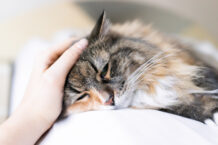
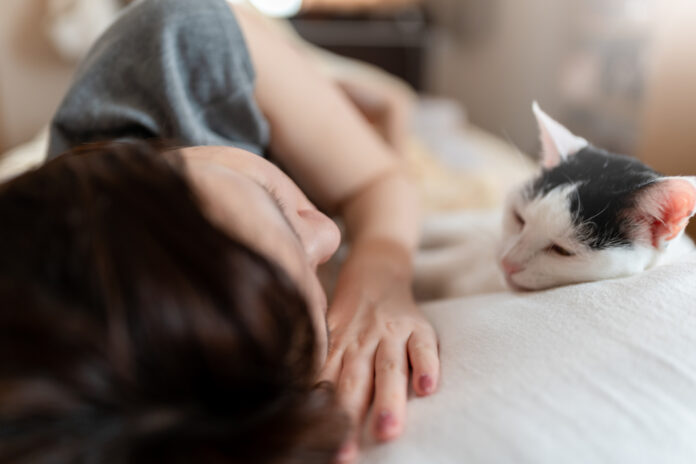
Pets are wonderful companions, but these lovable members of the family may be having a not-so-lovable effect on your sleep, according to a study published earlier this year in the journal Human-Animal Interactions.
Using data from the National Health and Nutrition Examination Survey (NHANES), researchers at Lincoln Memorial University in Tennessee assessed the relationship between dog and cat ownership (better known today as “pet parenting”) and sleep quality and sleep disorders in nearly 5,500 adults over age 18, compared to pet-less people.
In particular, those with dogs in their household were more likely to have a sleep disorder diagnosis and trouble sleeping in general, compared to non-dog parents. Cat parents were more likely to experience leg jerks (a symptom of restless legs syndrome) during sleep than non-cat parents. These results held up after the researchers statistically adjusted for other factors that can affect sleep, such as age, gender, race/ethnicity, income, and body mass index (BMI).
Prior studies, however, have been inconsistent, with some in contrast suggesting that pets may improve sleep because they can help ease anxiety, stress, and depression. And dog parents tend to get more physical activity (from walking their dogs), which can also aid sleep. That is, for some people, the potential benefits of pets may ultimately offset any negative effects they have on sleep.
There’s also been conflicting evidence about whether cats and dogs affect their owner’s sleep in different ways. Cats tend to be active at dawn and dusk, and they tend to have bursts of activity in the night, which can be noisy and disruptive. A preliminary study from Sweden in 2021, for instance, found that cat ownership was associated with greater odds of not getting a full night’s sleep. It’s worth noting, too, that some people report that their human partners disrupt their sleep as much, if not more so, than their pets do.
The study had some caveats: It showed only associations between pet ownership and sleep, not causal relationships, and it didn’t look at where the pets slept or take into account the age, health, or breed of the pet; the number of pets in the household; or the bond between owners and their pets to see if and how that might affect one’s sleep.
Still, the authors concluded that “although the causal nature of pet ownership and sleep quality was not determined, our study provides additional evidence that pet ownership may have negative effects on sleep quality and sleep disorders.”
To get the most social support and companionship from your pet without losing zzz’s, the authors of the study say one potential solution is to crate your pet or restrict its access to the bedroom at night. Alternatively, some pet experts acknowledge that sharing your bed with your furry friend can bring comfort, thereby helping improve sleep quality, and instead recommend finding ways to help both you and your pet sleep through the night better—for example, establishing bedtime routines (including having a consistent bedtime) and engaging your pet in activity in the evening to tire them out.
You can also take steps to improve your sleep environment in general, such as controlling the temperature, humidity, noise, and light in the bedroom and washing your bedding regularly.