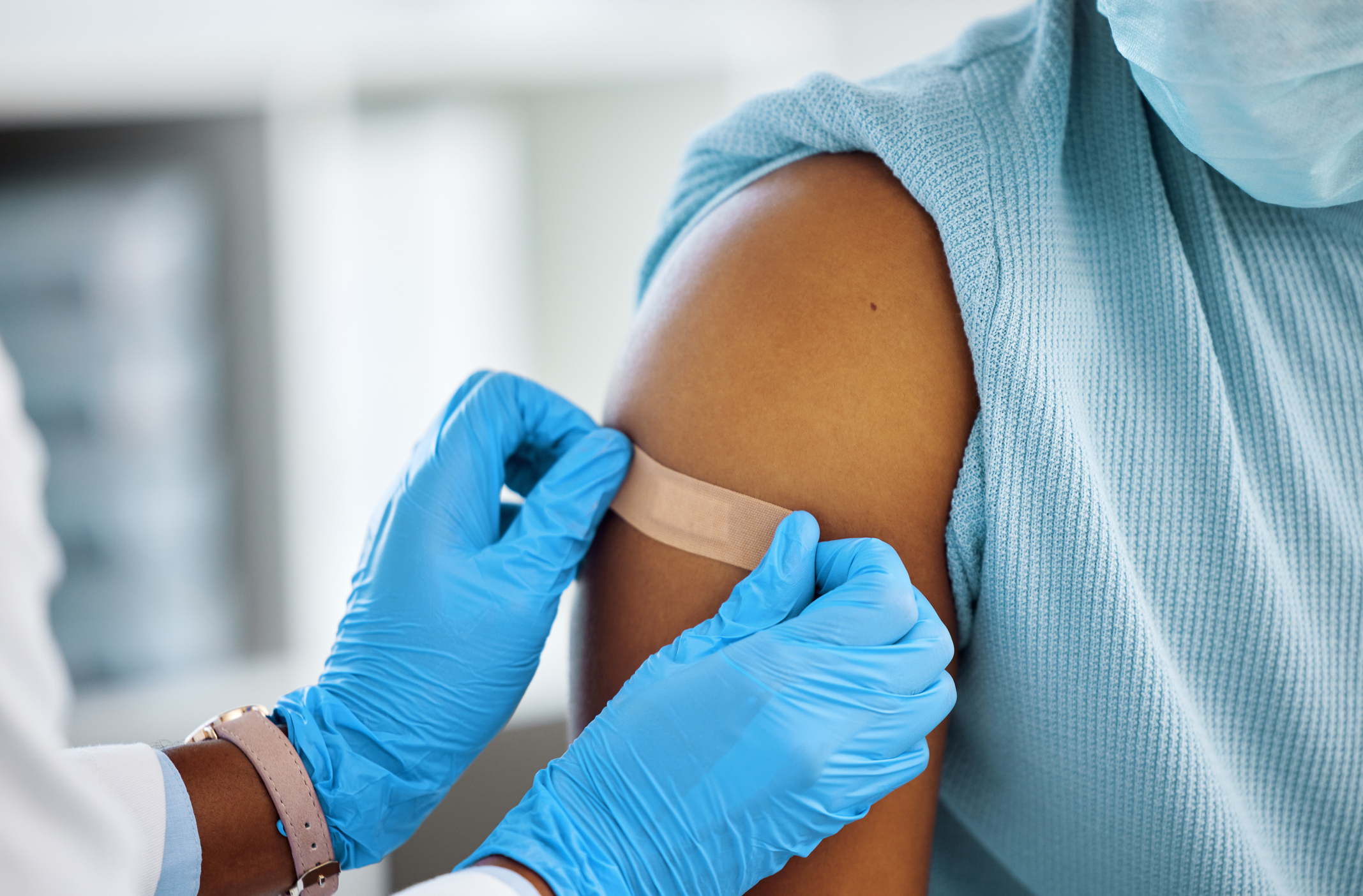

Do some vaccines hurt more than others? I just got my Covid-19 booster, and like with my previous Covid shots, it really stung, and my arm was sore for the next few days.
It’s not your imagination: Some shots do hurt more than others—and can cause more arm soreness afterward than others.
Among the factors that determine how much a shot will hurt going in are what liquid the vaccine is suspended in (the diluent) and its temperature, as well as whether the needle hits a sensory nerve. For instance, if the liquid in the vaccine is cold, it tends to hurt more than liquid that is at room temperature.
It’s hard to tease out a single factor that’s responsible for the post-vaccine sore arm. Several things may be involved. To begin with, soon after any vaccine is administered into the tissues of your arm, an army of immune cells, including B cells and macrophages, recognizes the substance as “foreign” and releases potent chemicals, such as prostaglandins, cytokines, and chemokines. These chemicals can stimulate nerves, causing pain, and produce redness and swelling at the injection site. There may also be systemic (body-wide) reactions, making you feel tired and achy; you may even develop a fever.
These physical manifestations of a vaccine are referred to as reactogenicity. Some vaccines are more reactogenic than others, depending on several factors, including the form of the foreign substance (the antigen) in the vaccine and the diluent.
Another factor is adjuvants, such as aluminum, which are added to many vaccines to produce a more robust immune response—and those vaccines tend to be linked to more arm pain and other reactions. Vaccines that contain adjuvants include hepatitis A and hepatitis B, HPV (Gardasil 9), Japanese encephalitis, shingles (Shingrix), FLUAD (flu vaccine), and various ones for tetanus, diphtheria, and pertussis (Tdap).
Some individual factors, including genetics, may also come into play in terms of who gets arm soreness (and how much) and who doesn’t. For instance, some (but not all) studies have found that people who have a higher body mass index (BMI) have less of a reaction, while younger people have more pain than some older people. Women may be more likely to have arm pain than men for a few reasons, including differences in hormones, skin thickness, blood flow in the tissues, and pain receptors, as well as in the perception of pain.
Does having more of a reaction to a vaccine mean your immune system had a greater response to the vaccine and thus you will be better protected? There is no strong evidence for that. On the flip side, if you don’t have arm pain or other signs of an inflammatory response after the vaccine, that doesn’t mean the vaccine is not doing its job.
By the way, you’re hardly alone in having arm pain after your Covid vaccine. The majority (64 to 78 percent) of people who received the Pfizer or Moderna vaccines experienced some reaction, according to a study in The Lancet in March, which looked at reactions to the first two doses (not the boosters). But the effects were mild overall. That doesn’t mean the J&J, AstraZeneca, or other Covid vaccines won’t also cause arm soreness or other reactions—they very well may, but the study didn’t include those vaccines.
To deal with the arm pain (and any body aches or other systemic effects you may experience), you can take acetaminophen after you get the vaccine. Do not take it before as a prophylactic, as that could compromise the immune response. Applying a cool compress or an ice pack to your arm may also help. You could also try a warm compress to relax the muscle.
Some experts also recommend the following to reduce arm-related pain both during and after the shot:
- Try applying a cooling spray or other topical analgesic to the injection site area before the vaccine. How much that will help is debatable, but it can’t hurt.
- Before the injection, take a deep breath and try to relax, so you don’t tense your muscles, which could make the shot hurt more while it’s being given. If needed, distract yourself by talking with someone or by using your cellphone during the injection.
- Though you may not feel inclined to do so, move and stretch your arm in the first few hours after the injection, such as in a circular motion. This might reduce soreness by helping to keep the muscles more relaxed and increasing blood flow to the injection site. Some exercises can be found here.
BOTTOM LINE: Arm pain from a vaccine can be annoying but typically lasts just a day or two at most and is usually mild. This side effect—along with any systemic reaction you may experience—is a small price to pay for the protection vaccines provide against serious and sometimes deadly diseases, and it should not deter you from getting one.