How often should I get dental X-rays? I want to minimize my radiation exposure.
It depends largely on your dental health and history, but generally speaking, most people don’t need them every year.
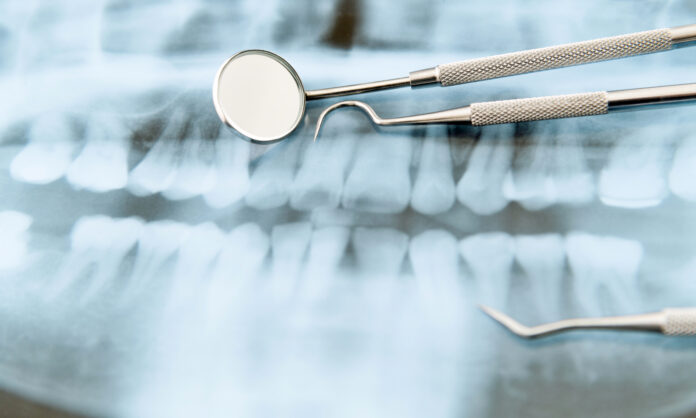
Here are the joint recommendations for adults from the American Dental Association and U.S. Food and Drug Administration (FDA), which are designed to limit radiation: New patients should get posterior “bitewings” (of molars and premolars) with either a panoramic exam (which images the whole mouth) or with selected periapical images (which show the whole tooth from crown to root).
After that, if you’re at low risk for cavities, you can get bitewings every 24 to 36 months. If you’re at increased risk for cavities (for instance, because you have many fillings or crowns, dry mouth, or poor dental hygiene), bitewings are recommended every six to 18 months. If you have periodontal disease, implants, root canals, or other dental problems, your dentist will determine when various X-rays are needed.
For children and adolescents, there is a different schedule of X-rays after a more-extensive initial series, depending on their stage of tooth development.
Though the radiation exposure from today’s dental X-rays is very small, you can wear a lead apron over your neck and chest during the procedure. A lead thyroid collar can also be worn to protect the thyroid gland from radiation, if it doesn’t interfere with the primary X-ray beam. Also, ask whether your dentist is using the fastest film (E or, even better, F—the faster the film, the less exposure time required) or digital technology, both of which greatly reduce radiation; the FDA has encouraged dentists to use these.
Of course, even with these precautions, no amount of radiation is 100 percent safe, and thus some dentists and patients may decide that routine X-rays should be done less frequently than the official recommendations.