
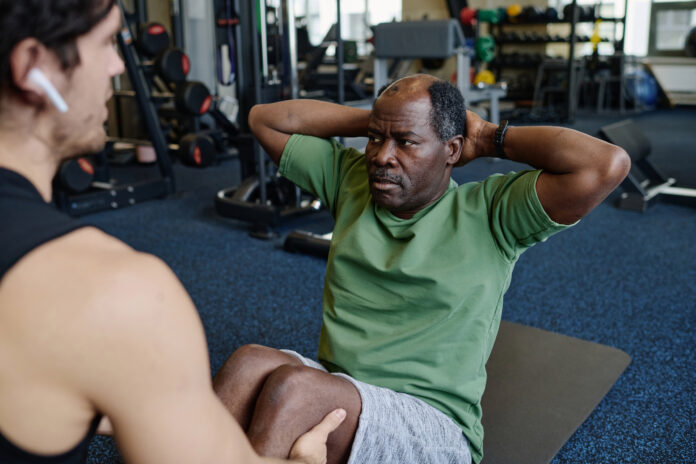
I want to start a workout routine this year—to get more aerobically fit and preserve my strength as I get older—and would like some professional guidance. What is the difference between a personal trainer and an athletic trainer, and which would you recommend for my needs?
Though the term “trainer” is often universally applied, personal trainers and athletic trainers are, in fact, quite different, according to Cindy Chang, MD, professor emerita of sports medicine at UC San Francisco and a member of our editorial board. In your case, especially in the absence of limiting medical issues, you may want to start with a personal trainer, she recommends.
Personal trainers work with all different sorts of people—at gyms, wellness centers, or clients’ homes—to help them attain their fitness goals. No matter your level of fitness, they can set up a specific program for you, whether you want to start out with free weights at home, for instance, or with equipment at a gym, and they can monitor your progress. Depending on your goals, a personal trainer can help you improve your aerobic fitness, build strength, become more flexible, or lose weight.
Athletic trainers, on the other hand, typically work with sports teams (high school, collegiate, and professional) or with individual athletes to enhance performance. And, if an athlete becomes injured, they would evaluate, treat, and provide rehab for the injury and guidance for preventing reinjury. Athletic trainers are also employed in sports medicine clinics (where they work alongside sports medicine physicians and other allied health professionals), physical therapy clinics, hospitals, military facilities, and other settings. Among the health conditions they may manage are joint sprains, muscle tears, and heat illness.
Another difference between the two professions is that athletic trainers have to be certified by the Board of Certification (BOC) for the Athletic Trainer. And to be certified, they need to have graduated from an accredited athletic training program and pass the BOC certification exam. In most states, they must also be licensed. In contrast, there is no national or statewide requirement for specific credentialing or licensing of personal trainers. Instead, various organizations offer personal trainer certification programs.
So, if you pursue working with a personal trainer, ask if they have certification from a program that’s accredited by the National Commission for Certifying Agencies, such as the American Council on Exercise, American College of Sports Medicine, National Academy of Sports Medicine, or National Strength and Conditioning Association. You can verify a personal trainer’s credentialing at the searchable database of the Coalition for the Registration of Exercise Professionals. You can also ask your physician or physical therapist for a reference—or even a friend or relative who is happy with their personal trainer.
When considering a particular personal trainer, ask about their specialty to see if they are the best fit for you. For example, do they work with seniors, pregnant women, marathoners—or, in your case, someone who is just beginning an exercise program? Ask how long they have been practicing—you may not want someone who is just starting out. You can also ask for references from their current or past clients.
When you meet with the personal trainer, they should ask you about your fitness goals, as well as any medical conditions you have (such as asthma or arthritis). If you have had an injury or have a biomechanical issue or past health condition that affects your ability to exercise or exercise safely (such as scoliosis, osteoporosis, or past heart attack), make sure to tell them so they can adjust exercises as needed. Your personal trainer should determine your current level of fitness, give you advice on how to use equipment safely, and keep track of your progress over time.
A word of caution: Your personal trainer should be in the business of helping you meet your fitness goals through exercise. Avoid those selling—or even just promoting—nutritional supplements, especially if they have a financial interest.
How much does it cost? Prices for personal trainers vary widely and can run $30 to $100 or more per session, depending on such variables as the geographic area (rural versus urban), whether they work in a big health club or a small independent studio, and whether they provide individual or small group sessions. Expect to pay more for home visits. If you work out in a gym, discounts may be available for senior citizens.