Medical science has profoundly changed our lives. I am sure that I would not have survived to this old age (95) without antibiotics and advances in epidemiology and surgery.
I was a child in the 1930s. We lived in Southern California in a flat across the street from my grammar school playground and I had friends in the neighborhood. It was a time when parents simply said “Go out and play,” and we did. Our games were hopscotch, kick the can, jacks, tag, jump rope, handball, and hide and seek. We cruised on roller skates and bikes, and built club houses out of boxes in vacant lots. We were supposed to come home at twilight, before dark. The milkman, bakery truck, and iceman delivered to our doors. We felt safe in our neighborhoods.
But my parents were fearful of epidemics. At school in first through eighth grades, I had classmates who suffered from scarlet fever, mumps, measles, German measles, chickenpox, and whooping cough. I had rubella and had to stay in bed for several days in a darkened room; they thought light was bad for sick children’s eyes. Several of these diseases required the family to put a quarantine sign on their door; their children missed a lot of school.
As an adult, I knew survivors—men who could not father children because they had mumps as a child, a woman with a flail arm from polio, people with chickenpox scars, those deafened because of measles, a man who spent three years in a tuberculosis sanitarium, and a woman whose child was mentally disabled because she had German measles during her pregnancy. I have friends who had polio then who now have post-polio syndrome—that is, muscle weakness, fatigue, and pain, for which there is no known cure. They experienced their illnesses before vaccines and antibiotics.
Understanding disease
In the 1930s, germ theory was less than 100 years old. Although people from biblical times knew that diseases were contagious, no one knew exactly how they were spread. In 1854, there was the famous moment when John Snow stopped an epidemic of waterborne cholera in London by removing certain water pump handles. In the 1860s, Louis Pasteur and Robert Koch found that diseases were caused by germs—this led to both a new world of medical exploration and to new fears as to how epidemics originated. We were supposed to wash our hands after we handled money because it was contaminated with germs when touched by other people.
The discovery of germs led to the birth of the public health movement and laws and practices designed to control the spread of disease. At that time, the main way epidemics were prevented was by quarantine, the isolation of the ill. When I was a child, patients and entire families could be quarantined. Quarantine was first used in Italy in the 14th century for ships’ crews coming from places with plague epidemics; later, in the 19th century, it was used to limit the spread of plague, cholera, yellow fever, and smallpox. As we all remember—too well—we had quarantines in recent years at the beginning of the spread of the Covid-19 virus.
The first vaccine
People long knew that exposure to certain diseases made them immune; one could get certain illnesses only once. This was known about smallpox, which killed about 30 percent of those who caught it and often left facial scars on survivors.
In Asia, India, and Turkey, it was known that inoculation with smallpox scabs could lead to a mild disease that made one immune. Lady Mary Wortley Montagu, the wife of England’s ambassador to Turkey, was the first to bring the practice into Europe. In 1715, she was disfigured as a result of smallpox. After learning about inoculation in Turkey, she was determined to protect her six-year-old son from the disease through inoculation. “The smallpox, so fatal, and so general amongst us, is [in Turkey] entirely harmless by the invention of [inoculation],” Montagu wrote to a friend. “There is a set of old women who make it their business to perform the operation every autumn…The old woman comes with a nut-shell full of the matter of the best sort of smallpox, and asks what veins you please to have opened.”
In the 1790s, Edward Jenner, a country physician in England, noticed that the faces of milkmaids, the young women who milked cows, were rarely scarred with smallpox. He found that their exposure to cowpox, an infection of cows, protected them. This led to the development of cowpox vaccination as smallpox prevention—the word vaccine is derived from the Latin, Variolae vaccinae (smallpox of the cow).
Immunization to smallpox was important in the Revolutionary War. George Washington in 1777 ordered mandatory inoculation for troops who hadn’t had smallpox before. However, inoculation with this live virus was dangerous: It killed about 2 to 3 percent of those injected with even small amounts. Today, vaccines are developed from dead or weakened bacteria or viruses.
My childhood vaccination for smallpox left a scar on my upper arm, a rarity now. In the “History of Medicine in California” mural, formerly at UC San Francisco’s School of Medicine and now available as a virtual tour, artist Bernard Zakheim shows James Ohio Pattie in 1829 vaccinating the California Alcalde (governor) with cowpox during a smallpox epidemic; vaccination was a novelty at that time and place. Massachusetts was the first state in the U.S. to require smallpox vaccination in 1902.
Now that smallpox has been eradicated, smallpox vaccinations are no longer required. The last U.S. smallpox case occurred in 1949 and, after extensive vaccination campaigns, the last naturally occurring case of smallpox in the world occurred in 1977.
The success of smallpox vaccination and the identification of specific germs led to a search for vaccines for other diseases. In my lifetime, these vaccines now protect my children and grandchildren from devastating diseases: diphtheria (developed in 1923), tetanus (1924), pertussis/whooping cough (1940), poliomyelitis/polio (1961), measles (1963), mumps (1967), rubella/German measles (1969), hepatitis B (1994), and varicella/chickenpox (1995). We now also have a vaccine that protects children and young adults from human papillomavirus (HPV), which can cause cervical and other types of cancer as well as genital warts.
Vaccines for common childhood diseases
Polio. For my parents, polio was a major fear. In summer, public swimming pools were closed because of polio, which thrived in summer months. The consequences of polio were serious: Children lost the ability to walk, to breathe, to use a limb. Hospitals had wards full of patients living out their lives in iron lungs.
Our president, Franklin Roosevelt, was a victim of polio. He found relief from his symptoms with trips to Warm Springs, Georgia. Later, in the 1940s, polio patients were treated with exercise in warm pools, a method pioneered by the Australian nurse Sister Elizabeth Kenney. Many cities built warm pools where children and adults with polio could participate in therapeutic exercise.
In 1938, the March of Dimes was founded to combat polio and support efforts to develop a vaccine. In 1955, Jonas Salk developed the first polio vaccine, and it came into use that year. The oral polio vaccine was developed by Albert Sabin and came into commercial use in 1961.
In 1963, I gave my children Sabin’s oral vaccine on a sugar cube and was grateful I no longer had to fear this dreadful disease. In 1965, there were only 61 cases in the U.S. By 1994, the Americas were declared polio-free. In 2002, Europe was certified polio-free. Today, polio is rare worldwide, though not eradicated.
Diphtheria. In my childhood, I was not aware of anyone having diphtheria. However, my mother was from Eastern Europe, born in 1893 and the youngest of 11 children. She knew only eight of her siblings as her parents lost three sons to diphtheria in one week, years before she was born. At that time, 40 percent of children who caught diphtheria died.
Thanks to the discovery of germs as a cause of disease, diphtheria bacteria were observed by Theodor Klebs in 1883 and cultivated by Friedrich Löffler in 1884. The first successful vaccine for diphtheria was in 1923.
Vaccination for diphtheria became wildly popular in the U.S. after an outbreak in Alaska resulted in the famous Great Race of Mercy from the town of Nenana to Nome by dog sled. Balto, the lead sled dog on the final stretch into Nome, has a statue in New York City’s Central Park. The relay took five and a half days and was successful in delivering the diphtheria vaccine that saved Nome and its surrounding communities from the epidemic.
News about the Great Race of Mercy generated a vaccination campaign in the U.S. In the 1920s, there were 200,000 cases of diphtheria a year here and 15,000 deaths; there have been no deaths since 2003. We children did not experience diphtheria because we were vaccinated. However, today there are reports of diphtheria epidemics in regions of sub-Saharan Africa with low vaccination coverage and fragile healthcare systems.
Measles. Measles was another real danger for us children. In 1912, U.S. healthcare providers and laboratories were required to notify the health departments of measles cases. In the first 10 years of reporting, there were about 6,000 measles-related deaths each year, and 48,000 infected people were hospitalized. The most common complications include pneumonia (also the most common cause of measles hospitalization), diarrhea, and otitis media (ear infections).
Before 1963, when a vaccine became available, nearly all children got measles by the time they were 15 years of age. I never caught measles and was glad to vaccinate my children. We feared measles, whooping cough, rubella, mumps, and scarlet fever—they might be fatal or make us very ill and keep us out of school for weeks. Some parents arranged to expose their children to measles and chickenpox because these illnesses were much milder in children than in adults, and this offered them long-lasting immunity.
Unfortunately, amid rising anti-vaccine sentiment, measles has been returning, with the most recent outbreak in South Carolina affecting nearly 1,000 people, most between the ages of 5 and 17.
Protecting the progress we’ve made
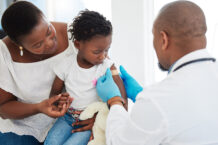
We no longer fear epidemics and deaths from these childhood dangers because vaccination prevents them, and so many people are vaccinated. Epidemiologists call this herd immunity—protection from infectious diseases that happens when most of a population is immune and thereby protects those who are not immune.
I for one am grateful that these deadly illnesses are no longer commonplace—although I worry about a return to darker days if efforts by the current administration continue to cast doubt on vaccine safety, weaken public confidence in routine childhood immunizations, and politicize what has long been a cornerstone of public health. If vaccination rates decline, herd immunity will erode, leading first to small outbreaks in under-vaccinated communities and potentially to the return of diseases we once considered eliminated (it’s likely the U.S. will lose its measles elimination status this year). Hospitals could again see children suffering from these preventable diseases and their complications.
Yet this future is not inevitable. With strong, responsible leadership from our government and active engagement from our communities, we can preserve the progress we’ve made and ensure these diseases remain in the past.