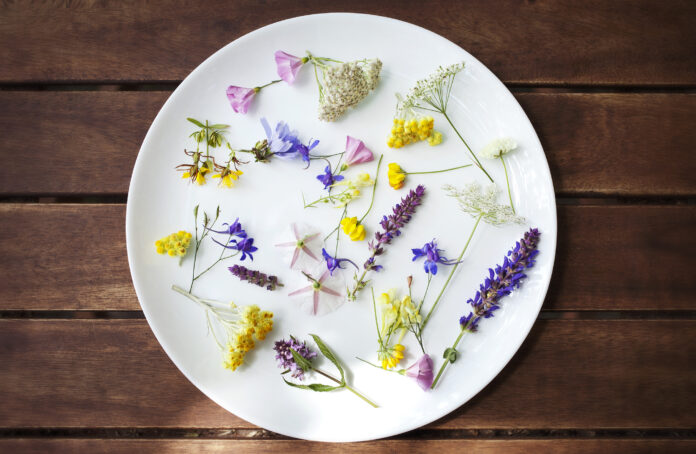
I’ve seen flowers in salads at fancy restaurants and sold at some upscale markets. Are they really edible, and how nutritious are they?
Yes, many flowers—from pansies and nasturtiums to lavender, roses, and squash blossoms—are indeed edible, but given the small amounts they are consumed in, you should consider them more decorative than nutritious (more on that below). Besides salads, they can dress up main course dishes like fish, desserts like cake and ice cream, and much more.
Interest in edible flowers is hardly new. The petals or whole flowers have been used for thousands of years in different parts of the world. In ancient Rome and Greece, they were used to flavor honey and wine. In medieval France, they were added to salads, soups, and stews. In the Victorian era, fresh and candied edible flowers adorned cakes, pastries, petit fours, and tea sandwiches.
Besides upscale supermarkets and restaurants, you can find edible flowers these days at some farmers’ markets, specialty markets, and online. Prices vary. One website sells 50 begonias or pansies for $13.50 and 25 squash blossoms for $15.65. Another company sells an 8-gram mix of edible flower petals for $19.50.
Edible flowers are not just pretty. They have other properties—including their texture and taste—that stimulate your senses. Marigold and nasturtium are a bit peppery, while chrysanthemum and banana flowers are slightly sweet, hibiscus is tangy, and orange blossoms can be bitter. Lavender is sweet and floral, violas have notes of vanilla, and elderflower is described as sweet with hints of honey and citrus.
But just because a flower is pretty and flavorful doesn’t mean it’s safe to eat. You must be 100 percent certain that it is edible. Commercially grown ornamental flowers—as sold at florists, garden centers, nurseries, bodegas, and supermarkets—are often sprayed heavily with pesticides and other chemicals and treated with preservatives, and should not be ingested. It probably goes without saying that you shouldn’t pick flowers from the side of the road to eat—they can be contaminated with all kinds of things including animal waste, heavy metals, de-icing salts, and plain old garbage. And some flowers are naturally toxic or downright poisonous. Unless you have critical knowledge of which flowers are safe to eat, leave foraging for them to the experts.
When buying, make sure the flowers are labeled edible or for culinary use and come from a reputable source. No single agency certifies edible flowers as safe to eat, but you can look for the USDA Organic seal, which means they have been grown according to strict organic standards and not with any prohibited chemicals.
Another caution: Some people have allergies (like hay fever) or asthma that could be triggered by certain edible flowers, so never surprise anyone with flowers in a dish. It’s recommended that you remove the pollen-containing parts of the flower (the stamen where the pollen is made, and the pistil that receives the pollen) not only to reduce the risk of reactions but also because these parts tend to be bitter.
As for the nutritional value of flowers, the U.S. Department of Agriculture provides limited information in its nutrient database. A half cup of pumpkin flowers has about 28 milligrams (mg) of potassium, 4 mg of magnesium, 6 mg of calcium, and 5 mg of vitamin C. A half cup of squash blossoms has about 55 mg of potassium, 13 mg of magnesium, 16 mg of calcium, and 3 mg of vitamin C. Considering that the recommended Daily Value for potassium is 4,700 mg, that of magnesium is 420 mg, that of calcium is 1,300 mg, and that of vitamin C is 90 mg, those amounts essentially boil down to nothing. Somewhat of an exception is vitamin A, whereby certain edible flowers provide about 10 percent of the daily recommendation per half cup—if you eat even that much of them.
What about phytochemicals—those plant compounds that may have antioxidant and other potentially beneficial properties? Some research has found marigolds, for instance, to be a good source of carotenoids and polyphenols. (Carotenoids include beta carotene, which is the precursor to vitamin A.) Other research cites the presence of anthocyanins, betalains, and lycopene in edible flowers. Bear in mind, however, that because edible flowers are consumed in such modest amounts—often as garnishes—they provide pretty negligible levels of these compounds overall. As with the nutrients cited above, you’ll get far more from typical serving sizes of vegetables and fruits.
Nutrition aside, there are plenty of ways to incorporate flowers into dishes. Some ideas are to use sage blossoms as a topping on fish, or hibiscus to make a refreshing iced tea. You can sprinkle petals or whole flowers, like pansies, violas, and calendula, into salads and soups, add chopped rose petals to softened butter, or spruce up a cocktail by floating some petals on top. The books Floral Provisions and Eat Your Flowers: A Cookbook have dozens of recipes that use edible flowers, including in layer cakes, scones, granola, and French toast. You can, of course, also find plentiful recipes online.
If you have a green thumb and the desire, you can grow your own flowers, including chamomile, lavender, rose geranium, and nasturtium, as well as the blossoms from cooking herbs such as chives and sage. If you don’t have outdoor space, some can be grown indoors. Make sure that the soil where you plant the seeds is free of pesticides and other chemicals. If you’re planting the seedlings, these must be free of chemicals as well.
Whether you pick edible flowers from your garden or buy them, look for any insects that may be inside the blossoms and clean them by gently swooshing them in a bowl or pot of cool water (avoid rinsing under running water as that may damage the delicate petals). Then let them air dry.
For more on edible flowers, this publication from NC State Extension is a useful reference.