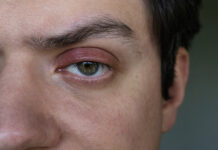

I’ve tried over-the-counter artificial tears for the stinging and burning of my dry eyes, but they don’t help enough. What do you think about the oral supplement Blink NutriTears that’s advertised on TV? Does it work?
While the research on dry eye supplements like Blink NutriTears is still preliminary, certain ingredients in them have shown potential for relieving symptoms. Dry eye disease (DED) is a chronic inflammatory condition that develops when the eyes don’t produce adequate tears or when the tears evaporate more rapidly than normal.
Over-the-counter artificial tears and ointments are a common first line of treatment for the symptoms of stinging, burning, redness, and possible blurred vision and light sensitivity, but they provide only temporary relief. Prescription eye drops like cyclosporine (Restasis, Vevye), perfluorohexyloctane (MIEBO), and lifitegrast (Xiidra) have longer-lasting benefits, and new classes of drugs are being developed, including acoltremon (Tryptyr), which was recently approved by the FDA.
Bausch + Lomb, the manufacturer of Blink NutriTears, asserts that its supplement targets the key root causes of dry eyes. Sold in drugstores and online, it contains a combination of four main nutrients: lutein, zeaxanthin, curcumin, and vitamin D3 (a form called cholecalciferol). Each ingredient is meant to address dry eye in a different way.
Lutein and zeaxanthin are carotenoids—pigments that are concentrated in the macula of the eye (the spot in the center of the retina that is responsible for sharp central vision). They are also ingredients in dietary supplements used to prevent age-related macular degeneration (AMD). Both these carotenoids have potent antioxidant and anti-inflammatory effects. They protect the eye against cytokines—proteins that are involved in the body’s inflammatory response—and they may help stabilize the tear film that lubricates the eye. Inflammation and an unstable tear film are involved in the development of DED.
Curcumin is a plant-based compound with anti-inflammatory effects. It’s been found to manage inflammatory conditions like metabolic syndrome and arthritis. Research suggests that in dry eye, curcumin may improve tear film stability, increase the volume of tears, and ease symptoms like irritation.
Vitamin D3 acts on inflammation and the immune system in ways that may slow DED. Low levels of this vitamin could lead to worse symptoms in people who already have DED. Some studies show that taking vitamin D3 supplements improves tear production and tear film stability, which may help alleviate DED symptoms, reduce the severity of dry eye, and increase the effectiveness of artificial tears in people who both are and aren’t deficient in this vitamin.
Other ingredients in NutriTears include marigold flower extract, linseed oil, and medium chain triglycerides, which also have anti-inflammatory properties and may help improve tear quality.
But how well do these nutrients work together? That’s a key question. Though the manufacturer claims the supplement is “clinically proven,” there is only one placebo-controlled study that has been published on it. It included 155 people with dry eye disease who were randomly assigned to take either a supplement containing the ingredients in Blink NutriTears (20 mg of lutein, 4 mg of zeaxanthin, 200 mg of curcumin, and 600 IU of vitamin D3) or a placebo (inactive) supplement once a day for eight weeks. The group that took the “active” nutrient supplement started to see improvements at two weeks. By week eight, they had better tear film production and quality, as well as a reduction in dry eye symptoms. Side effects were minimal and minor (such as a nosebleed).
Though these results sound promising, the study, which was published in Frontiers in Ophthalmology in 2024, noted significant conflicts of interest: Bausch + Lomb provided financial support, and some of the authors were employees of the company. Larger, longer—and independent—trials are needed.
Prescription dry eye treatments have more evidence to back their effectiveness than do supplements. These medicines work more directly by reducing inflammation in the eye, which enables the eye to produce more tears. But you could try NutriTears as an add-on to them (not as a substitute), or as an add-on to OTC artificial tears for milder disease. The supplement may also help manage dry eye symptoms for a few weeks when you start taking a prescription medicine, to give it time to start working.
Blink NutriTears and other dry eye supplements are generally safe, but check with your doctor before taking one if you are on a blood thinner like warfarin (Coumadin) or if you have gallbladder disease, kidney disease, or certain cardiovascular conditions. Take only the recommended dose. At higher doses, curcumin can increase the risk of bleeding and aggravate gallbladder symptoms. And if you’re already on high-dose vitamin D, talk with your doctor to make sure you don’t inadvertently take too much. The supplement costs $29.99 for 50 soft gels.
Final note: It’s important to treat dry eye disease because this common condition isn’t just uncomfortable—it could compromise your vision if you don’t manage it. See your ophthalmologist for treatment recommendations.