You probably know about the need to lower “bad” LDL (low-density lipoprotein) cholesterol to reduce the risk of cardiovascular disease, which includes heart attacks and stroke. But there’s another important lipoprotein, called lipoprotein(a), or Lp(a), that you may not be familiar with. It too is a significant indicator of risk, though relatively few people are aware of it.
Here’s the lowdown on this less talked about cardiovascular risk factor.
The ABCs of Lp(a)
Lipoproteins are particles made up of protein and fat that carry cholesterol in the bloodstream. LDL makes up the bulk of blood cholesterol, and it contains a protein called apolipoprotein B (ApoB). Lp(a)—pronounced “L-P-little-A”—looks very similar to an LDL particle, except that it’s also attached to another protein called apolipoprotein(a), or Apo(a).
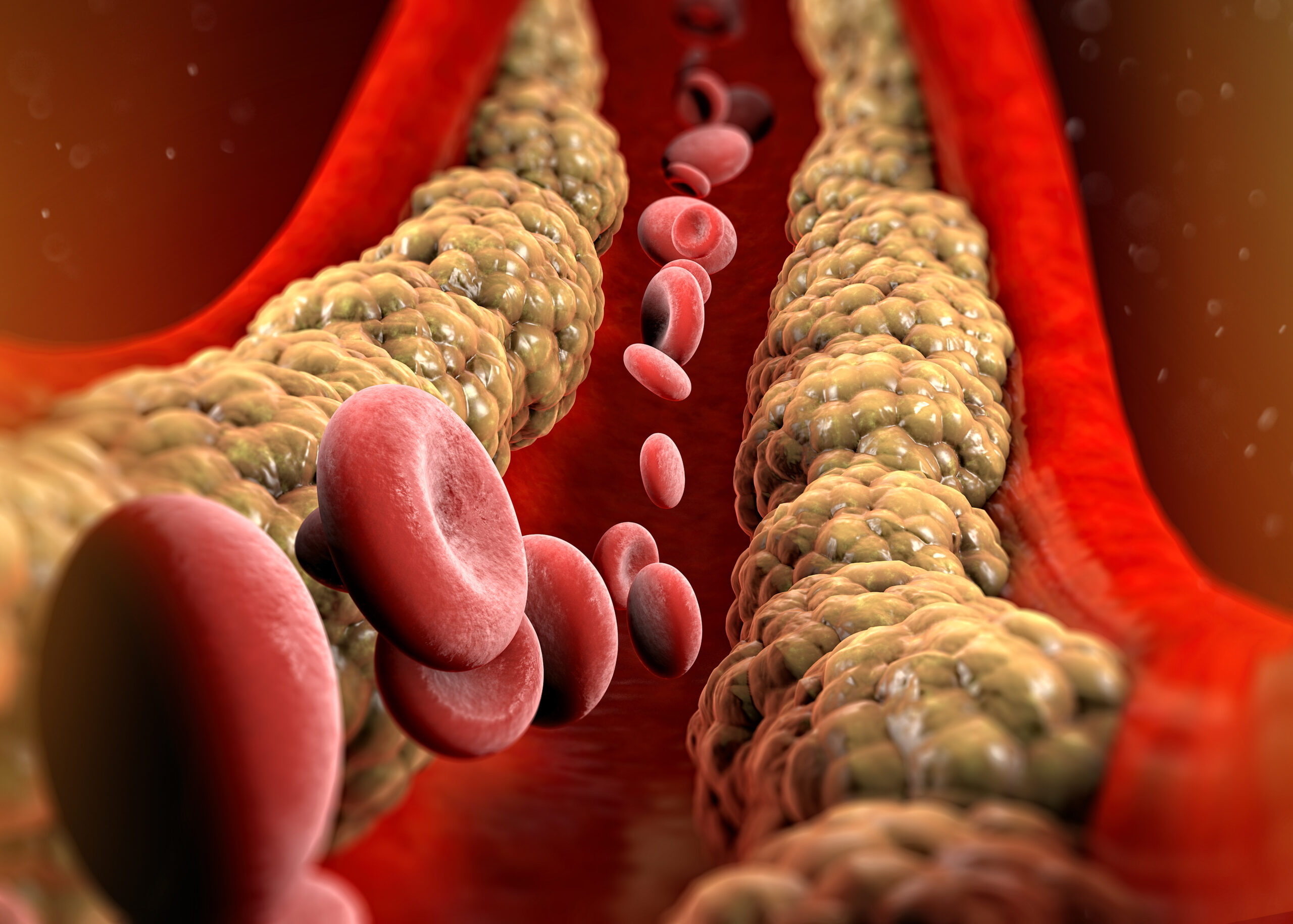
Like LDL cholesterol, Lp(a) can collect in artery walls and form deposits called plaques that narrow these blood vessels, promote the formation of blood clots, and increase the chance of having a heart attack or stroke as well as blockage of arteries in the legs.
Studies have established that having high Lp(a), currently defined as a level of more than 75 nmol/L, increases the risk of cardiovascular disease by as much as fourfold. Though it may not get the attention of high LDL cholesterol, high Lp(a) is a common phenomenon. Up to 30 percent of Americans—more than 100 million people—have elevated Lp(a) levels.
Lp(a), often left out of the cholesterol conversation
Researchers have known about Lp(a) and have been aware of its propensity to promote heart disease for more than 50 years. So why don’t we hear more about it from our doctors and in the media? There are several reasons why Lp(a) flies under the radar, according to Ronald Krauss, MD, professor of pediatrics and medicine at the University of California, San Francisco, and a member of our editorial board.
One reason is that if you have high Lp(a), there’s very little you can do about it. Unlike LDL cholesterol, which can be lowered with lifestyle interventions, as well as medications if needed, no amount of diet or exercise will budge Lp(a). In fact, up to 90 percent of high Lp(a) is attributable to genetics—specifically to a gene called APOA that holds the instructions for making the Apo(a) protein.
“Genetic factors result in a resistance to having Lp(a) lowered by most of the available cholesterol treatments. So that has limited the incentive for drug companies to enter the fray and develop treatments that might succeed in lowering Lp(a),” Dr. Krauss says.
That reluctance has further been fueled by a catch-22. Research hasn’t been able to confirm that lowering Lp(a) will reduce the risks of heart attack and stroke. “It’s very difficult to show a beneficial effect to lowering Lp(a) without having a drug that can actually achieve it,” Dr. Krauss adds.
To test or not to test?
Given that there isn’t much you can do to lower Lp(a), is it even worth finding out whether your level is high? For some people, the answer is a resounding yes.
Organizations like the American Heart Association recommend getting tested for Lp(a) at least once if you have been diagnosed with cardiovascular disease or you have family members who developed cardiovascular disease at an early age (in their 50s or 60s). And you certainly should be tested if you have a close family member who is known to have high Lp(a), Dr. Krauss advises.
Lp(a) is measured with a simple blood test. In the past, analyzing the results was a complicated process due to a lack of test standardization. “That barrier has been overcome,” Dr. Krauss says. Of note, if you are a candidate for Lp(a) testing, this is something you would do just once in your lifetime—at least until there is a way to reliably lower it, since, without treatment, the number is not likely to change significantly. You either have an elevated level or you don’t.
If you are tested and find out that you do have high Lp(a), your doctor might suggest that your close family members (parents, siblings, children) be tested to see if they are also affected. “It’s such a strong genetic factor that half of those relatives will likely be affected, and many of them may not be aware,” Dr. Krauss says.
While discussing Lp(a) with your doctor, it might be worth asking whether you should also be tested for ApoB, the main protein in LDL cholesterol. The result could provide additional information about your heart disease risk.
Making a dent in your Lp(a)
Currently, no medication is specifically approved to lower Lp(a), but a few potential candidates have shown promise in studies.
- PCSK9 inhibitors. PCSK9 is a protein made in the liver that controls the number of LDL receptors in the body. People who have high PCSK9 levels are also more likely to have high LDL cholesterol.
Two PCSK9 inhibitors—alirocumab (Praluent) and evolucumab (Repatha)—are currently available to treat high cholesterol. Studies show that these medications not only reduce LDL cholesterol, but also lower Lp(a) by as much as 30 to 35 percent. “There is evidence that when they lower Lp(a), it can contribute to reduced heart risk,” Dr. Krauss says.
The challenge right now is that PCSK9 inhibitors are only approved for lowering LDL cholesterol, and they are quite expensive. Although these drugs can be used off-label for lowering Lp(a), patients will likely be left footing the bill for them if their LDL is not also elevated.
- Gene therapies. A few gene-based treatments are also under investigation. Their aim is to lower Lp(a) levels by changing the function of the APOA gene. According to Dr. Krauss, these treatments look very promising for achieving substantial Lp(a) lowering. In one early study, an Apo(a)-lowering therapy reduced Lp(a) by nearly 80 percent.
- Low-dose aspirin. Aspirin is already a mainstay in cardiovascular disease prevention because of its ability to stop blood clots from forming in arteries (though the latest guidelines no longer recommend aspirin for certain age groups). This same effect could make it a potential therapy for people who are at genetic risk for high Lp(a). A study in the Journal of the American College of Cardiology in 2022 found that low-dose aspirin reduced the risk of serious cardiovascular events such as heart attacks and strokes in older adults who had gene variants associated with high Lp(a) levels.
- Niacin. This compound is already a treatment for high cholesterol and high triglycerides. Studies show that niacin reduces triglyceride levels, boosts “good” HDL (high-density lipoprotein) cholesterol, and modestly lowers Lp(a). But for Lp(a), Dr. Krauss says that niacin has “fallen off the radar screen, unfortunately, because of its side effects and its failure to show benefit in clinical trials in which LDL cholesterol was kept very low with statins and other drugs.”
- Statins. These medications are widely used for their dramatic LDL-lowering effects. But when researchers used statins to try to lower Lp(a), the results were disappointing and even counterproductive. In some studies, Lp(a) levels didn’t budge. In others, statins actually increased Lp(a) levels by as much as 20 percent.
However, this “statin effect” might not be what it seems. “Some people have speculated that the increase of Lp(a) in the blood is actually a consequence of getting it out of the arteries,” according to Dr. Krauss. Less Lp(a) in the arteries could be a positive when it comes to preventing cardiovascular disease. If you have high LDL cholesterol, these well-studied medications might still be worthy additions to your medicine chest, because reducing LDL helps to offset the risks of high Lp(a). If you have elevated Lp(a), you might even be prescribed a statin if your LDL is only slightly elevated.
BOTTOM LINE: Lp(a) treatments are still considered experimental. Until research confirms that they improve cardiovascular disease risk, your best plan of attack against Lp(a) is to get tested if you’re at high risk and keep your LDL cholesterol level within a healthy range. Your doctor may advise that you achieve an LDL cholesterol level even lower than that recommended for the general population—below 70.
Although diet and exercise won’t help with Lp(a), they can help move your LDL in the right direction, which should improve your overall heart risks. If those lifestyle interventions aren’t enough to achieve a low enough LDL, a statin or other cholesterol-lowering drug may be needed. And there’s one more thing you can do: If you smoke, stop. “Smoking can amplify the risk of high Lp(a),” Dr. Krauss warns. And because smoking is a significant cause of cardiovascular disease, the sooner you stop lighting up, the better.