
If you’d like to brighten your smile, you may be wondering if you can get the same results with over-the-counter bleaching options as you would in a dentist’s office, and if there are any risks or side effects to know about. In short, both in-office procedures (by a dentist or other licensed dental professional) and at-home bleaching (using over-the-counter products) can effectively and safely whiten teeth—with some precautions and contraindications, as discussed below.
As teeth age, they darken to off-white or even yellow, primarily due to a thinning of the enamel that allows the yellow-tinged dentin underneath to become more visible. Trauma to teeth and some medications may also contribute to tooth discoloration over time, while coffee, tea, wine, and other pigmented beverages and foods can stain teeth, as does smoking.
Here’s the drill
Unlike routine dental cleaning and polishing, which can physically remove surface stains, bleaching uses hydrogen peroxide or carbamide peroxide (which releases hydrogen peroxide when exposed to water) to chemically lighten teeth.
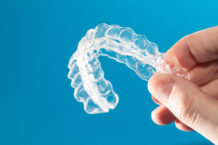
In-office professional bleaching usually involves applying a high-concentration (30 to 35 percent) hydrogen peroxide solution to the enamel surface of the teeth; a light source may be used to activate or accelerate the process, though it’s not clear whether this significantly improves the outcome. OTC options include lower-potency whitening strips, paint-on gels, and tray-based systems (with one-size-fits-all trays or mouth guards that you place over your teeth to hold the chemical). Whitening toothpastes typically contain abrasives to remove stains; some may have a low concentration of peroxide.
A sort of hybrid option is to have your dentist make you a custom tray and supply you with professional-strength bleaching product (typically a 10 to 38 percent carbamide peroxide gel) to use at home.
“The concentration of hydrogen peroxide and carbamide peroxide varies per product, and the over-the-counter products generally contain lower concentrations than the dentist-direct products,” said Robert Peri, D.D.S., a dentist and member of the Wellness Letter editorial board. How long you apply the product depends on the concentration of the bleaching agent, so when using OTC products, be sure to follow the specific instructions.
The lower concentration of bleaching agents in OTC products means they take longer to produce results. The effects of in-office bleaching are usually apparent after a single 30- to 60-minute session; tray-based tooth gels, worn two to four hours a day (or even overnight if no sensitivity occurs), lighten teeth after a few days, as do dental strips, which have a hydrogen peroxide concentration of 5 to 14 percent. Rinses, with about 1.5 percent hydrogen peroxide, require regular use for up to three months to lighten teeth.
What studies have found
A review of studies published in the Brazilian Dental Journal in 2020 concluded that whitening strips are generally more effective than toothpastes, rinses, or paint-on gels, attributable to the longer contact time and the higher hydrogen peroxide concentration of the strips. (The study did not include tray-based tooth gels.) But inconsistencies in the protocols used across studies makes it difficult to fully compare products.
Despite the lower concentrations of bleaching agents, some at-home tooth-whitening methods can be just as effective as in-office bleaching. A study in the Indian Journal of Dental Research in 2018 compared in-office bleaching (35 percent peroxide gel) with home bleaching (16 percent carbamide peroxide applied via a night guard) in 30 adults. Both approaches lightened teeth significantly, with neither being better than the other. Where the two approaches differed was in the duration of their lightening effect: After three and six months, office-based bleached teeth had a greater degree of “color rebound” (that is, return of discoloration) than home-bleached teeth. There was also more tooth sensitivity associated with office bleaching.
The dark side of whitening
This tooth sensitivity is a common side effect of teeth whitening. It’s more likely to occur with higher peroxide concentrations and, though usually mild, can last up to four to seven days. The sensitivity is thought to arise due to microscopic defects in tooth enamel that allow the whitening agent to get into and inflame the pulp of the tooth, where the nerves are located. Many people using whitening products also experience gum irritation if the tray is poorly fitted or if the chemicals are not properly applied and get onto the gums.
But the biggest downside is that the gleam will fade. “How long the bleaching effect lasts depends at least partly on your oral habits—whether you smoke or drink coffee, tea, or red wine, and how well you otherwise take care of your teeth—and all types of bleaching need touch-ups at some point,” Dr. Peri said.
It should be noted that tooth whitening is not for everyone. It’s more effective on yellow teeth than on brown teeth, and it might not work at all on teeth that have a gray tone. Bleaching won’t whiten teeth that have been discolored by medication or injury, and it won’t change the color of fillings, caps, veneers, or crowns. In fact, if you whiten your natural teeth, any restorations you have may stand out more.
BOTTOM LINE: Dr. Peri recommends that anyone considering tooth whitening consult with a dentist first to have their dental health evaluated and to rule out causes of discoloration that may require intervention (such as large cavities); possible side effects should also be discussed. People with very sensitive teeth, periodontal disease, or worn enamel should not bleach, at least not without seeing a dentist first. Any cavities should be treated before bleaching. It’s important not to overdo it, also. Tooth enamel may be weakened by excessive bleaching, so follow the manufacturer’s instructions on use, including frequency and duration. If you go the OTC route, the ADA provides a (short) list of whitening products that carry its Seal of Acceptance for safety and effectiveness.
To help keep your teeth as white as possible naturally, follow good dental hygiene practices: Brush and floss daily to remove plaque (which attracts stains) and get regular dental checkups and cleanings.