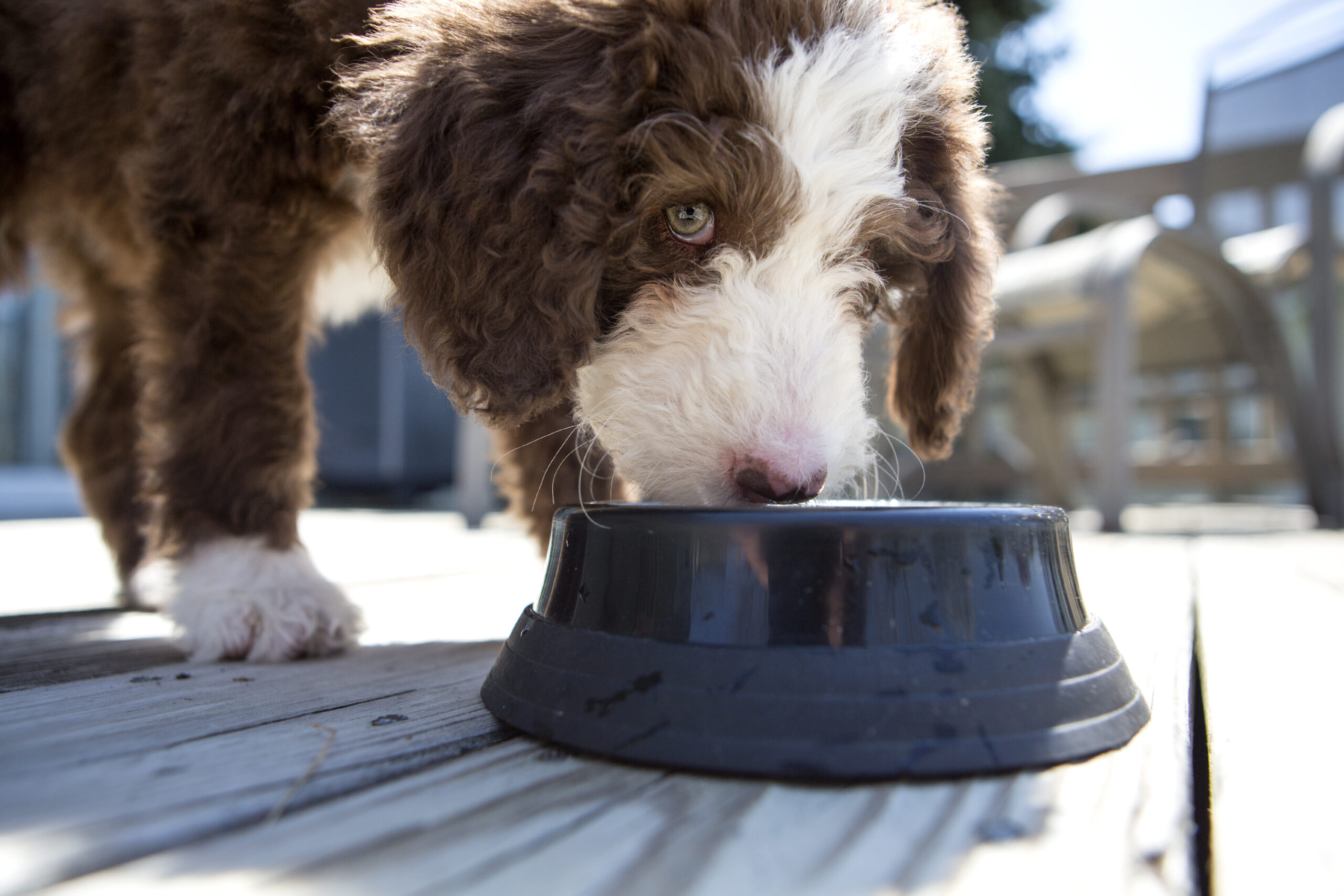
If you have a pet, be sure to wash its food and water bowls and feeding utensils well—not just for Fido’s and Fluffy’s sake but for your own health, too. Past research has provided evidence of harmful bacteria being present on pet dishes, with one study, for example, finding that six out of 84 dog food bowls were tainted with Clostridioides difficile (formerly known as Clostridium difficile). The bowls were the second most likely household surface after toilet bowls to be contaminated.
But, as a new study in PLOS ONE showed, following FDA recommendations for safe handling of pet food (see below) effectively reduces bacterial counts on pet bowls. In the study, from North Carolina State University, 68 dog food bowls were swabbed for bacteria before and after the owners were randomly assigned either to follow a set of FDA guidelines for one week or to carry on as usual, without being given any specific instructions. The bowls that were washed according to the guidelines had significantly lower bacterial counts at follow-up testing, especially when hot water was used instead of cold or lukewarm water.
The study also revealed that of 417 dog owners surveyed, fewer than 5 percent were aware of the FDA guidelines. Fewer than 25 percent washed their hands before handling pet food or washed the food dish or food scoop after each use, for instance. More disconcertingly, 18 percent of those surveyed said they washed their pet’s dish less than once every three months—or never washed it.
Although the study did not look at whether any dirty dog bowls actually made people sick, the interaction between people and animals “creates the opportunity for mutual exchange of microbial contaminants from food or water, dishes, and the food storage or preparation environment, which can cause health consequences for both humans and pets,” the researchers wrote. In fact, dogs and people have both gotten sick after being exposed to bacteria-contaminated dog food, with the risk being higher in households with children and immunocompromised people, who are more vulnerable to infections. Among the possible sources of contamination of food bowls are the pet food itself (with raw pet food far riskier than processed food) and dog feces. The FDA maintains a regularly updated list of recalled pet food products here.
According to Emily Luisana, D.V.M., the lead author of the paper and a clinical nutrition veterinarian, “The biggest take-home message of our findings is that the reality of pet food handling at home is different than what the FDA is recommending. Pet food dishes in the household can be a source of bacteria, but we can minimize the risk with some relatively simple changes and hygiene practices.” Here are some tips from the FDA:
- Wash your hands for at least 20 seconds with soap and warm water before and after handling pet food and treats.
- Don’t use the pet’s bowl to scoop the food; use a separate utensil such as a clean scoop, cup, or spoon.
- Wash food and water bowls and scooping utensils with soap and hot water after each use.
- Refrigerate (or toss) unused or leftover wet food promptly; cover the food tightly and make sure your refrigerator is at 40°F or below.
- Discard old or spoiled pet food safely—such as in a plastic bag secured with a plastic tie (to prevent pets from getting into it).
- Keep dry food in its original bag, tightly sealed.
For more tips on how to safely store pet food, see this FDA page.
The FDA also recommends against feeding raw foods to your pet because they are more likely than processed pet food to harbor Salmonella, Listeria monocytogenes, or other disease-causing bacteria, according to the agency’s own testing. If you choose to put your pet on a raw food diet, you should at least be aware of the risks and take these extra precautions.