
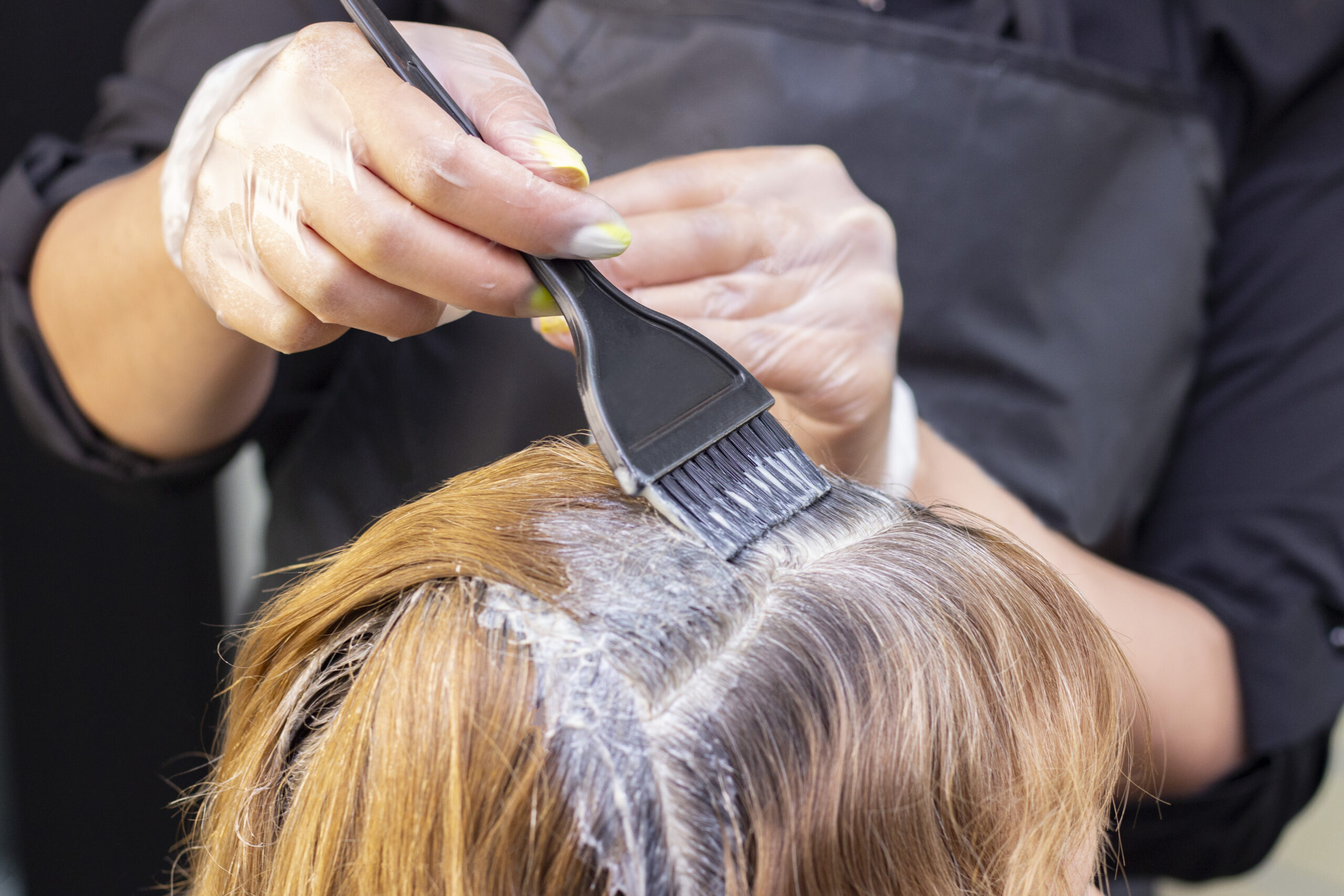
Whether used to cover grays or just achieve a new look, hair dyes have been around since ancient times. Ramses II, the pharaoh who ruled Egypt from 1279 to 1213 BCE, applied henna to turn his hair red. Ancient Greeks achieved a blonde look with potassium, pollen, and flower petals, while concoctions to change hair color in the 17th century included elderberries and wine for a black shade, radish for auburn, and lead, lime, and saffron or turmeric for blonde.
Today’s hair dyes are a lot less natural—and consumers pay a lot for them: Globally, the hair color market was valued at more than $20 billion in 2023, and that amount is expected to reach $38 billion by 2032, according to a market research and consulting firm.
From temporary to permanent
If you’re looking to change your hair color, you have a few options: Temporary hair dye stains the hair shaft but doesn’t penetrate it, so it usually lasts only through one or two washings. Semipermanent hair dye penetrates into the hair shaft and lasts through five to 10 washes.
Permanent dye, also known as oxidative dye, is a two-in-one process. The natural pigment in hair is bleached out, while new color penetrates the hair shaft. This is referred to as permanent because although the vibrancy may fade, it doesn’t wash out—the color change remains on hair that’s been treated, while the hair that grows in will be your natural color. Most hair color products sold in the U.S. are permanent dyes.
All of these products are referred to as “coal-tar hair dyes,” a term that comes from the time when coloring agents were byproducts of the coal industry. The products are now mostly made from petroleum, but the name has persisted.
The downsides of dye
Anything that causes chemical changes to your body can have adverse effects, and those associated with hair dye can range from cosmetic (common) to life-threatening (rare):
- Damage to your hair. The more permanent the change to your hair, the greater the risk of unwanted effects. While it’s not known to directly cause hair loss, permanent hair dye can cause oxidative damage and alter the chemical structure of the hair, causing it to break more easily. The ingredients can remove moisture from the hair and scalp, leading to dryness.
- Allergic reactions. Some people are allergic to one or more of the chemicals in hair dye. Para-phenylenediamine (PPD), an ingredient in nearly all hair dyes, is the most common culprit, affecting about 4 to 6 percent of people in Europe, Asia, and North America. The reaction is usually a mild skin irritation called allergic contact dermatitis. More severe allergic reactions—including anaphylaxis—are rare but possible. If you experience swelling of the eyes, lips, hands, mouth, throat, or tongue, or you have difficulty breathing or swallowing, seek emergency medical help immediately.
- Because of the possibility of an allergic reaction, it’s a good idea to test a hair dye on a small patch of your skin behind your ear (any location will work, but this is a good one because it won’t be noticeable) at least 48 hours before you plan to color your hair at home. Do this patch test every time you are going to color your hair, since some allergic reactions only appear after repeated use of a product. (This advice may not be practical if you get your hair colored at a salon, however, but you could possibly ask for a sample of the product a couple of days before your appointment.)
- The FDA requires all coal-tar dyes to carry this warning label: Caution—This product contains ingredients which may cause skin irritation on certain individuals and a preliminary test according to accompanying directions should first be made.
- If you do have a reaction, either during a patch test or after dyeing your hair, stop using the product and immediately wash (or rewash) your scalp thoroughly. Depending on how severe the allergic reaction is, you may need a corticosteroid cream or oral antihistamines.
- Respiratory irritation. In addition to allergic reactions, PPD and other ingredients can cause respiratory irritation. Hairdressers—who have a much greater exposure to hair dye—are at risk for both upper and lower respiratory symptoms and asthma, many studies have shown.
Do hair dyes cause cancer? The scientific evidence to date is inconsistent and thus inconclusive regarding cancer risk in people who regularly dye their hair. The research is difficult to interpret, since hair dyes contain so many different ingredients, products vary, and formulas have changed over the years. Chemicals found to increase cancer risk (at least in animals) were removed several decades ago, so the risk may be different today than in the past. Even the evidence in hairdressers and barbers, who have higher long-term exposure, is equivocal.
Cancer risk has been studied in two groups of people: those who color their hair, meaning they have occasional contact with hair dye; and those who work with hair dye often, namely hairdressers and barbers. A 2010 meta-analysis of 42 studies found that although the lifetime risk of bladder cancer is very low (2.1 percent), hairdressers and barbers who had worked for at least 10 years were modestly more likely to develop this cancer. A 2022 systematic review concluded that “despite the scarce evidence that hairdressers are at increased risk of carcinogenic or reprotoxic effects related to their trade, such health risks cannot be ruled out.”
The International Agency for Research on Cancer (IARC, which is part of the World Health Organization) says that exposure to hair dye in the workplace is “probably carcinogenic to humans,” based on the evidence for bladder cancer. And the National Toxicology Program classifies some chemicals found in hair dyes as “reasonably anticipated to be human carcinogens.”
The IARC also says there’s no evidence to suggest that personal use of hair dye causes cancers. And while most studies agree with that assessment, some more recent research suggests there may be a connection with cancer even in occasional users. Clearly more research is needed regarding both occupational exposure and personal use.
Can I color my eyebrows and eyelashes?
Yes, but with some important cautions. Using hair dye around your eyes puts you at risk for the same allergic reaction as dyeing your hair, and too many people skip the all-important 48-hour patch test. There are even reports in the lay literature of blindness developing after an extreme allergic reaction.
The FDA does allow the use of products that don’t contain PPD for eyebrows and eyelashes. These contain silver nitrate instead, but they come with very specific instructions—they are not for use in in people under age 16, and they should not be left on for longer than one minute. Also important: They should be applied only by a trained professional. Even if the product doesn’t contain PPD, you should still do a patch test before using.
The FDA does not equivocate on this point, saying: Never dye your eyebrows or eyelashes at home. This can hurt your eyes and cause permanent skin discoloration. You might even go blind.
Ammonia-free: Is that better?
Ammonia is the ingredient that helps hair dye penetrate the hair shaft, and it’s what makes permanent color permanent. But ammonia’s strong odor can be irritating, and its ability to change your hair color means it’s also strong enough to cause dryness and breakage.
Ammonia-free dyes—which are available in the same temporary, semipermanent, and permanent categories—are marketed as being safer and gentler on your hair. They typically replace the ammonia with other chemicals like monoethanolamine (MEA), which can potentially achieve a similar effect but with less odor and potential for irritation.
A 2022 study in the Journal of Cosmetic Dermatology looked at 50 women with a range of hair types and textures who used ammonia- and PPD-free hair color in two coloring sessions two to six weeks apart. There were no reports of contact dermatitis (although there was no control group that used dyes containing ammonia or PPD).
Because the chemicals in ammonia-free hair dye aren’t as strong, the color may not be as vibrant or last as long as with a traditional hair dye. It’s also important to remember that ammonia-free dyes still have the potential to cause irritation or other reactions, so do a patch test before using and follow the instructions carefully.
Safety tips, covered
Whether at home or at the salon, here’s how to make sure your hair coloring experience is as safe as possible.
- Check the ingredient list. If you’ve previously had a reaction to a PPD-containing hair dye, avoid those products in the future. Anything you’re allergic to could give you a more severe reaction with each exposure. PPD is often labeled as PPDA, 1,4-benzenediamine, or phenylenediamine base.
- Wear gloves when coloring your own hair. This will prevent your hands from getting stained as well as even minor, nonallergic reactions to your skin. Use gloves that have strong chemical resistance, such as nitrile or latex.
- Wash dye out thoroughly. Any remaining residue could cause a reaction if left on the scalp too long, even if you normally tolerate the product well.
- Have proper ventilation. Whether at home or at a salon, try to sit near an open window if possible. Or run a venting fan to avoid breathing in large amounts of chemical fumes from the product.
- Follow package directions. Don’t leave a hair dye on for longer than is recommended, and don’t mix products, as the chemical reactions from different formulas could irritate your skin or lungs.
- Don’t use on irritated skin. If your scalp is irritated or damaged (for example, from dandruff or sunburn), wait until the problem is fully resolved before coloring your hair.
BOTTOM LINE: Hair dye is so commonly used that it’s easy to overlook any possible risks. But it’s a good idea to remember that these products are not risk-free. Always use them as directed, and stop using if you experience an adverse reaction—no matter how nice the result.