We, as a nation, have been doing a lot of handwashing lately. Though we now know that the virus that causes Covid-19 is transmitted mainly via airborne particles, keeping your hands clean is still an important measure for helping prevent the spread of many respiratory pathogens, possibly including Covid.
Unfortunately, frequent handwashing—along with the use of alcohol-based sanitizers—can take a toll on your hands, causing your skin to become dry, red, itchy, flaky, and cracked, and possibly even bleed. Once your skin becomes irritated, further handwashing can worsen all that.
A protective barrier
Your skin is your body’s largest organ. It performs many essential functions, including regulating body temperature, preventing dehydration, and serving as a barrier to potentially harmful pathogens such as viruses and bacteria. Cracks or cuts in your skin reduce its effectiveness as a barrier and can allow an infection to set in or serve as a site for microorganisms to dock.
Excessive handwashing and sanitizing can irritate anyone’s skin, but they can be especially bothersome to people with hand eczema, an inflammatory skin condition.
Aging skin is more susceptible to damage than younger skin from frequent handwashing and sanitizing. As skin ages, it loses fat, becomes thinner and more fragile, loses moisture more rapidly, and heals more slowly than younger skin.
Safeguard your skin
You can protect your skin while shielding yourself from pathogens by taking the following steps:
- Wash your hands with care. Use a mild soap (such as Dove, Basis, or Olay), preferably one that’s fragrance-free. Avoid antibacterial soaps, which can be especially abrasive to skin. Wet your hands, then lather them with cleanser by rubbing your hands together for at least 20 seconds (the time it takes to sing the “Happy Birthday” song twice). Don’t forget to lather the backs of your hands, under and around the nails, and between your fingers. The cleanser helps germs slide off your hands as you rub them, so you don’t need to scrub vigorously, which can damage the skin barrier. Use lukewarm or even cool water, which is less harsh on your skin than hot water, and be sure to rinse thoroughly. Pat, don’t rub, your hands dry with a soft towel.
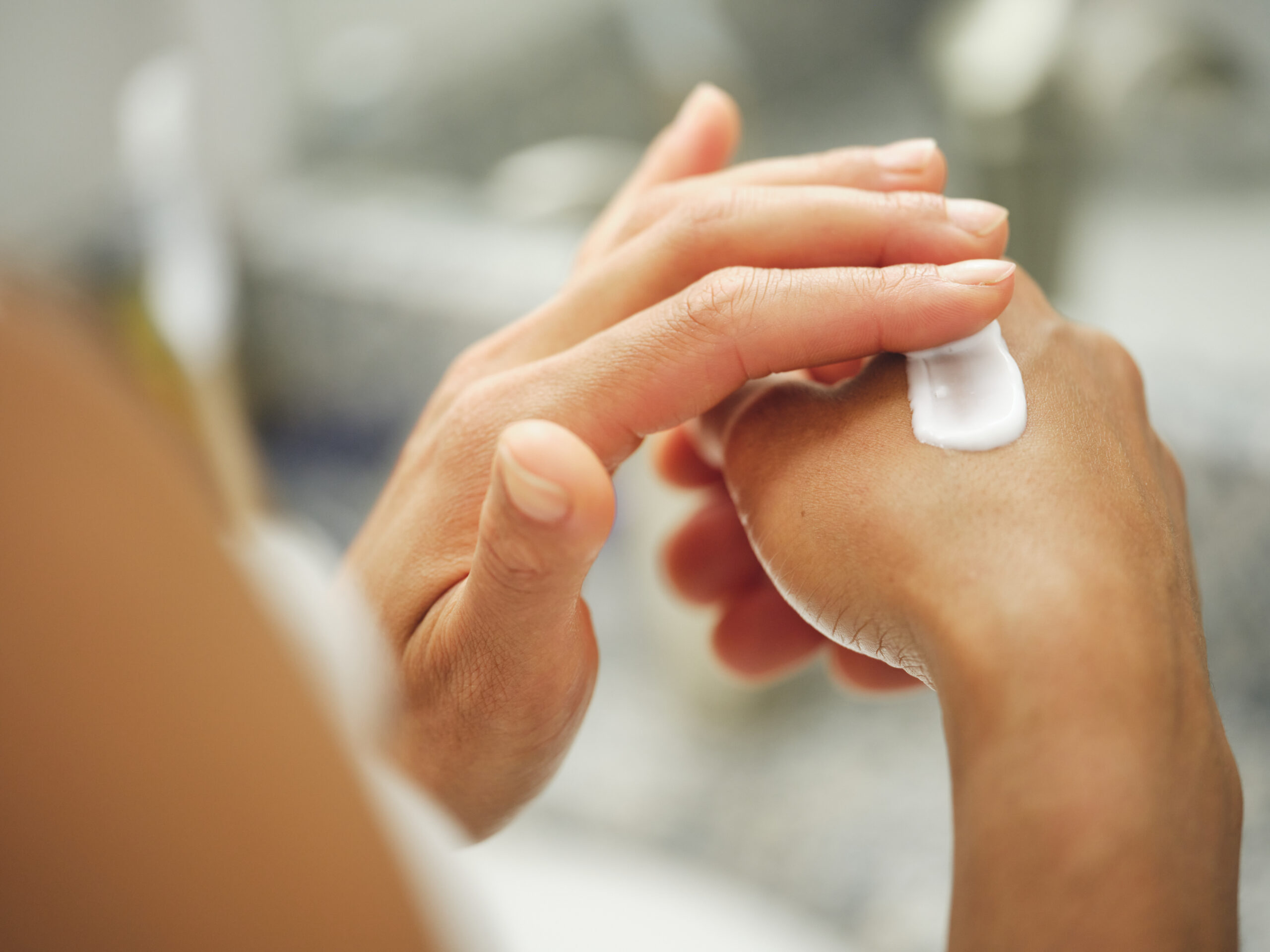
- Apply moisturizers frequently (several lighter applications throughout the day may be more effective than one heavier application). Apply moisturizer on each hand right after washing your hands, while they’re still slightly damp, and repeat throughout the day. Moisturizers can also help protect damaged skin by sealing in moisture and promoting healing. Moisturize even if you’re not experiencing skin irritation to prevent redness and cracking in the future. Moisturizers act as an additional barrier that helps keep bacteria and other germs from adhering to your skin. For extra-dry skin, use moisturizing ointments and creams you squeeze out of a tube instead of lotions you pump out of a bottle. (See inset.) After you use hand sanitizer, you should also apply moisturizer, but wait until your hands are completely dry before doing so.
- Use gloves when performing chores. Wear gloves when working with cleaning products or harsh chemicals, washing dishes, or doing yardwork. Avoid latex gloves if you have an allergy to latex. If you wear waterproof gloves for longer than 10 minutes, consider layering your hands with thin cotton gloves underneath to absorb sweat that could aggravate irritated skin. Keep a few gloves on hand, if possible, so the insides can dry between use, and discard gloves with holes.
- Pay attention to what worsens your symptoms. Once your hands become irritated, substances that hadn’t bothered them in the past—such as acidic fruits and vegetables (like oranges, lemons, and tomatoes), spices, or certain cleaning products—could cause symptoms to worsen.
- Avoid scratching itchy skin. Scratching can make your skin even itchier and worsen redness and cracking.
- Keep an eye on your irritated hands. Call your primary care doctor or dermatologist if you develop more severe symptoms such as blisters or bleeding; pain in your hands or fingers; or signs of infection, such as redness, warm skin, pus, or fever.
Moisturizers can help keep the skin on your hands from becoming overly dry and offer protection from the itching, flaking, and cracking that can come with frequent washing and sanitizing. They work by coating your skin, locking in moisture, and preventing water evaporation from your skin.
Moisturizers are available in three main formulations—ointments, creams, and lotions:
- Ointments that contain mineral oil or petrolatum are the most effective and long-lasting moisturizers because they have a high oil content and contain little water. You can also use petroleum jelly (Vaseline, Aquaphor Healing Ointment) on your hands before bedtime (consider putting cotton gloves on after).
- Creams also help seal in moisture. They’re less greasy than ointments but also less effective.
- Lotions, which contain more water than creams and ointments, are the least messy of the three but also the least effective.
If you have sensitive skin, choose a moisturizer that’s free of fragrances and dyes. Finding a moisturizer that works well for you may require some trial and error. If you have eczema, ask your dermatologist for a recommendation.