
“A substantial proportion of the population is at significant risk for cardiovascular disease. We understand many of the factors that predispose people to this disease, and cholesterol has a lot to do with it. We have learned how to practice prevention by seeking to manage those factors. But there’s still a great deal of misinformation and unfiltered material on the internet that is not evidence-based and is confusing to the public. One big issue is that there’s a contingent—fortunately, a minority, albeit a vocal one—that has generated doubt about the importance of managing cholesterol for cardiovascular disease risk reduction. They think the evidence relating cholesterol to cardiovascular disease is not well established, and that’s completely wrong.”
So articulated Ronald Krauss, MD, an expert in lipidology and a member of our editorial board, in a recent conversation we had with him at the Wellness Letter. Dr. Krauss’s research is devoted to understanding how best to prevent cardiovascular disease (CVD) through early detection and management of its major risk factors, most notably elevated levels of blood cholesterol and lipoproteins.
Recently, Dr. Ronald Krauss joined Dr. John Swartzberg, Chair of the Wellness Letter Editorial Board, for a webinar on Preventing Cardiovascular Disease. They discussed the latest benefits of diet, exercise, and weight control—as well as medications and treatments in preventing cardiovascular disease.
Click here to access the recording of the webinar.
Here, we present the first of a three-part series on CVD, this one focusing on how to assess risk. Over the next few weeks, we will present Dr. Krauss’s thoughts on the role of a healthy diet and the role of statins in reducing CVD risk.
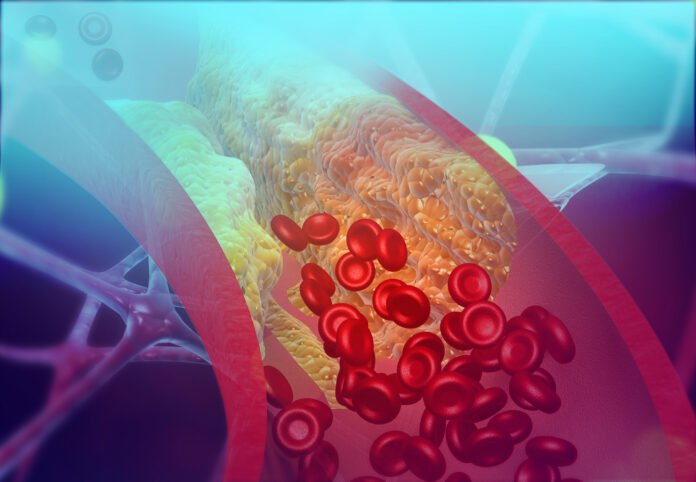
NOTE: Atherosclerotic cardiovascular disease (CVD) is what people generally mean when they refer to heart disease. It is the buildup of cholesterol-containing plaques in the arteries that can lead to heart attack, stroke, or blockages of circulation to the legs.
Wellness Letter: Can you give a quick rundown of the components measured in a blood cholesterol panel and their functions, for good or bad, in the body?
Ronald Krauss: Cholesterol in the blood does not circulate all by itself. It is a component of particles that include fats (also called lipids) and proteins. LDL [low-density lipoprotein] particles carry most of the cholesterol in blood. They are strongly related to CVD risk, and treatments that reduce LDL cholesterol levels have been shown to reduce that risk. In contrast, the amount of blood cholesterol carried in HDL [high-density lipoprotein] particles is inversely associated with CVD risk. But it has not been shown that raising HDL cholesterol is beneficial, so it is not considered a target for intervention, unlike LDL. And while high HDL is generally a sign of good cardiovascular health, it turns out that similarly high HDL levels can be pathologic for a subset of people. In our research, we are aiming to develop tools for differentiating those types of HDL to better improve CVD risk assessment.
So in addition to measuring the main cholesterol components—LDL and HDL cholesterol—the cholesterol panel includes fats called triglycerides, most of which circulate along with some cholesterol in VLDL [very-low-density lipoprotein] particles. High triglyceride levels are associated with very common problems in society today that increase CVD risk—being overweight or obese, especially having extra fat in the abdomen, or having diabetes or a condition called metabolic syndrome. When triglycerides are elevated, they are often accompanied by low HDL and higher levels of a specific kind of LDL called small dense LDL. This condition is called atherogenic dyslipidemia.
Then there’s the total cholesterol level, which is the sum of cholesterol carried in the blood by all LDL, HDL, and VLDL particles. In the past, total cholesterol was the be-all and end-all of cardiac risk. But this is something we have moved way beyond. In my own practice, quite honestly, I never even look at the total cholesterol because it doesn’t give enough specific information.
WL: Let’s talk about how CVD risk is assessed.
RK: The first step in current guidelines for assessing risk of developing CVD uses an equation with factors including age, sex, total and HDL cholesterol, blood pressure, and presence or absence of diabetes. This provides an estimate of the risk of a heart attack within 10 years [see box below]. Based on that risk level, your health care provider can decide on the need for, or intensity of, cholesterol-lowering treatment.
However, this risk equation is not always used by physicians to determine the need for drug treatment—though it should be. Rather, there is often a historical emphasis on LDL because of its important role in CVD, but LDL cholesterol alone does not reflect all the factors that can impact risk.
WL: Are there other tests that may be used to improve assessment of CVD risk?
RK: Yes. The risk algorithm and cholesterol levels do not always capture the effects of other factors that can act to increase CVD risk. So we have additional tests that allow us to enhance or fine-tune our risk predictions. One of them is a test for a lipoprotein called Lp(a), which is highly damaging to the arteries. It has a very strong genetic component, and as much as one-third of the population has Lp(a) levels that put them at significant CVD risk. It is often not recognized as something to consider, in part because there are currently no good ways to lower it. But it is useful to measure because it is a red flag that would indicate higher-risk individuals who need to be even more intensive in their efforts to lower their LDL levels and other risk factors.
The second category of tests for risk enhancers involves measurement of lipoprotein particles that in many cases are more closely linked to CVD than LDL- and HDL-cholesterol values. One of these tests is for a protein called apolipoprotein B, which is a marker for the total number of LDL and VLDL particles and is therefore a global measure of the total number of particles that put someone at increased risk for CVD. There are also tests for specifically measuring levels of LDL particles, as well as the small dense LDL subtype that is a high-risk component of atherogenic dyslipidemia. These measurements can further sharpen risk assessment and help to guide the efficacy of lipid-lowering treatment.
Then there is another important test that is often done that has nothing to do with lipids. It’s a CT scan that measures calcium deposits in the coronary arteries called the coronary artery calcium score. It’s a direct index of the extent of coronary artery disease. This score is not always correlated with the blood laboratory measurements. But it’s an additional piece of information that can be quite useful, particularly in helping to determine those people who may or may not need serious or immediate attention.
WL: And then based on all these factors, you come up with an assessment of the risk of CVD and an intervention plan?
RK: That’s right. In all cases, healthful dietary patterns are recommended, but if diet change is unsuccessful in improving that risk profile, then medication is next. And the primary medications we have are statins. If your risk factors put you at very high risk for CVD, however, your doctor should recommend a heart-healthy diet but may prescribe a statin or other cholesterol-lowering medication right away.
Though heart risk calculators are not always enough to adequately assess your cardiovascular disease risk over the next 10 years, they can provide valuable information that you and your doctor can use to customize a risk-lowering plan that may include diet and lifestyle changes and possibly medication. Your doctor may order additional tests depending on your risk factors.
To assess your 10-year heart risk, you can use the ASCVD Risk Estimator Plus from the American College of Cardiology. This online calculator is intended for people who do not have a history of cardiovascular disease, including a past heart attack, stroke, or heart failure; other limitations may also apply. Note that results may be an underestimate or overestimate of your risk and do not mean you definitely will or won’t have a cardiac event within the next 10 years.