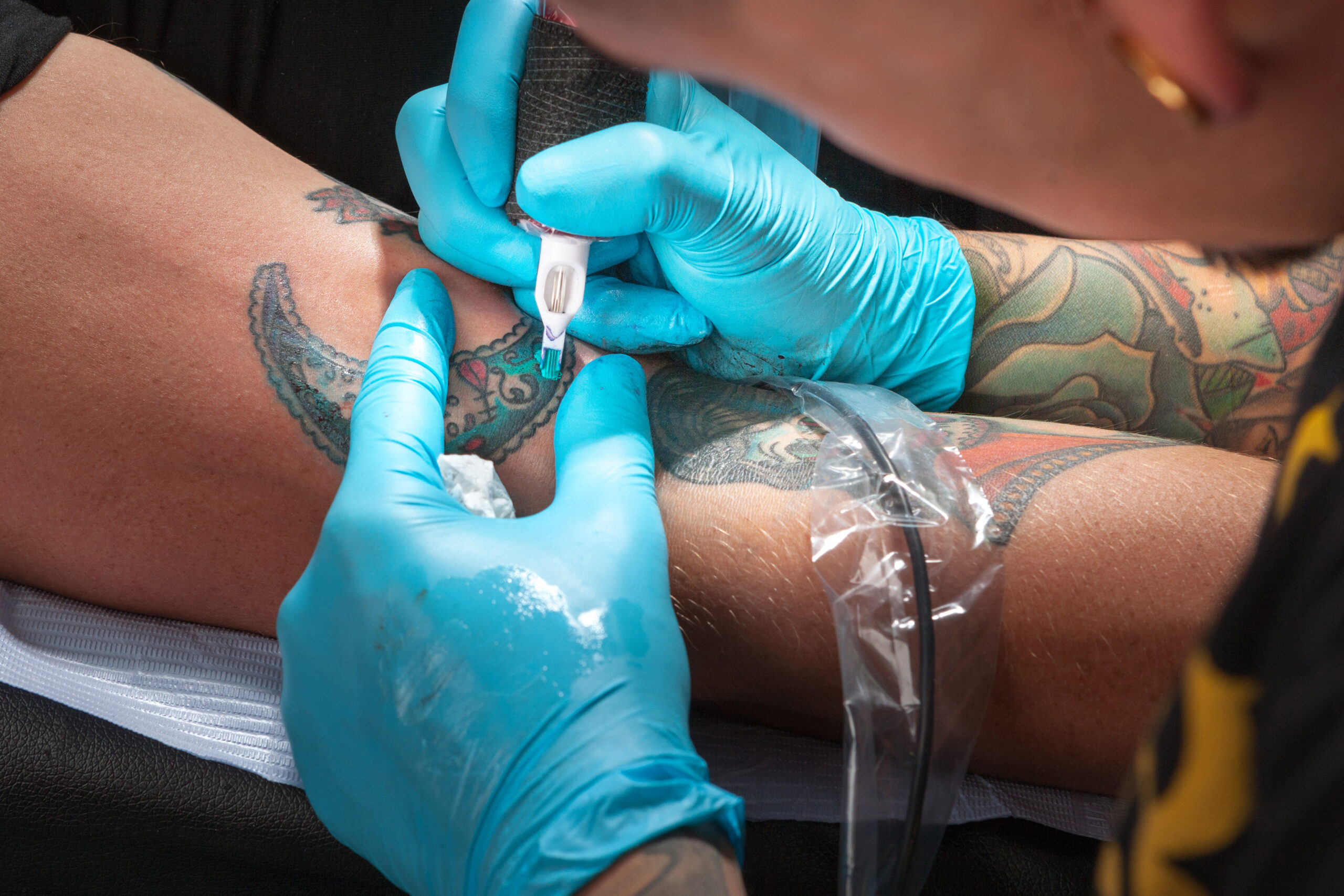
By 2022, some one in three Americans had at least one tattoo, up from one in five in 2012, according to market research. And millennials and Gen Z-ers do not by any means account for all of them. Almost one in seven people sporting a tattoo (which includes permanent makeup, such as eyeliner, or coloring to camouflage vitiligo) is a baby boomer in their 60s or 70s.
Okay, so body art, which goes back at least 5,000 years according to archeological evidence, is having a resurgence. But is it safe? Even if you don’t need to know for yourself, you may want to know for your children, or grandchildren. As one Wellness Letter reader wrote, “I like the art on most of my son’s tattoos, but it’s starting to get crowded. What is the latest research on tattoos’ long-term effects? I read they can interfere with MRIs and cause other problems.”
Here are the answers for the most common concerns.
The government regulates tattoos, right?
For all intents and purposes, no. The inks injected with needles that go deeper than the outer layer of skin (the epidermis) to create tattoos are considered cosmetics. Theoretically, that means the pigments used are subject to premarket approval under the Federal Food, Drug, and Cosmetic Act. But the way it really works is that the FDA reacts rather than acts. The agency urges people to report adverse reactions so they can look into them and orchestrate the recall of inks after they have caused harm, although in many cases a company will recall problem inks voluntarily. In 2019, makers of certain black and red pigments stopped selling them due to bacterial contamination.
It does not appear that adverse reactions are terribly common. But no one has any way of knowing how many go unreported.
But tattoo parlors and tattoo artists have to be licensed, right?
Almost every state has laws that regulate establishments offering body art. But the rules differ from state to state, and sometimes from city to city and town to town. According to the standards set by the Occupational Safety and Health Administration, or OSHA, all tattoo artists must use sterilized equipment, and they have to wear protective equipment such as gloves and also dispose of sharps properly. But actual licensing requirements—for those who create tattoos as well as for tattoo parlors—can vary widely.
Are organic tattoo inks safer?
In a word, “No,” writes the FDA. “An ingredient’s source does not determine its safety.” Adds Wellness Letter editorial board member Ed Blonz, Ph.D., “There is a lack of testing for safety and efficacy in novel combinations of ingredients being tattooed into the flesh. The mere fact that the inks are organic—or vegan—should not be assumed to represent a safety advantage.” Those terms may provide a sales edge to the seller and increase consumer comfort, Dr. Blonz says, but objective information about effects on the body is lacking. Indeed, “organic” describes how a substance is made, not how it might impact the body when it is injected with a needle that breaks the skin.
What are common adverse reactions to tattoos?
Short-term complications:
- Infections. If the tattooing equipment is not sterilized, it can transmit harmful pathogens that cause skin infections ranging from “staph” (usually caused by Staphylococcus aureus bacteria) to hepatitis (B, C, and D) and HIV. Signs of illness from a bacterial infection include fever, chills, and sweats. There may also be redness, swelling, bumps (often with pus), and pain or tenderness in the area.
- Allergic reactions, manifested by red, bumpy, or itchy skin. Red ink is more likely to cause them.
- Granulomas. These are nodules that form around something the body perceives as foreign, like particles of tattoo pigment.
- Keloids. A keloid is an abnormal proliferation of scar tissue. If you’re prone to developing them, a tattoo is more apt to cause one.
Long-term complications:
- Allergic reactions. Nope, this is not a typo. Allergic reactions can sometimes occur—or persist—years after a tattoo is applied.
- MRI complications. The FDA says there have been reports of tattoos interfering with the quality of MRI images (mainly when someone with permanent eyeliner undergoes an MRI of the eyes). MRI can also cause swelling or a burning sensation in the tattooed area, but it’s rare and doesn’t have lasting effects. The FDA counsels that “the risks of avoiding an MRI when your doctor has recommended one are likely to be much greater than the risks of complications from an interaction between the MRI and tattoo or permanent makeup.”
- Difficulty detecting skin cancer. There’s no evidence that tattoos cause cancer, but it could be harder to detect a malignant melanoma “hidden” by tattoo ink. Certainly, a tattoo should not be applied over any mole or skin lesion.
Are there any medical conditions that should preclude a person from getting a tattoo?
If you have any of the following conditions, you should consult with your physician to see if being tattooed might pose undue risks for you: chronic skin disorders such as psoriasis, lesions of the skin that are already pigmented, congenital heart disease, diabetes, immunosuppressive conditions, blood clotting disorders, and pregnancy/breastfeeding. Someone with congenital heart disease may have an increased risk for a condition called infective endocarditis.
Is getting a tattoo on certain body parts riskier than getting it on others?
First, some tips for reducing risk in general. Be aware that for all body parts, when a tattoo is applied, bacteria may be introduced under the skin. These “germs” can come from bacterial colonies that live on our skin’s surface, on a contaminated needle, or in contaminated dye. Whatever the potential source, the most important way to prevent bacterial infection is to carefully clean and disinfect the skin just before the tattooing gets underway. This can be done with soap and water followed by medicinal alcohol once the skin is dry. Another option is to wash the skin with chlorhexidine soap. Because of the damage to the skin caused by the application of the tattoo, the area should then be kept clean through the one- to three-week healing process. Just as important is to keep the tattooed skin covered from the sun until healing is complete (after which sunscreen can be applied, as on the rest of the skin).
Some parts of the body are harder to keep clean than others and are therefore more susceptible to infections once the skin is pierced, so you may want to think twice before having tattoos applied to those areas—or pay special attention afterwards. The susceptible areas include the hands (which touch all kinds of surfaces throughout the day), the feet (which also come into contact with plenty of germs, especially if you get your tattoo in warm weather and are going outside in flip-flops or open-toed sandals), areas that you shave regularly (because shaving traumatizes the skin and makes it easier for bacteria to enter), and areas where there might be a lot of friction, such as where a waistband frequently rubs (you certainly don’t want a lot of rubbing on a tattoo before it heals completely).
What if I want to have a tattoo removed at some point?
Good question. “Dissatisfaction” is a common problem, says the FDA. Sometimes tattoos fade. Sometimes they appear blurry because the pigments migrate beyond the sites for which they were intended. Also, the body changes over time. A tattoo that once looked flattering can lose its allure with changes in skin tone or shifts in body contours resulting from changes in weight or the fat-to-muscle ratio that occurs with aging.
Advances in laser technology mean tattoo removal is better than it used to be, but it’s not necessarily a walk in the park. Because not all layers of the ink can be lasered away at once, more than one treatment is usually necessary, often with weeks between sessions. Redness, swelling, and blistering sometimes occur. The process can also be uncomfortable, even painful (although a numbing shot can help). And as with tattoo application, you need to keep the treated skin out of the sun—for three months.
Another way of putting it: Think carefully before having permanent ink injected into your body. The image that seems so apt today may not be what you want to be sporting in 10 or 20 years—or beyond.