Have you ever wondered just what your belly button is doing there and whether it’s a necessary or useful piece of anatomy? Or pondered why yours takes the form it does—either an “innie” or an “outie”? Did you know that men accumulate more lint in their belly buttons than women and there’s a physical reason why? If you want to know the answers to these and other questions about this small, often overlooked body part, read on!
What exactly is a belly button? Does it serve a purpose?
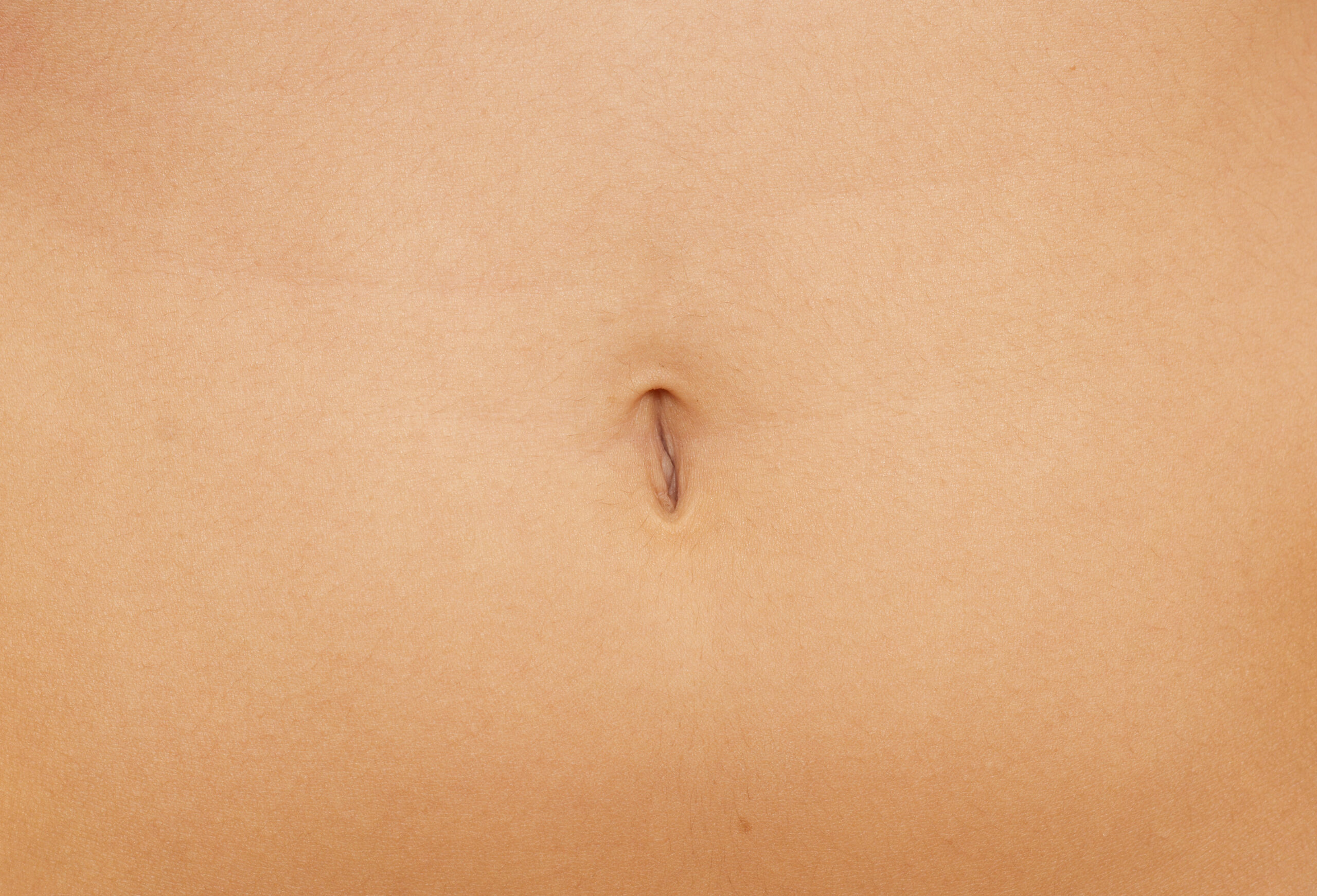
Technically called the umbilicus, the belly button (or navel) marks where the umbilical cord attached to the fetus during pregnancy. The umbilical cord itself is essential—it provides the fetus with nutrients and oxygen and removes waste products and carbon dioxide, among other functions. But after birth, what’s left of the umbilical cord shrivels up and falls off, and its erstwhile attachment point, the umbilicus, serves no real purpose. One potential use after birth, however: The belly button can be used as a point of entry for the camera during laparoscopic surgery.
Why are some belly buttons “innies” and others “outies”? Is one type more common than the other?
Contrary to popular belief, an obstetrician’s scalpel and knot-tying skills have nothing to do with whether a belly button becomes an outie or an innie. Outies (which are far less common than innies) typically result from a small umbilical hernia that generally closes on its own before a child turns 5 years old. Surgery only becomes necessary if the hernia is large, painful, or gets trapped and ends up affecting blood supply to the intestine. The characteristic outie “knot” can also be the result of a small infection that leads to the formation of granulation tissue. For those who simply don’t like their outies, removing excess belly button skin via a surgical procedure—called umbilicoplasty—is an option.
What is belly button “lint” typically made of?
Also called “navel fluff,” the yucky stuff that accumulates in your belly button is primarily composed of fibers from clothing or towels, as well as dead skin cells, bacteria, sweat, and other particles found in household dust. Predictably, outies and shallow belly buttons accumulate less fluff than deep innies, but why men collect more gunk in their navels than women remained a mystery until Georg Steinhauser, a chemist at the Vienna University of Technology, published the results of his four-year study on the nature of navel fluff in the June 2009 issue of Medical Hypotheses. The culprit, it turns out, is abdominal hair, which men tend to have more of than women. Not only does belly hair rub fiber off garments, but the downward growth pattern of this type of hair also directs fiber and other debris toward the navel. If lint buildup is a problem for you, Steinhauser (who collected 503 pieces of his own fluff to aid his research) suggests shaving your abdominal hair and wearing older clothes, which have fewer loose fibers than new ones.
Why do belly buttons sometimes smell bad?
Like other body parts, your belly button can start to smell bad if it’s not cleaned on a regular basis. Good cleaning techniques (see below) help wash away navel fluff, which is composed in part of substances that can be odoriferous, such as dead skin cells and bacteria. Poor personal hygiene habits can also allow navel bacteria to proliferate and cause a foul-smelling infection as well as a smelly brown, yellow, white, or even bloody discharge. Epidermoid and pilar cysts that grow in the navel and subsequently burst can release a stinky, viscous discharge, and sebaceous cysts that become infected can also produce a funky navel smell. Omphaloliths (also called umboliths but more commonly known as navel stones) that become infected are another potential cause of belly button odor (see below).
What are navel stones, and why are some people more likely to form them?
Omphaloliths, or navel stones, resemble hard, smooth pebbles and are typically brown or black in color. Composed of lint and other debris, they are uncommon but more prevalent in people who are obese, have deep innies or more abdominal hair, or have poor hygiene habits. Navel stones develop slowly and may not become evident for years. They do not need to be removed unless they become painful or produce a discharge or foul odor—both of which are signs of an infection. If you have one, don’t try to remove it yourself. That task should be left to your healthcare provider, who may also want to examine it to make sure it’s a navel stone and not a potentially dangerous growth.
What else “lives” in your belly button?
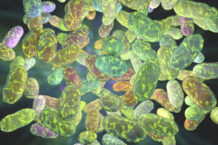
Quite a bit, it turns out. According to the Belly Button Biodiversity project (a joint effort of North Carolina State University and the Nature Research Center at the North Carolina Museum of Natural Sciences), the human navel contains “a jungle of microbial diversity” consisting of 2,368 different types of microbes (phylotypes). The average number of phylotypes found per belly button was 67, with six of those occurring in more than 80 percent of the 66 subjects whose navel ecologies were sampled. Calling it the “coolest study of biodiversity on the human body on the planet,” the researchers launched the Belly Button Biodiversity project in 2011 because of an increasing awareness about the importance of the microbes that live in and on our bodies. As Dr. Rob Dunn, the project’s lead investigator put it, “This collection of microbes must have a certain composition—must form a certain microbial ecosystem—in order for our immune system to function properly. This work is a significant step toward helping us understand which species are the most important players in those ecosystems.”
What’s the best way to clean a belly button?
Gently, for starters. Don’t go poking around with anything sharp or abrasive, or you might break the skin and get an infection. In general, regular bathing or showering with soap and water should suffice, especially if you have an outie. If you have an innie, you can lightly massage your navel with a soapy washcloth. For extra cleaning, you can use a solution of one teaspoon of table salt dissolved in a cup of warm water. For both innies and outies, rinse and pat dry your belly button after you step out of the shower or bath. Avoid applying body lotions or creams to the area because the added moisture can encourage the growth of unwanted bacteria or fungi.
Everyone has a belly button, of course—right?
Actually, no. Everyone has an umbilical cord in utero that attaches to the abdomen at the place that normally becomes the umbilicus. But in rare cases, babies are born with a congenital abnormality that precludes their having a belly button. In particular, a condition called omphalocele—which affects about 1 in every 3,700 babies born in the United States—occurs when the intestines (or other abdominal organs such as the liver or pancreas) develop outside the developing fetus and protrude out of the body where the belly button would ordinarily form. Surgically repairing this after birth may leave the baby with just a scar where the belly button would usually be, and with time, the scar may even disappear.
By the way, all other placental mammals—including gorillas, horses, hamsters, lions, blue whales, rabbits, and dogs and cats—also have belly buttons, though they may be hard to spot. They may, for instance, be flat and look only like a little wrinkled scar or be hidden in a swirl of hair or fur. To find your pet’s belly button, check in the mid-central abdominal area. On the other hand, marsupials like kangaroos and koalas don’t have belly buttons—their development from very early on takes place in their mother’s pouch (where they are nourished by milk), not in the uterus (where they would have to be nourished through an umbilical cord). Platypuses and spiny anteaters (mammals that lay eggs) also lack belly buttons.
Am I the only person who is terribly afraid of belly buttons, including my own?
Nope—there’s actually a name for this overwhelming fear: omphalophobia. Granted, it’s pretty rare, but people with this phobia—as with other phobias such as of spiders and blood—know it’s not rational yet can’t control the anxiety they experience. While many people don’t particularly like touching or even looking at their belly button, those with omphalophobia actively avoid any interactions with belly buttons and experience panic and physical symptoms—such as a dry mouth, sweating, shortness of breath, tightness in the chest, and a fast heartbeat—if they see, touch, or otherwise encounter one. If your fear of belly buttons is interfering with your life, you can seek treatment, which can include talk therapy, behavioral or cognitive behavioral therapy, or sometimes even medication.
Incidentally, omphalophobia is hardly the only phobia with a curious name. Consider also, for example, technophobia (the fear of new technology), triskaidekaphobia (fear of the number 13), mysophobia (fear of germs), ataxophobia (fear of untidiness or disorder), and glossophobia (fear of public speaking, which is actually quite common).