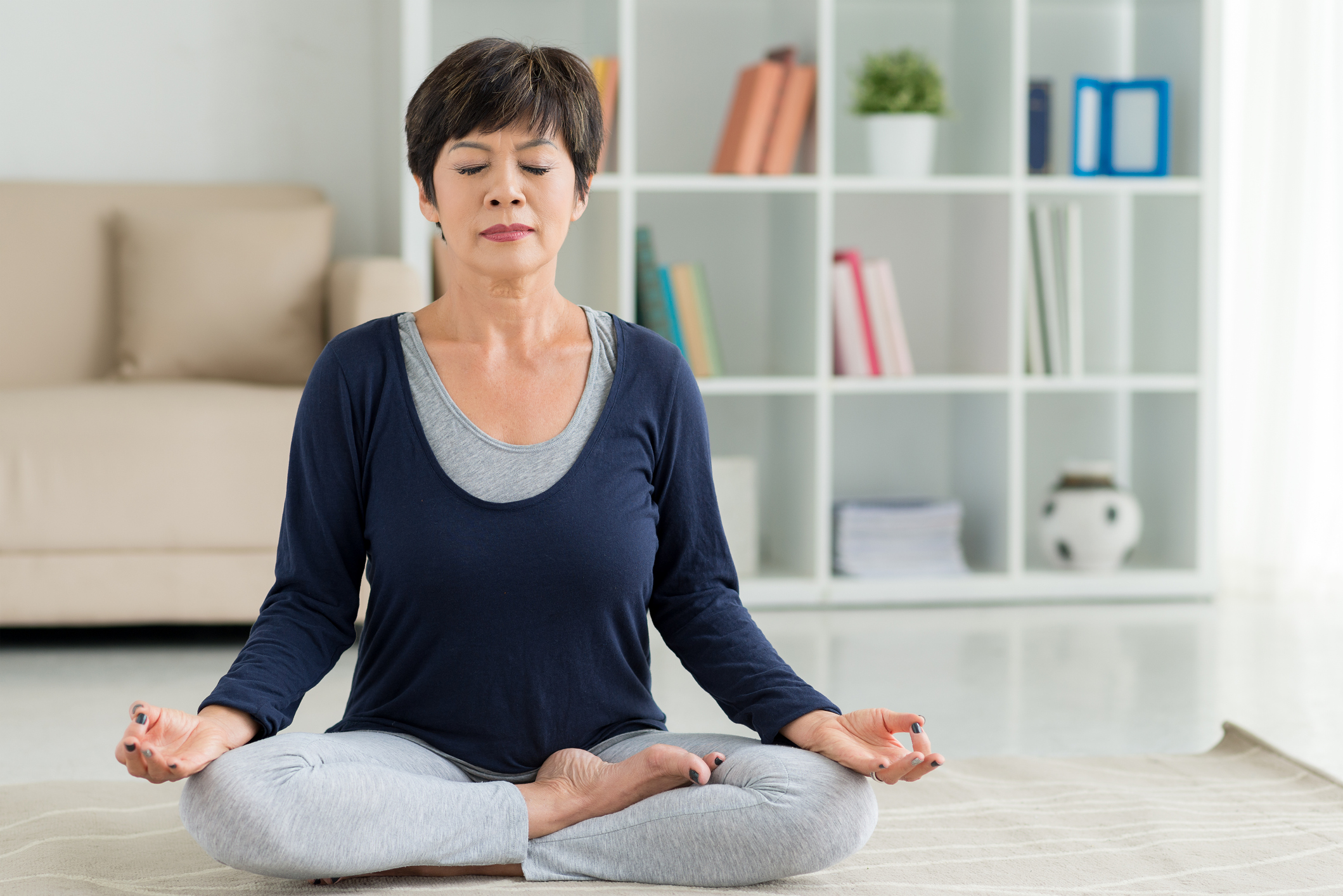
If you don’t already practice yoga, now may be an especially good time to lay out the mat and get started. In a search of the medical literature, we identified several studies over the past few years showing that this ancient mind-body form of exercise can be a balm for the brain.
For example, yoga may help relieve anxiety, ease depression, and reduce migraine headaches—three conditions that many of us are experiencing to even greater degree these days because of the pandemic. In fact, as reported by the nonprofit organization Mental Health America, the number of people in the U.S. living with anxiety or depression rose steeply in the first months of the coronavirus crisis, the time period covered by the survey. And stress is a well-established trigger for migraines.
- Anxiety. In a study in JAMA Psychiatry, 226 U.S. adults with generalized anxiety disorder were randomly assigned to one of three programs, done in small-group sessions for two hours a week over 12 weeks: Kundalini yoga, which combines physical poses, breathing, and meditation; cognitive behavioral therapy (CBT), which focuses on changing thoughts and behaviors that contribute to anxiety; or stress education (the control group), which included lectures on the effects of stress along with information on healthy lifestyle habits. After 12 weeks, significantly more people in both the yoga group and the CBT group than in the stress education group had experienced improvement in their anxiety. The effect was stronger for CBT than for yoga, however (71 percent of participants improved vs. 54 percent in the yoga group and 33 percent in the control group). And only CBT still showed a significant benefit after six months, suggesting that you may need to continue doing yoga to maintain the benefits.
- Depression. A systematic review in the British Journal of Sports Medicine, which included 19 randomized controlled trials involving 1,080 participants in six countries, found that yoga reduced symptoms of depression more than control interventions such as usual care, being waitlisted for a yoga class, or receiving education about depression. The more yoga sessions per week, the greater the reduction in depressive symptoms. The review looked only at “physically active” yoga, in which movement comprised at least half of the practice.
- Migraines. In a study in Neurology, researchers in India randomly divided 160 adults with regular migraines (between four and 13 a month) into two groups. One got standard medical therapy, which included medication and counseling about healthy lifestyle habits. The other got standard medical therapy and also participated in thrice-weekly supervised yoga sessions for a month, then continued practicing yoga five days a week at home for the next two months. Both groups saw reductions in their headache frequency, use of “rescue” medications (medications taken during an acute attack), and migraine-related disability. But the benefits were significantly greater in the yoga group for all measures.
Practicing yoga … and distancing
Although yoga studios and gyms offering yoga have widely reopened during the ongoing pandemic, in-person classes are not the safest option right now because of the fast-spreading Omicron variant. The good news is that if you want to practice on your own or via virtual classes, all you need is a yoga mat. The Yoga Journal has a free online library of yoga sequences to create your own practice, plus useful tips and advice for beginners. You can also find beginner yoga videos for sale online, or you may be able to borrow them from your library. Some yoga studios and private teachers are offering virtual classes via Zoom or other platforms during the pandemic. Whether in person or onscreen, look for a teacher with a 500-hour certification from a school registered with the Yoga Alliance. If you have a musculoskeletal problem or previous injury, talk with your doctor before starting, since certain poses might be contraindicated for you.