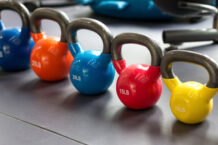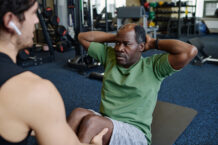
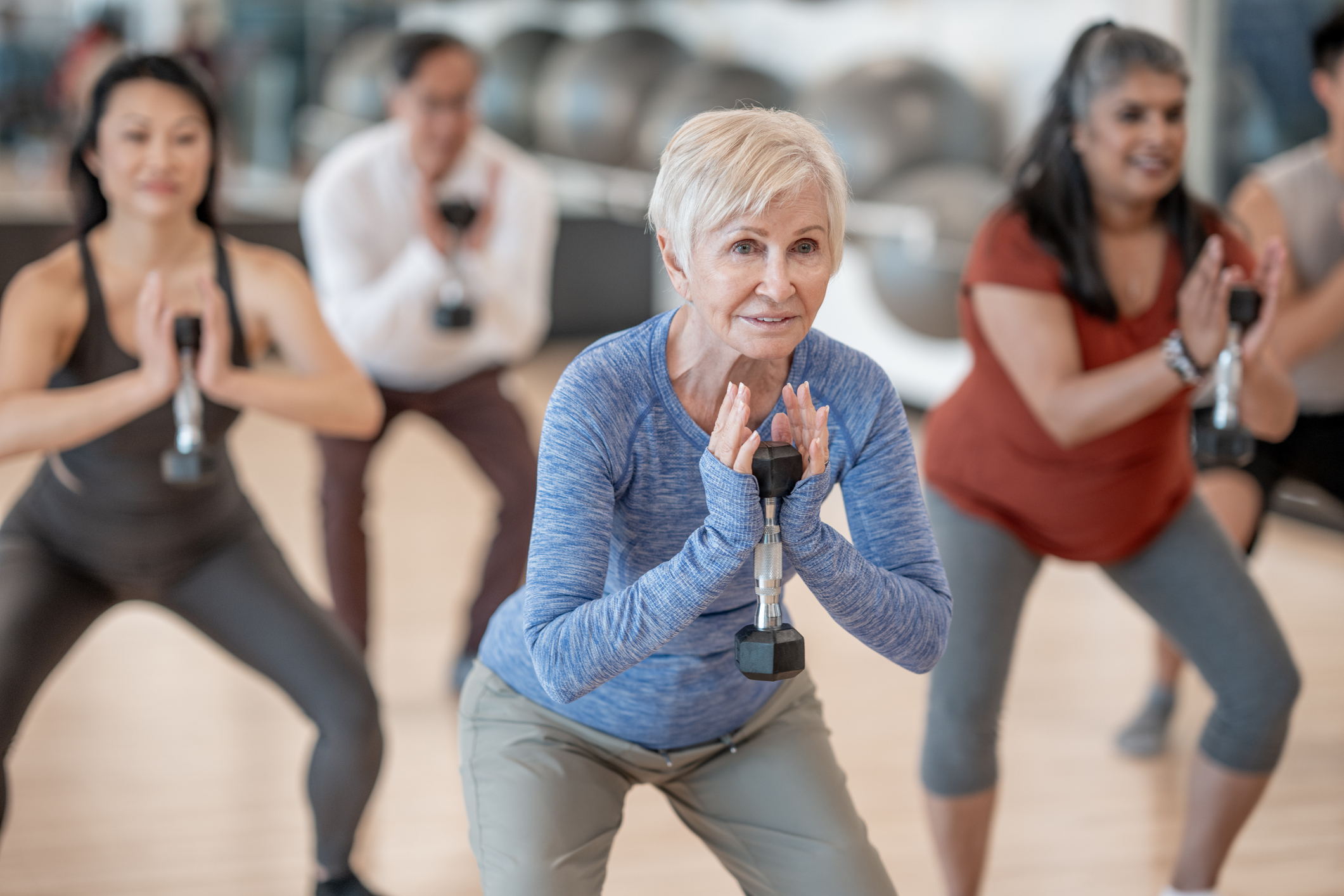
Experts advise adults to get 30 minutes of aerobic exercise five days a week (150 minutes in total). But making your heart pump faster by jogging, cycling, playing tennis, or taking an aerobics class isn’t the only way to improve your fitness, reduce body fat, and get healthier. Strength training, also known as resistance training, is another essential element of a well-rounded workout routine. The Physical Activity Guidelines for Americans recommend two days a week or more of muscle strengthening exercises, which can be done using dumbbells, medicine balls, resistance bands, weight machines, or your own body weight.
Three recent studies highlight the advantages of strength training for middle-aged and older adults in three different realms.
For mobility
A lack of time is one of the biggest barriers to consistent exercise, but a study published in PLoS One this past March suggests that just a few minutes a day of resistance training might improve movement and balance in adults over 65. Researchers randomly assigned 97 older adults with walking difficulties to either a 12-week exercise program called FAST (Functional Activity Strength Training) or to no exercise.
The program consisted of four daily exercises: push-ups, chair stands (repeatedly standing up from a chair), two-arm seated rows with a resistance band (looping the band around the soles of the feet with feet flat on the floor, then pulling the elbows back while squeezing the shoulder blades together), and stair stepping. Participants performed each exercise for 30 seconds, followed by a 30-second rest period—a total of two minutes of resistance exercise per day.
Participants in the workout group stuck with the program, completing more than 80 percent of the assigned workouts. At the end of the program, they were able to do more chair stands, do them faster, and stand for a few seconds longer on one leg than they could before. Their sit-to-stand time scores after completing this program correspond to better mobility and a lower risk of falling.
While the changes were notable, the authors stress that two minutes of exercise a day is not nearly enough to improve body composition or overall health. In this study, it improved functional performance only.
For a healthier heart
Aerobic exercise has long been promoted for preventing cardiovascular disease (CVD). A study published in the Journal of the American College of Cardiology in June suggests that resistance training may deserve a more prominent place in CVD prevention recommendations. The researchers found that adding resistance training to aerobic exercise might help lower the chance of developing heart disease or having a heart attack in women.
The authors analyzed data from more than 117,000 middle-aged and older women enrolled in the Nurses’ Health Study and the Nurses’ Health Study II and followed them over a 14-year period. Those who did two or more hours of resistance training per week had a 20 percent lower risk of major CVD and a 44 percent lower risk of heart attack compared with participants who did no resistance training. Each additional hour of resistance exercise per week was associated with a 5 percent lower risk of major CVD and a 14 percent lower heart attack risk.
Combining resistance training with other healthy behaviors was even more advantageous. Women who met the recommended amounts of both resistance training (at least two days per week) and aerobic exercise, and who limited television viewing (an indicator of sedentary behavior) to less than two hours a day, had the lowest risks of major CVD, heart attack, and stroke.
Some caveats for this study are that it used self-reported data and the authors didn’t have information about the type and intensity of exercises performed. And, as an observational study, it doesn’t prove cause-and-effect—that strength training was directly responsible for the benefits noted. However, the findings still suggest that combining strength training and aerobic exercise, while reducing sedentary behaviors like TV watching, could significantly lower CVD risks.
For longer life?
It’s well known that strength training builds muscle, improves balance, and preserves bone strength. Could it also improve longevity? A study published in June in the British Journal of Sports Medicine suggests that when done consistently over many years, resistance exercise might increase your life expectancy.
The researchers analyzed aerobic and strength training exercise data on more than 147,000 adults (mostly women; median age 54 at the start) enrolled in three large study groups. Participants were followed for up to 30 years.
Compared with doing no resistance training, engaging in 90 to 120 minutes (1.5 hours to two hours) of resistance training per week was associated with a 13 percent lower risk of dying from any cause, a 19 percent lower risk of dying from cardiovascular disease, and a 27 percent lower risk of dying from a neurological disease (such as Alzheimer’s). Adding strength training to aerobic exercise (which is itself linked to reduced mortality) further reduced the risk of dying during the study period. Doing more than two hours of resistance training per week offered no additional benefits.
These findings mirror the results of previous research; however, the researchers noted a few limitations of their study. Because this was an observational study using self-reported data, they could not prove that strength training directly led to longer life. Also, specific details about the length and intensity of the workouts were not collected, so it’s possible that different strength-training regimens have different effects on mortality. In addition, participants were from similar demographics—mainly white middle-aged to elderly health professionals—making it hard to generalize the results to other groups.
BOTTOM LINE: These studies showed that doing strength-training exercises consistently over a long period of time might improve mobility, protect against CVD, and possibly extend your lifespan. Together, the findings support the value of following a well-rounded fitness program that includes both aerobic and strength-training activities, targets muscle groups in both the upper (arms, chest, shoulders) and lower (legs, buttocks) body, and limits sedentary (sitting) time. While these studies only looked at strength training, there is an abundance of research showing the positive health effects of aerobic exercise. It’s likely that a combination of the two would provide the broadest range of health benefits.
Before beginning a fitness routine that includes strengthening exercises, check with your doctor to make sure it’s safe for you. Consider starting out with a certified personal trainer—one who is accredited, for example, by:
- The American College of Sports Medicine (ACSM)
- The National Academy of Sports Medicine (NASM-CPT)
- The National Strength and Conditioning Association (NSCA-CPT)
- The American Council on Exercise (ACE)
These personal trainers can teach you how to do the exercises safely and can recommend a weight to start with that won’t cause injury.
If a personal trainer is not in your budget, you could try a group class (be sure the instructor-to-student ratio is low enough that they can give you enough individualized attention to help ensure proper technique) or a structured program like SilverSneakers, which is designed for older adults. The ACE website provides general training information for older adults and a comprehensive exercise library, where you can search exercises by body area, difficulty level, and type of equipment.
However you start, be sure to warm up before each session with several minutes of walking or other aerobic activity. Allow at least one full recovery day before training the same muscle group again. For instance, if you train your legs on Monday, wait until Wednesday or later before training them again; you can work different muscle groups on the days in between.