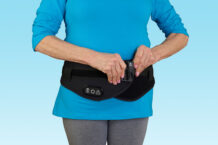
When Time magazine released its Best Inventions of 2025, alongside the chlorine-removing water filter, chemical-free mosquito bite treatment, and temperature-controlled medication storage was a vibrating belt called Osteoboost. The first wearable osteoporosis treatment to gain FDA clearance, the device sends low-frequency vibrations to the spine and hip bones to help reduce bone loss and build bone strength. (Note: FDA clearance doesn’t mean a device is approved, but rather that it’s similar enough to another legally sold product to be marketed in the U.S.)
Osteoboost is a localized version of whole-body vibration therapy, which, as the name implies, delivers vibrations to the entire body.
Vibration therapy is a relatively new approach to protecting bones. Currently, the mainstays of osteoporosis prevention and treatment are medications such as bisphosphonates, selective estrogen receptor modulators (SERMs) like raloxifene (Evista), and parathyroid hormone treatments such as denosumab (Forteo). Some of these drugs slow bone destruction, while others stimulate new bone formation.
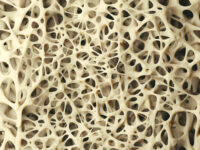
Given the rapidly growing older population, there is more need than ever for new osteoporosis treatments and preventive approaches. This bone-depleting disease affects more than 10 million people over age 50 in the U.S., most of them women. Another 43 million have osteopenia, a condition characterized by below-normal bone mineral density (BMD) that sometimes progresses to osteoporosis. Untreated osteoporosis leads to fractures that can have devastating effects on quality of life and shorten lifespan.
Whether vibration-based products like Osteoboost offer measurable improvements in BMD is still being investigated. Some research finds the therapy promising, but other studies have shown no clear benefits.
What’s the buzz?
The idea for vibration therapy originated in Sweden, where in 1857, Dr. Gustav Zander developed vibrating equipment to strengthen muscles and improve fitness. A few decades later, businessman and physician Dr. John Harvey Kellogg (famed for creating Corn Flakes) invented a whole-body vibration platform to improve circulation and relieve constipation. (Dr. Kellogg is also known for promoting eugenics, the scientifically inaccurate and racist idea based on selective breeding to “improve” the human gene pool.)
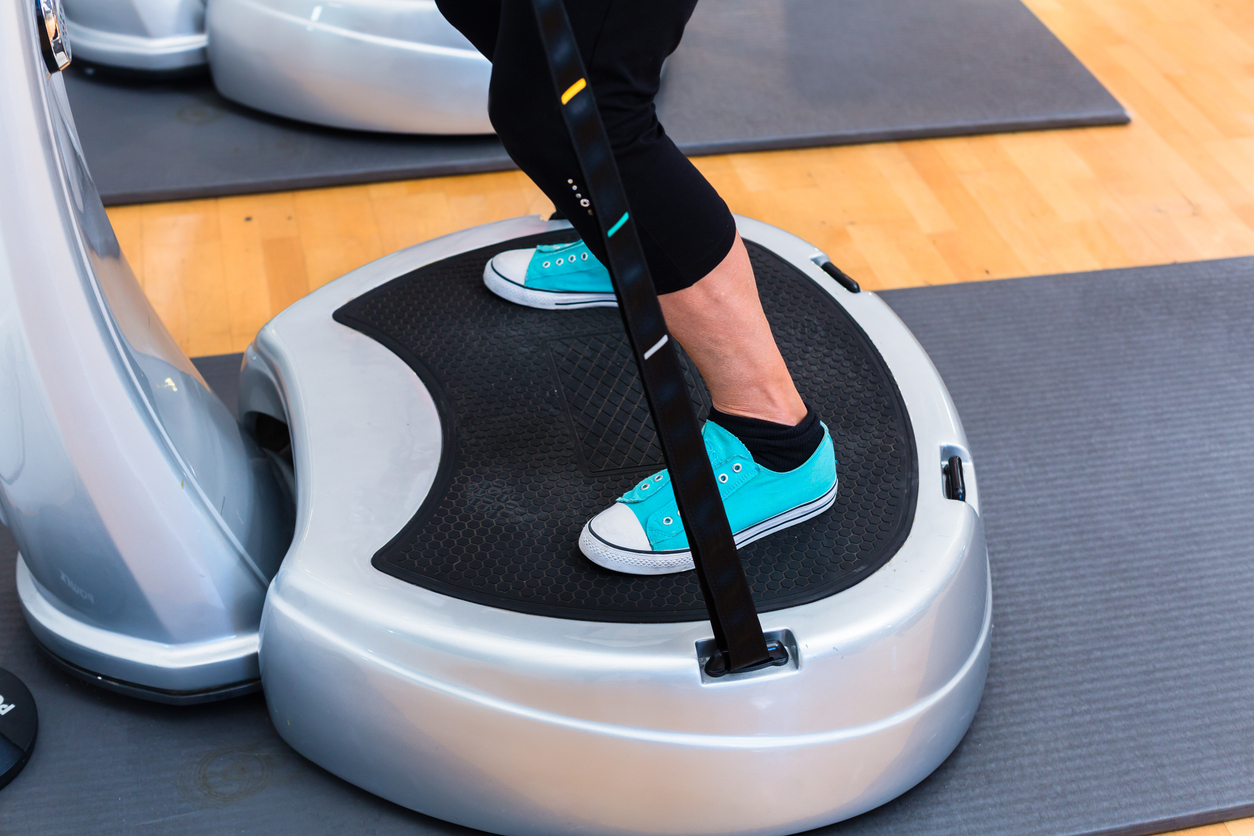
Vibration therapy today involves standing (or sometimes sitting or lying down) on a platform for about 10 to 30 minutes per session, a few times a week. Each type of platform vibrates at a specific frequency (the number of vibrations per second) and amplitude (how much the platform moves during vibrations), and in certain directions (side to side or up and down).
As the platform shakes, it transmits energy through the muscles and other tissues, which stimulates muscle contractions. The higher the frequency and amplitude of the vibration, the more of a workout the muscles get. Muscle contractions pull on bones and force them to work, which eventually strengthens them. The effect is similar to doing weight-bearing exercises such as walking.
In addition to stimulating muscle contractions, vibration therapy may strengthen bones by helping stem cells mature into osteoblasts (cells that form new bone), reducing the formation of osteoclasts (cells that break down bone), and increasing the supply of blood and nutrients to bones.
The science behind it
Russian scientists first discovered whole-body vibration’s effects on bone density through their space program. When their astronauts spent weeks or months in space, the lack of gravity would weaken their muscles and bones. The scientists found that astronauts who stood on a vibrating platform during their recovery showed improvements in bone density and muscle strength they had lost while in space.
Studies looking at the effectiveness of vibration therapy for bone health have had mixed results, however. Some older research didn’t find any benefit, including a 2011 systematic review and meta-analysis of 13 randomized controlled trials, which showed no difference in bone density of the hip or lumbar (lower) spine in older women who used whole-body vibration therapy, compared with those who had no treatment. A 2017 systematic review and meta-analysis of 15 randomized controlled trials published in BMJ Open found no effect from whole-body vibration on bone density or bone structure among adults 50 and older, although it did show a reduction in fall risk.
Findings from recent research have been more positive. A 2022 analysis of 30 studies in Complementary Therapies in Medicine showed that whole-body vibration significantly improved bone density in healthy postmenopausal women and reduced fracture risk. The analysis found an advantage to an oscillating platform (which rocks from side to side to mimic the movement of walking) over a vertical platform (that vibrates up and down like jumping). The authors say whole-body vibration could be a safe and helpful add-on to medication for reducing osteoporosis risk.
Another review, of 16 randomized controlled trials with 1,624 participants, analyzed the effects of different types of exercise training on bone density in postmenopausal women. The authors found improvements in bone density in the lumbar spine in a subgroup of participants, but not in the femoral neck (part of the hip), when whole-body vibration was part of the exercise program.
And in a study of Osteoboost, using the device five times a week for a year resulted in appreciably less bone loss compared with a sham treatment. But the findings, which were published in the Journal of the Endocrine Society in 2023, weren’t statistically significantly different between the treatment and sham groups, and all the authors had relationships with the manufacturer, which is a conflict of interest.
The varied findings in these clinical trials may be due to differences in study designs and analyses, demographics of the participants, financial ties of the authors, and types of vibration therapy used.
Where to hop on
Whole-body vibration therapy is available at some physical therapy and rehab clinics, chiropractic offices, wellness centers, and gyms. Health insurance might not pay for this therapy when used on its own, but may cover it when it’s part of a comprehensive treatment plan.
Though Osteoboost is only available to purchase with a prescription, you can buy a vibration plate to use at home. They’re available at online merchants and in sporting goods stores for around $70 to $200. These devices generally aren’t covered by insurance, but you may be able to use a Health Savings Account (HSA) or Flexible Spending Account (FSA) to pay for one if your doctor deems the treatment medically necessary.
Vibe check
Vibration therapy isn’t for everyone. For one thing, it typically involves standing for anywhere from 10 to 30 minutes per session, a few times a week. That could be difficult if you have pain from arthritis or another medical condition.
Safety is also a concern. Researchers have learned from occupations such as truck driving and construction that long-term exposure to vibration may contribute to back and joint pain, nerve damage, blood vessel issues, and other problems. Side effects reported in some studies include pain, leg numbness, and nausea.
The intensity of the vibrations differs from one machine to another. More intense vibrations may not be safe for people with back problems, severe osteoporosis, or cancer that has spread to the bones, because their bones are more vulnerable to injury. This therapy is also not recommended for people with balance problems, cochlear implants, pacemakers, retinal detachment, or recent hip or knee replacement, as well as pregnant persons and those who recently had surgery.
BOTTOM LINE: Vibration therapy has potential benefits for bone density, particularly for postmenopausal women, although the evidence from studies has been mixed, and any effects seen have generally been small.
Importantly, it isn’t meant to be used on its own, but as an add-on to more established bone-protective measures, such as medication, nutrition, exercise, and smoking cessation. If you want to try vibration therapy, start out supervised by a physical therapist or other healthcare provider to make sure the intensity is safe for you and that you’re using the device correctly. Anyone with a medical condition that could make vibration therapy unsafe should consult their doctor before trying it.