Since the invention of the flush toilet by Sir John Harrington in the 1590s (not, as is often humorously claimed, by Thomas Crapper), going to the bathroom has been a relatively straightforward process. Open the lid, go, wipe, and flush. Thanks to the advent of new technologies, today’s toilets offer a much more customized—and luxurious—experience. Some models open automatically, play music or soothing nature sounds while you go, wash and air dry your bum, self-clean, and close the lid for you when you’re finished.
Some emerging toilets or toilet-mounted devices go even further, with sensors and cameras that track your digestive and urinary health as well as your hydration and nutrition status. But for now, choosing the right toilet is still largely a matter of preferences and budget. Here’s how to sort through the many available features and prices to find the right model for you.
Toilets of today
Some modern toilets go far beyond a simple seat and bowl. They’re packed with extra features designed with comfort, convenience, and cleanliness in mind. Smart toilets offer a full suite of extras, from heated seats and lighting to air purifiers and self-cleaning mechanisms.
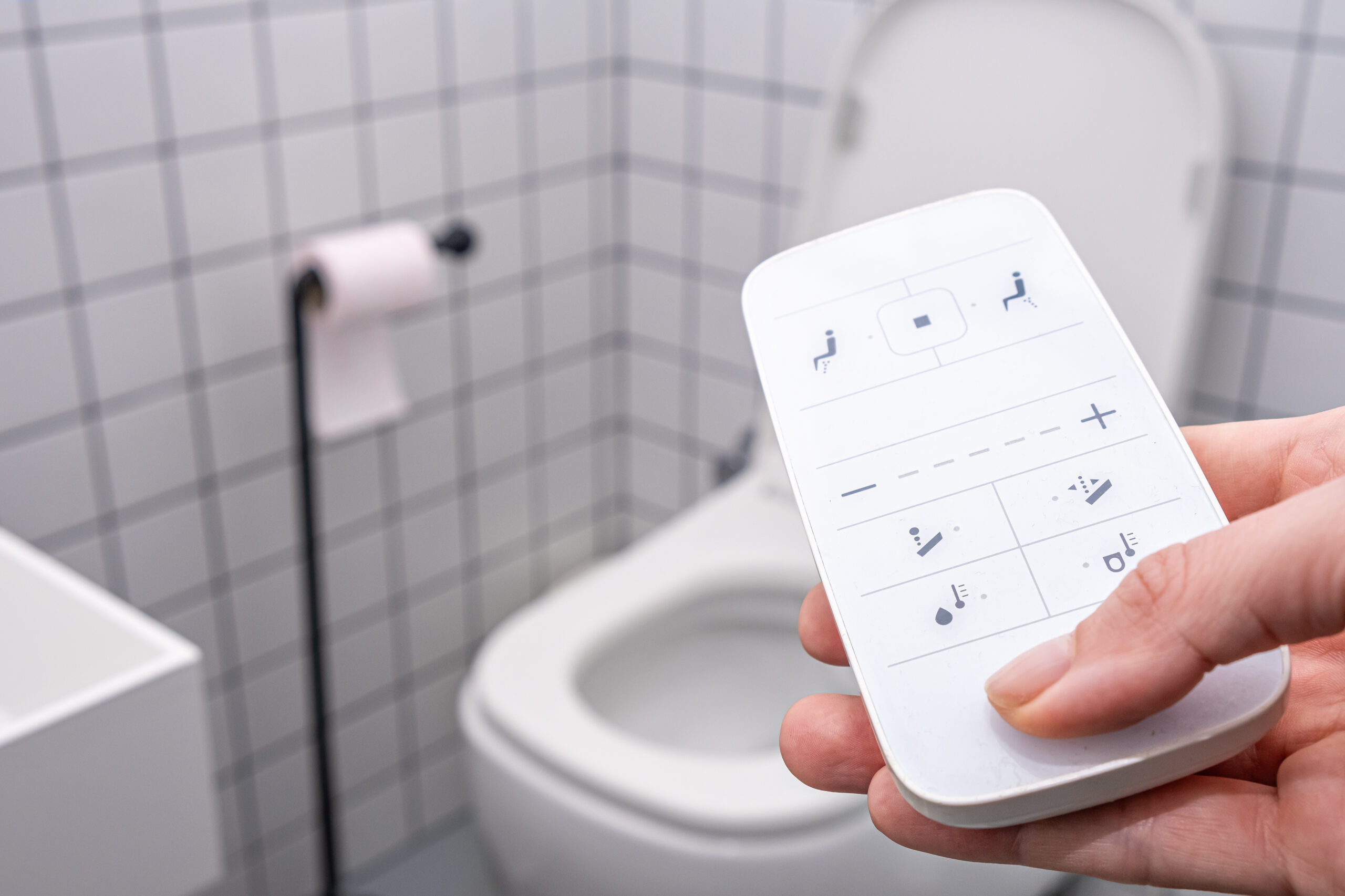
Japan is the undisputed leader in high-tech toilets. An estimated 80 percent of households with two or more people have at least one. TOTO is a Japanese manufacturer renowned for its advanced technologies. Take, for example, its sleek, futuristic-looking Neorest RS model (also available in the U.S. and other countries), which comes equipped with a night light, remote control, automatic open-and-close lid, heated seat with temperature control, oscillating and pulsing bidet (more on bidets below), and warm air dryer with five temperature settings. This model will mist the bowl before each use, auto-clean it afterward, and deodorize the air once you’re finished doing your business. The settings are customizable, and up to four people can save their presets.
The price tag for a toilet with smart features ranges from a few hundred dollars for a basic model, to a whopping $25,000 for one with all the extras (plus the cost of installation).
When deciding whether to buy a smart toilet and choosing from among the many options, consider not only the cost but also the size of your bathroom space, what features are most important to you, whether you can easily operate the controls, how high you need the toilet to be, and its water efficiency/environmental impact. Reading online reviews is a good starting point, because you can see which models get high marks from experts and what features each one offers.
Toilets of tomorrow
The next generation of smart toilets will more commonly add health monitoring to the already long list of features. Unlike current health trackers, which require at least some effort on your part, toilet health trackers take measurements automatically for you (which is called passive health monitoring).
In the not-too-distant future, you might use or even own a toilet that analyzes your urine and stool samples to inform you if you’re constipated or underhydrated (a common problem among older adults). By identifying bacteria, protein, white blood cells, or blood in urine and stool, these extra-smart bathroom fixtures could help screen for infections, as well as for conditions like kidney disease, inflammatory bowel disease (IBD), colon cancer, and bladder cancer. With sensors on the seat that measure vital signs like body temperature, heart rate, blood pressure, and blood oxygen level, the smart toilet of the future may even tell you if you are potentially dealing with a heart condition—and monitor your progress once you start treatment.
Last summer, TOTO launched a new “Stool Scan” feature in its Neorest smart toilet line (not generally available outside Japan yet). A sensor next to the nozzle checks the shape, color, and volume of stool and sends the data to a smartphone app that displays information about gastrointestinal health. A 2025 study from Duke University tested a smart toilet that captured images of stool and used computer analysis to assess the samples from six volunteers in an office bathroom over a 10-month period. The researchers found that the smart toilet provided more accurate monitoring of bowel movements than the participants’ self-reports.
Of course, any monitoring device comes with a set of potential risks. Safe data handling and storage practices will be essential to protecting privacy, just as they are with existing health tracking devices. In a study of 31 people who used a smart toilet seat for two weeks, the technology was viewed as a potentially acceptable and effective health-tracking tool, but participants also expressed the need for transparency and control over their collected health data.
Humans aren’t the only ones getting high-tech potty perks. Some litter boxes now have diagnostic features for your cat, including the supposed ability to detect potential urinary issues and monitor body weight. You can check your dog’s health through their poop too, with tools like the Poopscan, an AI-powered smartphone app that monitors stool consistency.
To bidet—or not to bidet?
A bidet, if you’re not familiar with the term, is a toilet add-on or separate plumbing fixture that cleans the genitals, anus, and perineum (the area between the anus and scrotum or vulva) with a stream of water. Depending on where you are in the world, bidets go by many names, including bum gun and washlet.
France is the birthplace of the bidet, where it first appeared in the 17th century before spreading throughout Europe. Cleaning with a bidet was an alternative to full-body bathing at a time when few people did so because hot water was scarce and morality made nakedness taboo. These fixtures have been popular in Europe and Japan for many years, but they have only caught on in the U.S. more recently, accelerating in popularity during the Covid-19 pandemic, when toilet paper was in short supply. Though the number of American bidet owners is still relatively small, it’s growing.
The traditional European bidet is a plumbing fixture that sits next to the toilet. You move over from the toilet and straddle it while facing either toward or away from the spout (depending on the design of the bidet and which area you are washing), then turn on the faucet. Japanese bidets are much more technologically advanced. Built into the toilet, they spray warm water in a variety of oscillating and pulsing patterns.
Proponents say a bidet is preferable to toilet paper because it removes more feces, is less irritating, and is a more hygienic way to clean yourself than wiping with toilet paper by hand. It can be an easier option for people with arthritis in their hands, who find wiping difficult. One clear advantage of a bidet is the cost and environmental savings of using less—or no—toilet paper (the U.S. leads the world in toilet paper consumption, followed by Germany and the UK). But is it really more hygienic than wiping?
A 2022 study in the Journal of Water & Health found that far fewer germs remained on the hands of people who used a bidet compared to those who used toilet paper. Though the study included only 32 participants, the authors say bidet use might reduce the transmission of infections like Salmonella and norovirus, which spread when people touch food without washing their hands after wiping. Another study showed that a “wash-and-dry” toilet increased cleanliness and improved the bathroom experience for nursing home residents.
However, shared bidets might facilitate the spread of infection if they’re not properly used or cleaned. For women, spraying in the wrong direction—from back to front—or using a contaminated nozzle could spread bacteria that cause urinary tract infections (UTIs). A 2019 study found that the nozzle surfaces and spray water of most bidet toilets tested at a hospital in Japan harbored a variety of bacteria, including Staphylococcus, Enterococcus, and E. coli, even when the toilets were manually cleaned every day. The authors say self-cleaning mechanisms (which some bidet toilets have) could help prevent infections. If you use a bidet that doesn’t self-clean—whether in a home or a hotel—be sure it has been properly sanitized by regularly cleaning it with soap and water or white vinegar using a soft-bristled brush.
If you’ve traveled to Germany or the Netherlands, you might have encountered an unusual looking toilet. Known as a “shelf toilet” or “flat-bottom toilet,” these fixtures come equipped with a platform inside the bowl, which serves as a landing place for stool before it goes into the water. The design is meant to prevent dirty water from splashing on you, and to give you a chance to inspect your poop. But not everyone is eager for that level of visual feedback, and these toilets come with two practical downsides: They increase odor and they’re more challenging to clean than traditional toilets.
A squat helps a lot
Though the smart toilet is still rolling out, one inexpensive tool to improve digestive function is already widely available. A “toilet stool” such as the “Squatty Potty” raises your knees above your hips in a squat-like position. This puts your colon into a straighter, more natural alignment during bowel movements, to help poop slide out more easily.
The limited evidence that exists supports this premise. A small 2019 study in the Journal of Clinical Gastroenterology found that participants who used a toilet stool emptied their bowels more effectively with less straining (which is helpful for preventing hemorrhoids). Propping your feet on a stool is safe to try, but if you have chronic constipation, check with your doctor. You might have an intestinal condition that no toilet stool can treat.
BOTTOM LINE: The toilet is evolving beyond a simple receptacle. Smart toilets being developed promise to monitor urinary, gastrointestinal, and overall health. Until these technologies become more widely available, however, choosing the right toilet is largely a matter of reading reviews from reputable sources like Consumer Reports and Good Housekeeping and selecting the features that best suit your needs and budget.