
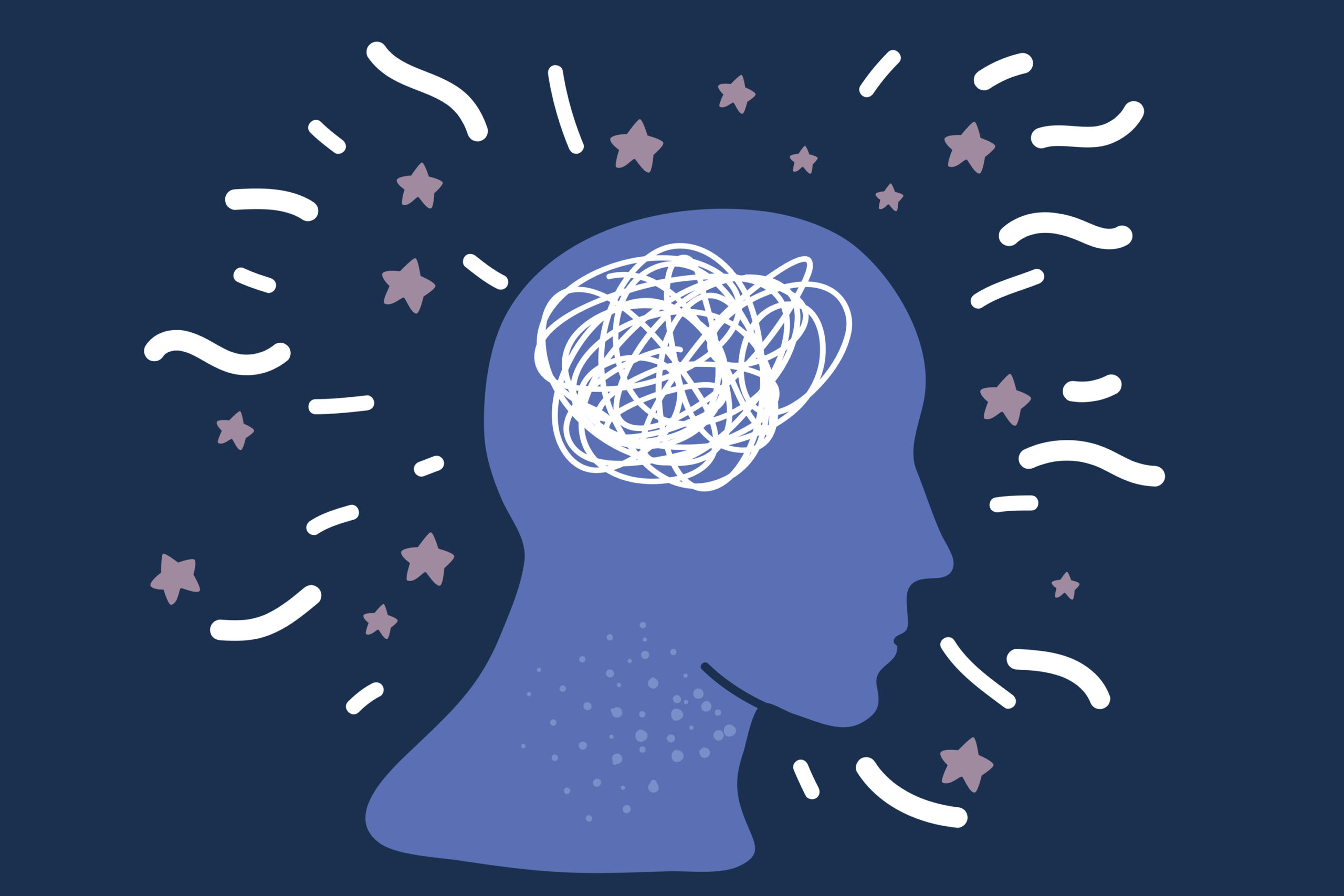
Worrying is a normal part of life. Did you forget to turn off the stove? Can you afford to pay the rent? Could your nagging cough be something serious? But when normal worry becomes excessive, uncontrollable, and constant, it crosses the line into something you should pay attention to: generalized anxiety disorder (GAD), as defined in the Diagnostic and Statistical Manual of Mental Disorders, 5th edition (DSM-5). If your worry is so overwhelming that it gets in the way of your daily life and it has lasted for months or longer, it’s probably time to see a mental health provider for an evaluation.
“It’s important to emphasize that anxiety can be a helpful indicator that something in our lives is not going well, so it can be a stimulus for healthy change,” says Ron Elson, MD, a psychiatrist at UC Berkeley Health Services and a member of our editorial board. That is, it even has some positive contributions to make to our overall well-being. “The problem,” he says, “is when anxiety becomes chronic and is not connected to an immediate threat or issue that would be good to deal with. This excess anxiety can cause great distress and affect other psychological, family, social, and even physical/medical areas of life.”
How common is GAD?
About 20 percent of U.S. adults suffer from an anxiety disorder every year, with some 3 percent (6.8 million adults) living with GAD in particular. Nearly 6 percent of the adult population experiences GAD at some point in their lives. (Other anxiety disorders include panic disorder, social anxiety disorder, specific phobias, obsessive-compulsive disorder, and post-traumatic stress disorder.) For many people, anxiety first creeps in during childhood or the teen years—but it can start later in life, too. Periods of worry come and go, getting worse during times of stress.
Although anxiety follows the transition from adolescence into adulthood, the nature of those fears changes. Kids tend to stress over school and sports performance, for instance, while adults worry more about their health and their family’s well-being.
Women are twice as likely as men to live with the constant, debilitating anxiety of GAD, according to the DSM-5. And this gender disparity could have to do with their genes (as discussed more below), hormones, or greater vulnerability to environmental stressors, such as the death of a parent or a traumatic experience like assault. GAD is more common in people of European descent than in those whose ancestors came from Africa, Asia, or other regions of the world—possibly because of shared genes. Individuals from developed countries are also more likely to report symptoms of GAD than those from least developed countries.
“Fight-or-flight” all the time
Why do some people worry uncontrollably while others are unbothered by the same situations? Anxiety stems from our normal response to fear. When we’re confronted with an imminent threat—say, a car that has run a red light and is speeding toward us—our fight-or-flight response kicks into gear. Muscles tense, breathing quickens, and our heart beats faster to help us confront the threat or escape it.
For people with anxiety disorders, this response is triggered excessively and out of proportion to the situation—and genetics are at least partly to blame for the overreaction. You’re more likely to have GAD if a parent, sibling, or other close relative does too, with experts attributing about one-third of the risk for GAD to genes. One possible target that researchers have investigated is the serotonin receptor gene, which regulates the release of serotonin, a chemical messenger in the brain that plays a role in mood regulation.
Biological differences in parts of the brain that respond to fear and stress might also be involved. And if you’ve lived through a stressful event, like a violent crime or the death of a loved one, your likelihood of developing GAD increases.
Got GAD?
The only way to know for sure whether your anxiety is a true disorder is to have a physical and psychological workup. Many medical conditions trigger the same kinds of feelings, including thyroid disease, adrenal gland tumors, and dementia, as can menopause. The side effects of certain drugs, some dietary supplements, and caffeine may also mimic anxiety. Blood tests can help your primary care doctor rule out a medical cause for your symptoms.
Provided you don’t have a medical condition, you’ll then see a psychiatrist or psychologist, who will do an evaluation and ask if you’ve ever been diagnosed with a mental health condition, trauma, or substance abuse that could have contributed to your symptoms.
The Generalized Anxiety Disorder 7-Item (GAD-7) Questionnaire is the main screening test mental health providers use to diagnose GAD. It asks how often during the last two weeks you’ve been bothered by:
- Feeling nervous, anxious, or on edge
- Not being able to stop or control worrying
- Worrying too much about different things
- Having trouble relaxing
- Being so restless that it’s hard to sit still
- Becoming easily annoyed or irritable
- Feeling afraid, as if something awful might happen
To meet the criteria for a GAD diagnosis, you:
- Have felt overly worried and anxious about several things (work, marriage, etc.) on more days than not for at least six months
- Find it hard to control your worries
- Have at least three of these symptoms: restlessness or feeling on edge, fatigue, trouble concentrating, irritability, muscle tension, difficulty falling or staying asleep
- Experience a lot of distress or disruption to your work and social life from the anxiety
- Don’t have another mental health disorder, such as panic disorder, obsessive-compulsive disorder (OCD), or post-traumatic stress disorder (PTSD), that could account for your symptoms
Getting GAD under control
“Some anxiety can best be dealt with by reassurance, support, and non-medical interventions like exercise, relaxation, music, nature, talking, or writing,” says Dr. Elson. “But more serious anxiety may benefit from professional help through psychotherapy and/or medication.”
For GAD, psychotherapy, or talk therapy, works as well as medication, but the two treatments are even more effective when combined, according to a paper in American Family Physician in 2022. Cognitive behavioral therapy (CBT) has been found to be the most effective psychotherapy method for GAD. In CBT, the therapist teaches you how to change the way you think and react to situations, so you feel less anxious.
A newer approach called acceptance and commitment therapy (ACT) uses techniques like mindfulness to help you accept your thoughts and cope with difficult emotions. ACT is promising but it hasn’t been as well studied as CBT.
Antidepressants are usually the first medication psychiatrists prescribe for GAD—most often selective serotonin reuptake inhibitors (SSRIs) like escitalopram (Lexapro) and citalopram (Celexa), and serotonin and norepinephrine reuptake inhibitors (SNRIs) such as duloxetine (Cymbalta) and venlafaxine (Effexor XR). Staying on an antidepressant for six to 12 months can prevent relapses. Benzodiazepines (like diazepam and lorazepam) are very effective at relieving anxiety—and quickly—but because they can lead to dependence and withdrawal symptoms, they should not be used long term.
New medications are being investigated to relieve anxiety through different mechanisms—including psychedelics like psilocybin and LSD, ketamine, the hormone oxytocin, and the cholesterol-lowering drug simvastatin.
“The goal is not necessarily to eradicate the anxiety but to lessen it enough so that the suffering is reduced and the ability to function in all spheres of life is improved,” Dr. Elson stresses.
BOTTOM LINE: Generalized anxiety disorder goes beyond normal worries. It’s anxiety that is uncontrollable, long-term, and out of proportion to the situation. If you suffer from it, get help: A combination of talk therapy and medication is most effective, and most people will see at least some improvement within a few months, if not sooner. Even with successful treatment, however, GAD can come back, in which case you may need another round of therapy.