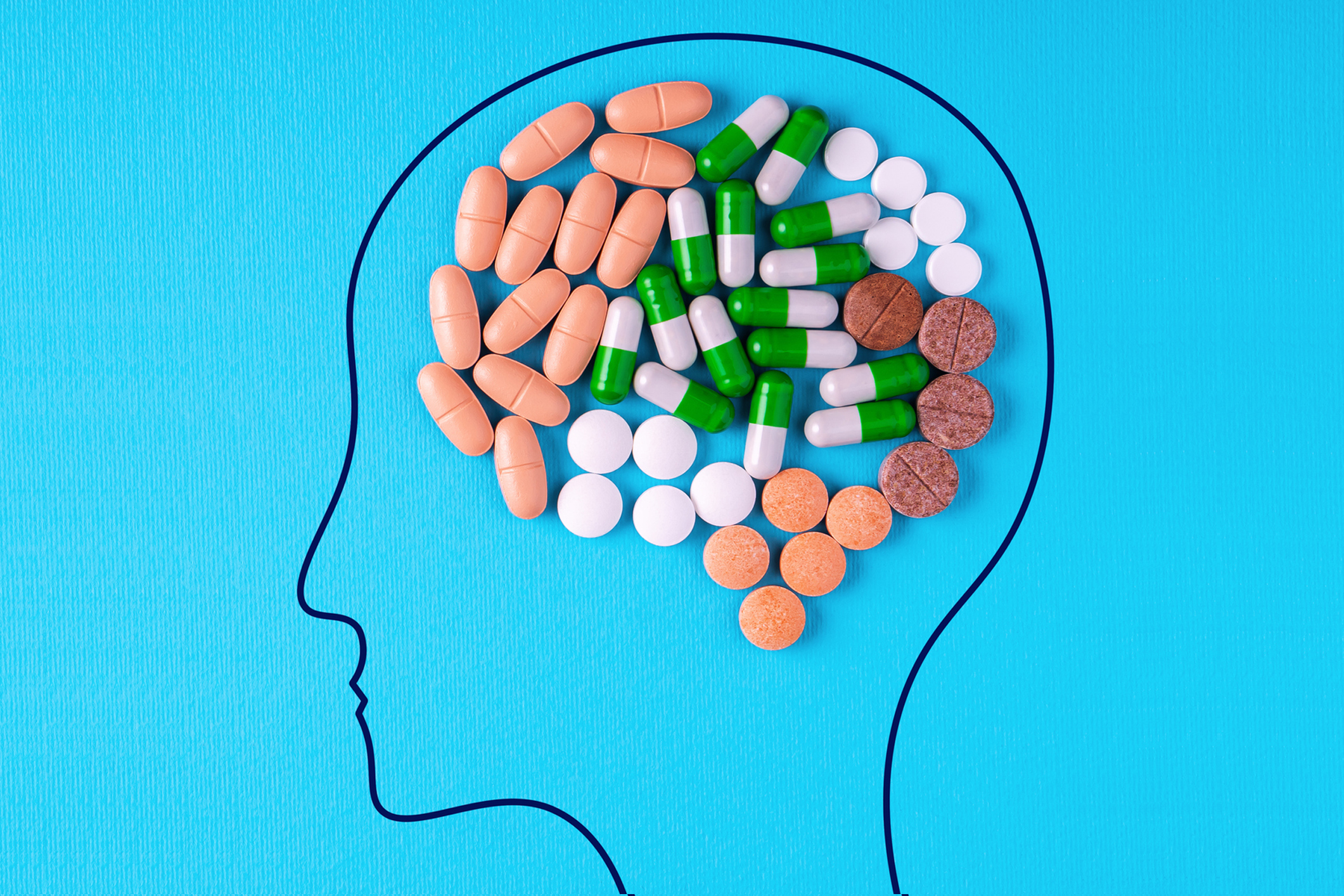
We all—at least those of us of a certain age—forget a word from time to time, misplace our keys, or walk into a room and can’t remember why. When faced with these momentary, minor memory lapses, the idea of a supplement that can help improve brain power can begin to look very appealing. At least that’s what the makers of Neuriva are hoping.
And they have good reason to vie for your money—21 percent of American adults 50 and older take a daily vitamin or supplement specifically for “brain health.”
Touted by Alton Brown (TV chef and food scientist) and Mayim Bialik (actress, neuroscientist, and former Jeopardy! host), Neuriva supplements are advertised on television, online, and in print as so-called brain boosters. But ads for the product make a lot of vague claims that aren’t backed by reputable scientific findings.
And those claims have become more vague than ever. A 2021 class action lawsuit prohibits the company from saying that its product is scientifically proven to help brain function. Reckitt Benckiser, the manufacturer of Neuriva, began paying out an $8 million settlement to customers in 2022. However, the lawsuit only required the company to change one word in its marketing—instead of saying that Neuriva is “clinically proven” to improve cognitive performance, the company is now saying that the supplement is “clinically tested.” More accurate, perhaps, but this wording still gives the impression that the supplement has been shown to provide a benefit—which isn’t really true.
What’s in the bottle
As far as supplements go, Neuriva is fairly simple. It comes in several different varieties (Original, Plus, Ultra, and Sleep capsules, plus gummies and liquid), which all contain the following four ingredients (some have other ingredients as well):
-
Coffee cherry extract. The company brands this ingredient as “Neurofactor,” but it likely doesn’t play much of a role in your neurological health. The coffee we drink is brewed from the beans (seeds) of the coffee fruit (commonly called a coffee cherry). The extract in Neuriva is made from the entire coffee cherry—skin, rind, and bean. Neuriva’s manufacturers point to their finding that coffee cherry extract was associated with a short-term increase in levels of brain-derived neurotropic factor (BDNF), a nonessential substance involved with brain function. But this short-term increase was not associated with an improvement in cognition or memory.
There is some evidence that coffee cherry extract could be helpful, but much of it is flawed. For example, a study in 2021 found that adults (average age 61) randomly assigned to coffee cherry extract had shorter reaction times and reduced cognitive errors compared to when they took a placebo. However, the study only included eight participants, was sponsored by the manufacturer, and included several employees. Similar results were found in a 2019 study of 71 adults with mild cognitive decline. Much larger—and independent—studies would be needed to prove a definite benefit.
- Phosphatidylserine (PS). This is a type of fat found in brain cells, as well as other cells in plants and animals. The Memory Cure, a perennial bestseller, touts but offers no clinical proof of PS supplements as a way to prevent Alzheimer’s disease. Derived from cow brain until the advent of mad cow disease, PS is now extracted from soy and has a different structure. A few preliminary studies suggested that PS might help elderly people with dementia. A 2023 review article suggested that there is “some current evidence for memory benefit from supplementation” with PS, as well as other supplements. (However, one of the studies mentioned used 300 milligrams of PS, while a daily dose of Neuriva contains only 100 milligrams.) But overall, there’s no convincing evidence that PS is useful for treating dementia or for preventing it in healthy people.
- Alpinia galanga. The newest versions of Neuriva include this caffeine-free extract of galangal, a member of the ginger family, branded as Cognivive. The company’s website says the ingredient “is clinically tested to help you feel mentally alert from just one daily serving.” Aside from being grammatically suspect, being “clinically tested” does not equate to clinical proof, and the manufacturer has none to offer. The ingredient is often used in “herbal remedies,” says the company website. There is no evidence affirming any memory benefit from Alpinia galanga as provided by Neuriva’s manufacturer.
- B vitamins. Depending on the specific formulation, Neuriva may contain B vitamins, including B6, B12, and folic acid. B vitamins, as part of their normal role as essential nutrients, may help brain function by reducing blood levels of homocysteine, a chemical in the blood that is created when amino acids are broken down. A 2019 randomized controlled trial of 279 adults with mild cognitive impairment found that although the group that took vitamin B12 and folic acid did have lower homocysteine levels than the placebo group, the rate of cognitive decline in both groups was similar.
Greater than the sum of its parts?
Neuriva’s manufacturer claims its ingredients work together to make “our products stand out from ordinary memory supplements.” That’s great for advertising, but the proof just isn’t there.
The company funded a study published in 2023 involving 133 healthy adults (ages 40 to 65) with self-reported memory problems (but no official diagnosis of dementia or cognitive impairment). After 42 days of taking Neuriva once a day, participants had no improvement in their memory problems, no increase in sustained attention, and no increase in blood levels of BDNF as compared with a group that took a placebo. The Neuriva capsules appeared to be safe and well tolerated by the participants.
If even a study funded by the manufacturer—with four of the eight researchers on staff—can’t find a clear benefit to this supplement, it probably doesn’t deserve a place in your medicine cabinet.
BOTTOM LINE: Even though some of the ingredients in Neuriva have shown some potential, there is no clinical evidence of real-world beneficial effects. You can’t expect a supplement to fix or reverse cognitive dysfunction. At approximately $1 per day, Neuriva isn’t an exorbitant investment, but you’re almost always better off investing in a healthy diet (full of fruits and vegetables, lean protein, and whole grains) and plenty of exercise and sleep. If you are concerned about memory issues, see your doctor to determine the cause.
And, as always, it’s important to remember the disclaimer that all supplement companies—including the manufacturer of Neuriva—are required to include on the label: “These statements have not been evaluated by the Food and Drug Administration. This product is not intended to diagnose, treat, cure, or prevent any disease.”