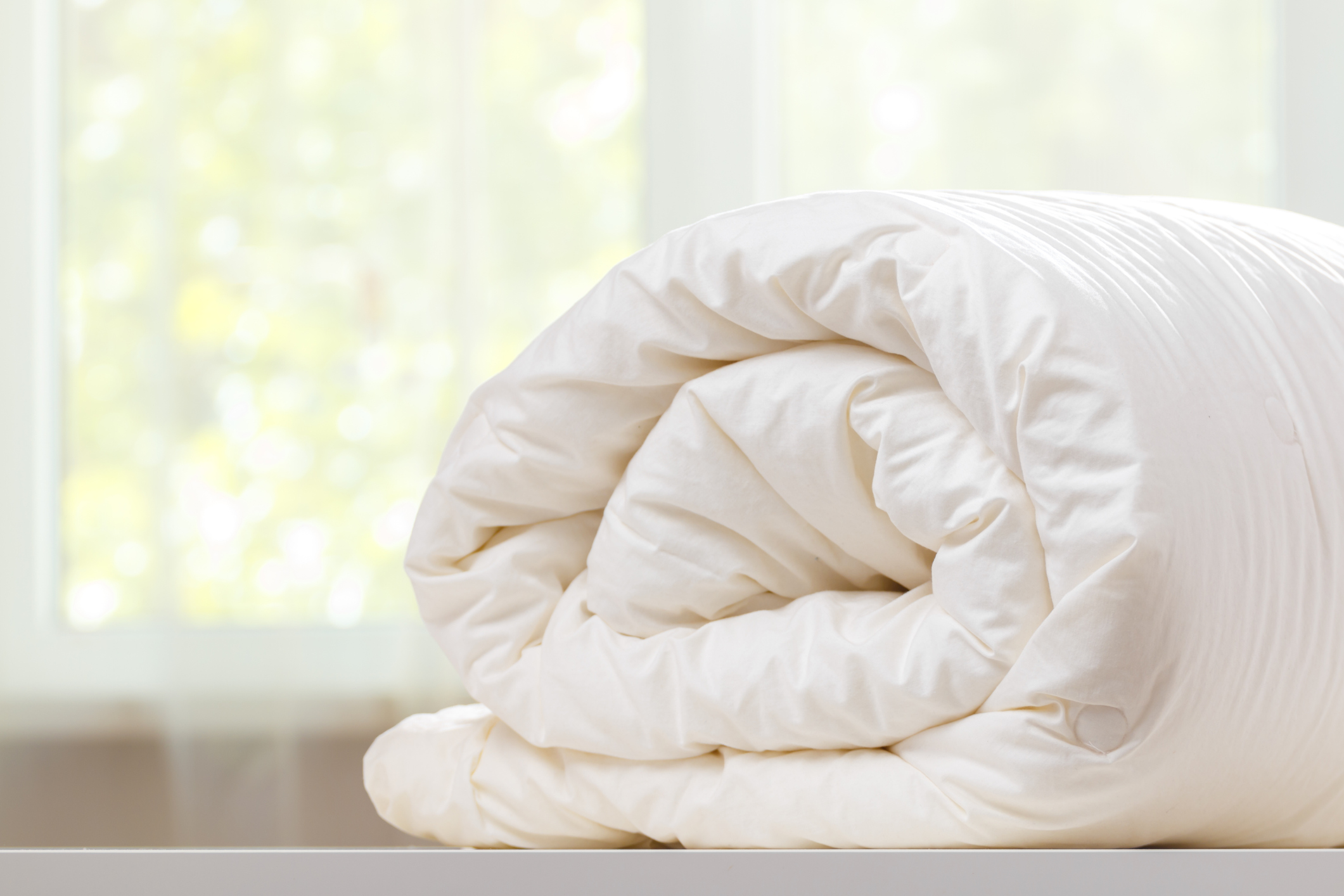
Anxiety, stress, insomnia, depression, restless legs—these are just some of the conditions that proponents claim can be eased by using a weighted blanket. Weighing anywhere from 5 to 30 pounds, the blankets are typically filled with plastic or glass pellets to exert even pressure over the body and feel somewhat akin to what you experience when you don that lead apron during dental X-rays.
It’s not a new idea. Occupational therapists have long prescribed weighted blankets for children with autism or other developmental or sensory disorders in order to help soothe them. The blankets have also been a feature in nursing homes, given to agitated elderly residents. But today, they have become a big business with broader appeal, with ads often popping up on social media platforms and products prominently displayed in store windows. Several weighted-blanket makers have taken to Kickstarter to solicit money for their businesses. One company alone, Gravity, raised close to $5 million from nearly 24,000 backers and has reportedly sold more than 60,000 weighted blankets, at a value of $15 million.
The weight of the evidence
There is a rationale for the idea that covering yourself overnight with something that exerts gentle and even pressure might alleviate stress and anxiety and therefore lead to a better night’s sleep. After all, as many new parents know, swaddling babies often eases their crying and soothes them to sleep. And a firm, reassuring hug tends to calm many adults, too. In medical terms, this type of compression is called deep pressure stimulation. Autism and animal-behavior expert Temple Grandin, among others, has demonstrated that this type of stimulation helps people on the autism spectrum in particular.
Grandin, who has autism herself, is known for her “Hug Machine,” which she invented while she was in college, based on her observations of cattle who were calmed when put in cattle chutes during branding. In a small 1999 study, this Hug Machine—which allows users to pull a lever to provide the desired level of pressure—was found to reduce scores on a “tension” scale (indicating reduced twitches, jerks, and shaking, for instance) in children with autism when done twice a week for six weeks, compared to a placebo group that used a Hug Machine with a nonfunctional lever.
Researchers have theorized that the same kind of pressure could also be beneficial for people who do not have autism but who suffer from anxiety, notably anxiety that keeps them from getting restful sleep. The deep pressure is thought to help reduce the physiological arousal associated with anxiety. But the actual evidence for weighted blankets’ efficacy is nearly as thin as a light cotton sheet, and suggesting that a weight- ed blanket can help with symptoms of myriad conditions is a big stretch.
Here’s what some preliminary research has reported regarding use of the blankets for sleep and anxiety:
- In a Swedish study published in the Journal of Sleep Medicine and Disorders in 2015, 31 people who had chronic insomnia slept for one week with their usual blanket, then two weeks with a weighted blanket (13, 18, or 22 pounds, based on personal preference), and then another week with their usual blanket. Length of sleep bouts increased modestly, as did self-reported quality of sleep, when the participants used the weighted blanket, compared to when they did not. But while the results are encouraging, it’s not known if the increased sleep time was of clinical relevance. And the researchers themselves pointed out that there was no separate control group (participants acted as their own control when not using the weighted blanket), and that it is impossible to provide a weighted placebo blanket.
- A 2014 study in Pediatrics did not find that weighted blankets, used for a two-week period, improved sleep length in children with autism or helped them fall asleep faster or wake up less often, compared to the use of a normal-weight blanket. Yet the children preferred the blankets, and the parents perceived that there were improvements.
- In a small study of 32 adults, published in Occupational Therapy in Mental Health in 2008, 78 percent reported that they felt more relaxed with a 30-pound weighted blanket than without it; 63 percent reported lower anxiety after use. Only a 5-minute time frame was used, so results can’t be generalized for a full night’s sleep.
- A study published in the Journal of Clinical Sleep Medicine in 2020 randomized 120 people with a variety of psychiatric disorders (including major depression, generalized anxiety disorder, and attention deficit hyperactivity disorder) to use either a weighted metal chain blanket or a light plastic chain blanket for four weeks. Those who used the heavier blankets slept better and had higher daytime activity levels and less fatigue, depression, and anxiety than those using the light blankets, with benefits lasting with continued use.
- A systematic review of eight studies, published in the American Journal of Occupational Therapy in 2020, found that weighted blankets have the “potential to be beneficial in limited settings and populations.” More specifically, it concluded that “weighted blankets may be an appropriate therapeutic tool in reducing anxiety; however, there is not enough evidence to suggest they are helpful with insomnia.”
Worth a try?
There are only a few, mostly small, published studies on weighted blankets, and they have design limitations. Still, that doesn’t mean the idea of deep pressure stimulation is without merit. It just means that it still remains relatively untested in the real world using commercially available weighted blankets. If your sleep is poor and your anxiety level high, you can give such a blanket a go—though you might want to talk with your doctor about the advisability of trying one if you have circulation or respiratory issues, sleep apnea, or another chronic health condition that could potentially contraindicate sleeping with extra weight on top of you. You might also just try using the blanket for short stretches of waking time if you find that soothing.
Though some studies have tested heavier blankets, the general recommendation is to buy one that’s about 10 percent of your body weight (15 pounds for a 150-pound person, for instance). The blankets range in price from about $50 to more than $250 and come in different fabrics. Ones made of polyester do not “breathe” as well as cotton so are not the best choice if you tend to get hot when you sleep; some are made with moisture-wicking materials to help you stay cool. Never use a weighted blanket on an infant or a very young child.
BOTTOM LINE: A weighted blanket will not solve serious sleep issues related to deep-seated stress or anxiety, but it may help to some extent on its own or be a soothing adjunct to medication or psychotherapy used to manage stress or anxiety. And no blanket is a replacement for good sleep habits, which include shutting off electronics in the bedroom, avoiding or limiting caffeine (especially later in the day), installing shades or curtains that block light from outside, and engaging in whatever soothing bedtime rituals work for you.