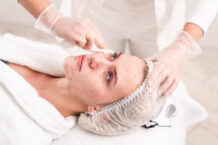
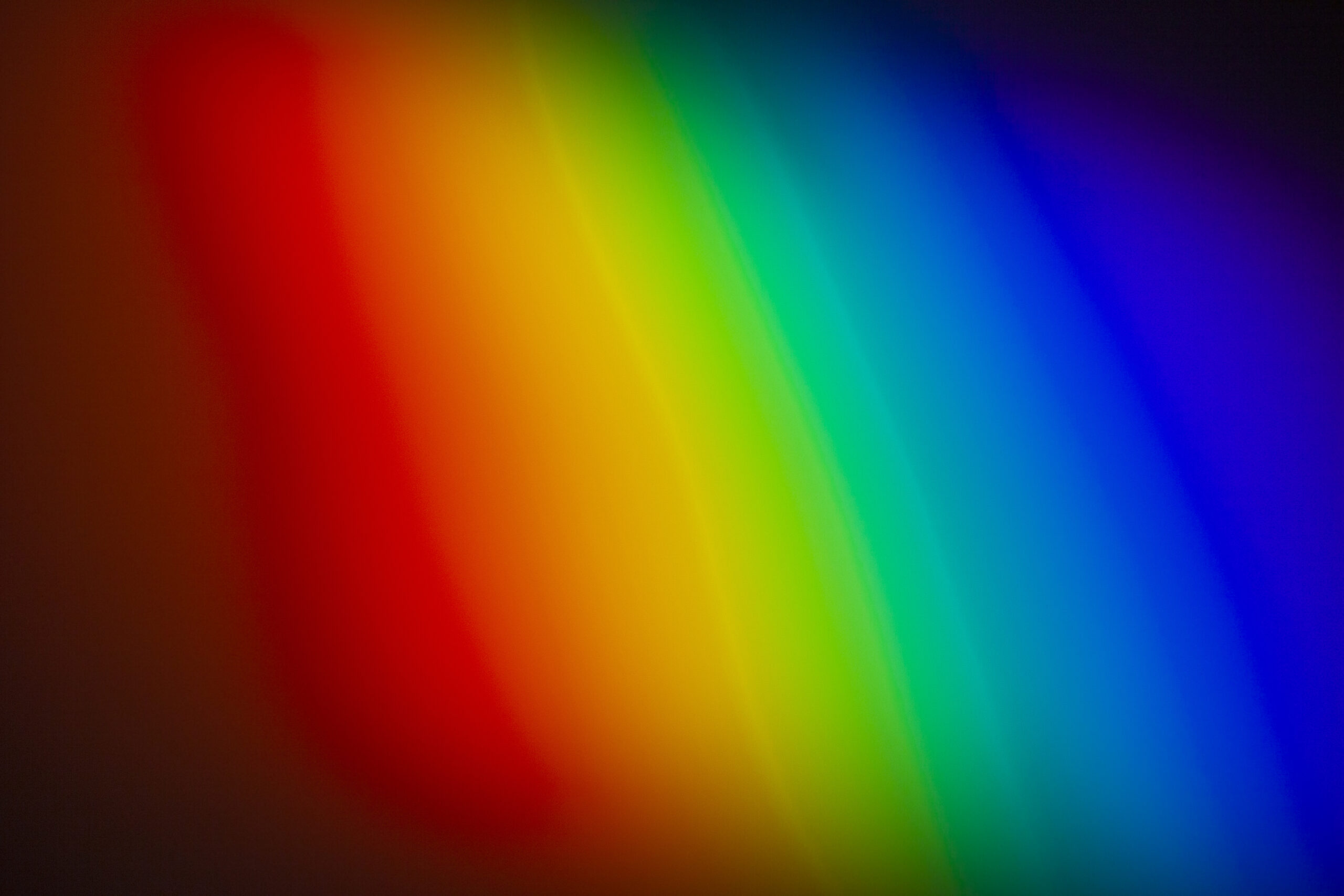
Blue light for acne? Red light to erase fine lines and wrinkles? Green light to ease pain? The different wavelengths of various colors enter the skin’s layers at different depths, and researchers have found some evidence that depending on the depth of penetration, colored light may contribute to a variety of healing effects—and even protect against cancer.
The treatments, called LED (light-emitting diode) therapy, were first used some 30 years ago by NASA. That agency determined that red wavelengths could boost plant growth and then discovered accidentally that this could promote wound healing. While doing testing on plants, the scientists found it was resolving lesions on their skin.
The good news: It’s not ultraviolet light, so it doesn’t burn the skin.
The cautionary note: For just about all conditions, evidence of its efficacy ranges from moderate to weak. In fact, while some doctors use LED therapy in their offices, it’s more often available in aesthetic skin care centers or skin care spas. That’s at least in part because aestheticians are not allowed to prescribe medications, which are usually more effective at treating the same conditions targeted by LED therapy.
Here are some of the findings to date and guidance for applications of colored light therapy.
Blue light
Sometimes called PDT (photodynamic therapy), blue light has been touted for treating both mild to moderate acne and actinic keratosis (a precursor to squamous cell cancer, which is the second most common type of skin cancer).
- Acne. Blue light penetrates the outermost layer of the skin and helps diminish acne by killing bacteria responsible for it. It is not a cure-all. The American Academy of Dermatology says that while most people see clearing of their acne, it doesn’t take care of the whole problem, and people respond to different degrees. Additionally, a 2019 meta-analysis that looked at 14 different blue light trials found mixed results. It also made clear that many of the studies suggesting it works involved only two or three dozen people who were followed for just a few months—not the most robust portfolio of positive evaluations. For instance, a 2004 study found a 65 percent reduction in acne lesions overall after four weeks of twice-weekly blue light therapy, but that research included only 28 people and was not double-blinded.
Still, people for whom other acne treatments have not worked might want to consider it as a last resort, as might those who don’t want to take oral antibiotics to clear their acne for fear of yeast infections or unpleasant gastrointestinal symptoms. Blue light might also be considered in cases where topical acne medications are too drying and irritating. Be aware, though, that blue light therapy for acne is often not covered by health insurance.
The number of sessions recommended by a dermatologist will differ depending on the severity of the acne and how well the patient responds to treatment. For most people, a minimum of several weeks of once-weekly sessions is recommended. Side effects may include a stinging sensation or itchiness, but these usually resolve within a day.
Note: The FDA has approved devices for blue light therapy at doctors’ offices, aestheticians’ offices, and at home, and many online ads for blue light tout that fact. But the FDA’s standard for approving medical devices is much lower than for approving medications.
Note, too, that if you purchase a blue-light device for at-home use, it will be less powerful than a machine at the doctor’s office. It needs to be used twice a day, for 30 to 60 minutes, for four to five weeks.
- Actinic keratosis. Actinic keratoses are rough, scaly spots on the skin—each more or less the size of a pencil eraser. They develop from years of sun exposure and can turn into squamous cell carcinomas if not treated. Blue light therapy is very effective in clearing them up. Studies have shown cure rates approaching 80 and even 90 percent. (“Cure” doesn’t mean the patient won’t get any more actinic keratoses; it means that the ones present are resolved and that new ones will presumably form at a lower rate.)
It’s a two-part treatment that is covered by insurance. During the first part, a solution that makes the skin extremely sensitive to light is applied to those areas that have actinic keratoses—usually the scalp and face. After that, blue light is beamed at the head and destroys the lesions by causing a reaction with the solution. Most patients require two treatments, with sun avoidance for 48 hours after each one. Some people report stinging pain afterwards, but researchers are looking at ways to reduce discomfort after the procedure.
You can also opt for a treatment that is equally or even more effective. One that’s available is 5% fluorouracil cream (5FU), a topical medication considered the gold standard for actinic keratoses. Other topicals that may prove just as effective as light therapy include 5FU combined with calcipotriene (Calcitrene), tirbanibulin (Klisyri), and imiquimod (Aldara). There’s also cryosurgery, often the default treatment for patients who have only a limited number of actinic keratoses.
It’s true that blue light therapy can cause less of an inflammatory response than a topical like 5% fluorouracil cream, with less redness and discomfort. And some people have poor responses to cryosurgery with the spots returning quickly, making light therapy worth a try. Some say blue light may also improve the cosmetic appearance of the skin in addition to clearing actinic keratoses. But it is by no means the only effective treatment.
Red light
Red light (and its close cousin infrared light) penetrates the skin more deeply than blue light and is believed to help reduce fine lines and wrinkles, scarring, and acne, too. (Some dermatologists use a combination of red and blue light to help clear acne.) Often, it’s touted as a skin rejuvenator and an aid for minimizing crow’s feet and other wrinkles, which is why it is frequently found in aestheticians’ offices. At-home devices are available as well.
The thinking is that red light may promote collagen production and improve the texture of the skin. But the evidence, once again, often comes from small studies. In one, 57 people were treated with red light therapy, and 40 of them were assessed to have “wrinkle improvement.” As a report in the Aesthetic Surgery Journal points out, a “reasonable body of clinical trial evidence exists to support the role of low-energy red/near infrared light as a safe and effective method of skin rejuvenation.” But, the report goes on to say, “its ubiquity and commercial success have outpaced empirical approaches on which solid clinical evidence is established.”
The American Academy of Dermatology does not provide information on red light therapy for skin rejuvenation on its website. If you are considering speaking to your doctor about going for treatments or buying a red light device to use at home (which will have less powerful strength than a device at the doctor’s office), be aware that its use for cosmetic purposes will not be covered by health insurance. And treatment is ongoing. There is not a specified number or even a specified range of sessions. Finally, there are other treatments out there, such as laser therapy, that are more effective.
Green light
Green light, which penetrates the skin somewhere between the depth of blue and red light, is being studied for its effects on pain and is best considered as an emerging therapy.
In a study in Cephalalgia in 2021, 29 migraine sufferers exposed to one to two hours of green light every day for 10 weeks saw significant reductions in how often they had headaches. Chronic headache sufferers (at least 15 headaches per month) went from experiencing an average of 22 headaches a month to about nine. Those who suffered migraines on an episodic basis (fewer than 15 a month) went from an average of eight days of headaches monthly to between two and three. Those with migraines also had reductions in headache duration and intensity.
In a study of 21 people with fibromyalgia, published in Pain Medicine in 2021, exposure to green light therapy led to reduction in self-reported pain scores—from an average of 8.5 to a little under 5, on a scale of 1 to 10.
Preliminary research suggests that green light increases circulation of endogenous opioids. Other research—on lab rats—suggests that green light may have an influence because neuronal connections spanning from the retina to the spinal cord pass through the parts of the brain that are responsible for pain control. Stay tuned for more and larger studies to confirm or refute the early findings.