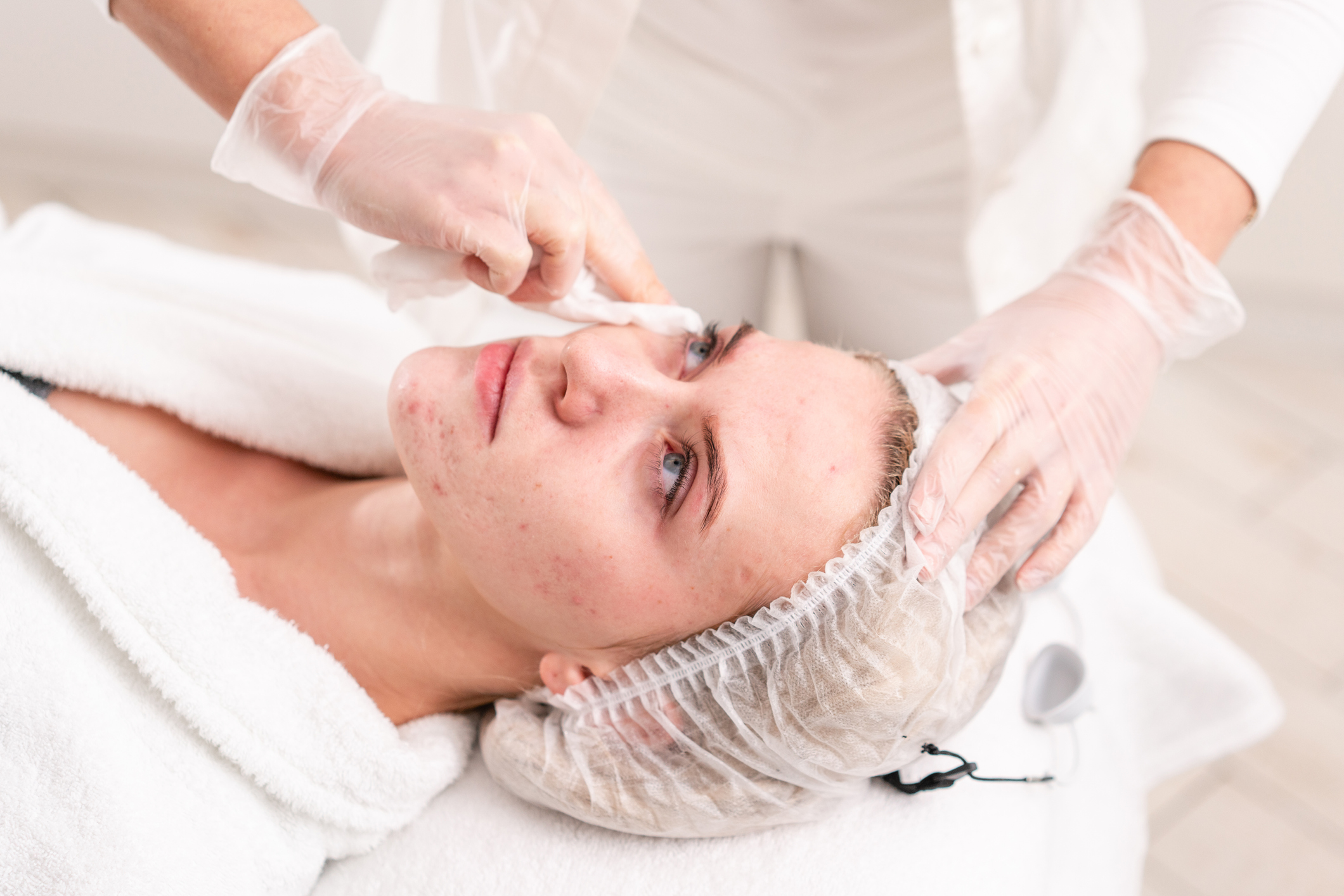
If you had acne as a teenager or young adult (and you likely did, at least to some degree), you may carry with you an unwanted reminder of those past days—in the form of scarring.
Acne involves inflammatory processes that lead to lesions, with scars potentially forming during the healing process as the body remodels collagen to repair the damage. The greater the severity of the acne, the greater the chance of scarring. In the case of most scars, too little collagen is formed, resulting in depressions, pits, or indents. This type of scarring, called atrophic, can take the form of “ice pick” scars (generally small but obvious deep holes in the skin), “boxcar” scars (depressed areas that are usually round or oval in shape with steeply angled sides, like a deep pore), and “rolling” scars (with sloping edges that make the skin look wavy). Less commonly, too much collagen is formed in a kind of overzealous attempt to heal the lesion, resulting in raised tissue. This type of scar is called hypertrophic.
Making matters worse, when facial skin begins to sag as a natural consequence of aging, wrinkles form around the scars, making them more visible. For this reason, many people who have had acne scarring since their teen years or early 20s don’t seek treatment until they reach their 40s, 50s, or older.
Treatments galore
According to Warren Dotz, M.D., a dermatologist and member of our editorial board, “No one should get acne scars, because acne is a treatable condition and the inflammation required to get scarring can be prevented.” That said, if it’s too late for prevention, dermatologists have an arsenal of treatments they can use to lessen the appearance of scars considerably, sometimes nearly completely. Which one is best for you depends on the type, depth, and extent of the scars. Usually a combination of treatments is recommended. Repeated visits to a dermatologist are often needed, and it can take months to see the full results.
Options for depressed atrophic scars include:
- Minor surgery, which, for instance, involves lifting a scar closer to the surface of the skin to make it less noticeable.
- Resurfacing procedures, for widespread (and not-too-deep) scarring, to remove layers of skin, which stimulates production of new skin cells. This can be done with lasers, chemical peels, or dermabrasion (deep exfoliation of the top skin layer).
- Injectable dermal fillers (temporary, semipermanent, or permanent), which augment soft tissue and are best for boxcar and rolling scars. Hyaluronic acid, for instance, attracts water and immediately plumps up the skin; longer term, it appears to stimulate cells to produce collagen.
- Skin tightening, using radiofrequency technology, which delivers a current through the skin to stimulate collagen production and make depressed acne scars less visible.
- Microneedling (collagen-induction therapy), which involves using fine needles to prick the skin, after which the skin produces more collagen to heal the small wounds created (especially good for rolling scars). In a 2015 review of 18 studies on microneedling, 12 reached statistical significance for scarring improvement.
- Electrodesiccation, which involves heating the skin, kills the tissue and thereby can reshape or reduce the edges of boxcar scars.
- Some dermatologists use retinoids, particularly tazarotene, which can remodel skin.
Treatment for raised hypertrophic scars also includes surgery and laser therapy as well as:
- Injections with corticosteroids or other substances, to soften and flatten the scars.
- Cryotherapy, which freezes and kills skin tissue, causing the scars to fall off. It may permanently lighten the treated skin area, so it’s best for lighter-skinned people.
- Creams, gels, or silicone dressings. Available over the counter, these scar products may help reduce the size and visibility of scars, as well as itching and other discomfort. But they must be used continuously for a long time and won’t eliminate the scars. Ask your dermatologist about what product might be appropriate for you.
Other treatments may be on the horizon, including autologous platelet-rich plasma (PRP) and stem cells that promote wound healing.
BOTTOM LINE: If you’re bothered by acne scars, consult an experienced board-certified dermatologist specializing in cosmetic dermatology; the doctor should take a detailed medical history and inform you of the risks and benefits of the various procedures and what precautions you may need to take before and after (such as avoiding sunlight). Because scars are typically considered a cosmetic condition, your health insurance likely won’t cover the treatments, which can cost hundreds to thousands of dollars. Some dermatology offices may offer payment plans or discounts if you pay in advance.
Not just a scourge of adolescence, acne can linger long into adulthood—or possibly appear for the first time then. These tips can help pimple-prone people of any age prevent or reduce outbreaks.
- Keep your face clean and avoid touching it with soiled hands. Wash gently (don’t scrub) using a mild cleanser and a soft pad (not a rough washcloth) or your hands, then rinse and blot dry. Remove makeup thoroughly before going to bed. Avoid “exfoliating” skin care products—their gritty texture can further irritate skin. Don’t waste your money on “medicated cleansers.”
- Look for “noncomedogenic” or “nonacnegenic” skin products (though such terms are not regulated). Oil-based products can block sebum (an oily substance produced by hair follicles that can clog the follicles, causing whiteheads or blackheads) from naturally reaching the skin’s surface, but some research has found mineral oil not to be a problem.
- Consider over-the-counter topical acne medications, but be aware that because skin tends to get drier with age, they may cause excess drying and irritation. The ingredient benzoyl peroxide kills bacteria—if you try it, start with a low (2.5%) concentration. Salicylic acid and glycolic acid help remove surface oil and dead skin. Some acne products are designed specifically for adults and claim to be less irritating, but you may have to shop around to find one that works best for you—or ask your dermatologist for a recommendation.
- Don’t squeeze, pick, or pop a pimple. This increases skin irritation, as well as the risk of infection and scarring.
- Eat a healthful diet, which may help control the chronic inflammation involved in acne. Though the literature is rife with inconsistencies about the role of diet in acne, some research has implicated carbohydrate-rich foods with a high glycemic index (such as white rice, white bread, and pretzels) and frequent dairy consumption (milk in particular). For instance, diet records of more than 24,000 adults (average age 57) in France revealed an association between current acne and milk, sugary drinks, and sugary and fatty foods. There is limited evidence that omega-3 fats (as found in fatty fish and flaxseeds) may be protective. The role of chocolate is still debatable, but a small study in 2014 found that acne worsened in young men with mild cases who took capsules of pure cocoa or cocoa with gelatin, compared with those taking gelatin alone. Similarly, a 2016 study found a worsening of acne in acne-prone men who consumed capsules of pure cocoa or 99% dark chocolate.
- Limit sun exposure. It might have some antibacterial effects, and a tan may help camouflage the lesions, but the long-term damage from sunning outweighs any short-term benefits.
If these measures don’t help enough, a dermatologist may recommend or prescribe other treatments, such as topical retinoids, topical or oral antibiotics, topical dapsone (Aczone), or photodynamic (light) therapy. Hormonal therapy (oral contraceptives and anti-androgens) are other possible options for hard-to-treat cases. Though less used overall, oral isotretinoin (Accutane) is particularly effective for severe active cystic acne, the most likely type of acne to cause scarring.