
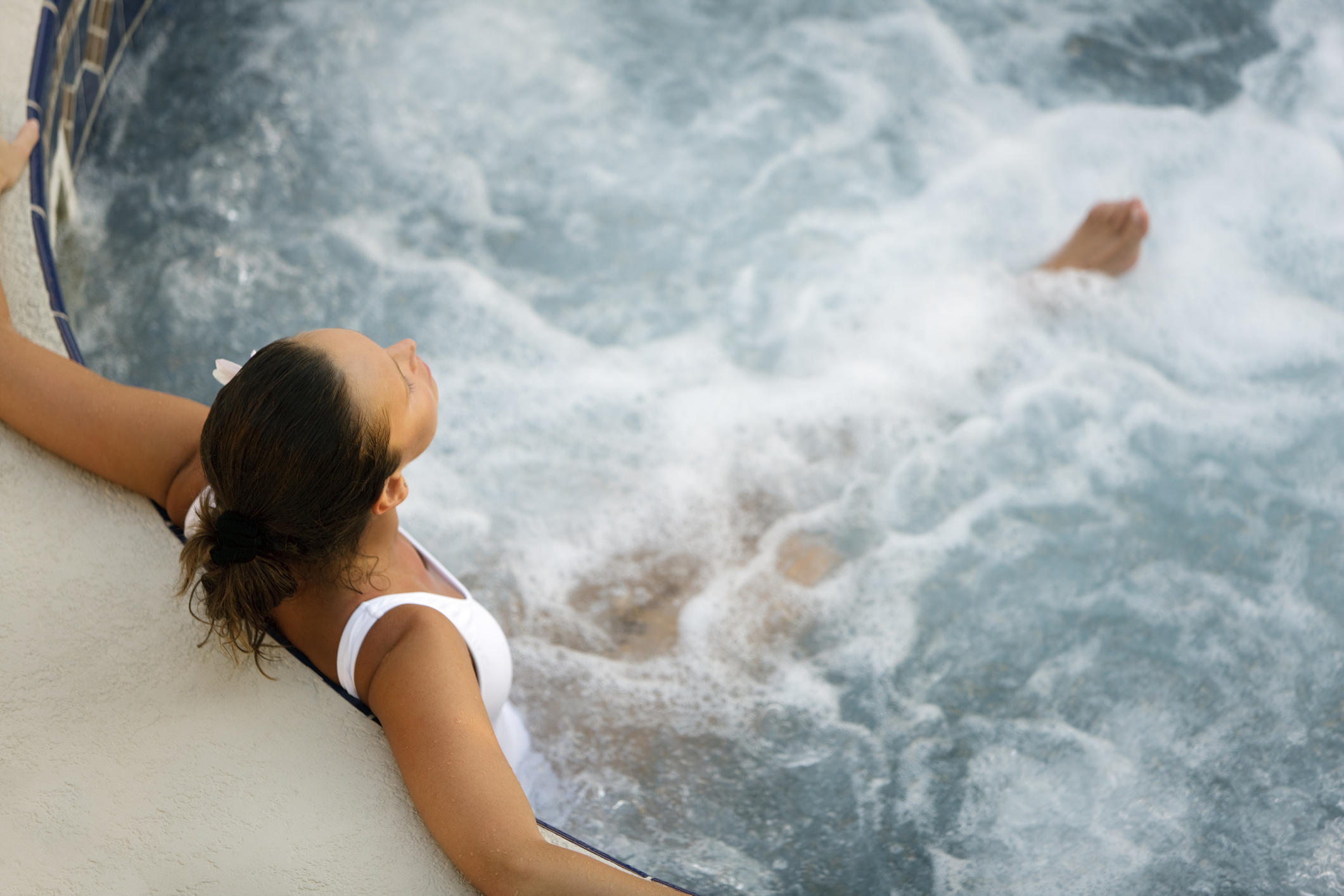
In the middle of the 19th century, a new wellness trend took hold. European nobles, royalty, and members of the American leisure class began traveling to spa towns like Baden-Baden, Germany, and Warm Springs, Georgia, to “take the waters.” These vacationers were not only seeking a respite from city life but also hoping that bathing in the warm, mineral-rich waters would relieve their ailments. In search of a cure for his polio, President Franklin D. Roosevelt bathed in the waters of Warm Springs every year from 1924 until his death in 1945.
Well into the age of modern medicine, the popularity of thermal springs tourism remains robust. Today, there are more than 35,000 hot springs establishments in 130 countries, and people continue to flock to them.
Hydrotherapy refers to the use of water—whether from a pool, bathtub, hot tub, or steam bath—for therapeutic purposes. (Hydrotherapy can also refer to the use of cool or cold water, in the form of cold plunges or ice packs, for instance, but the focus of this article is on warm or hot water, typically at temperatures of 100°F to 104°F. Note also that saunas, while not involving immersion, are sometimes associated with hydrotherapy as a heat-based treatment because they expose the body to high temperatures in a controlled environment.)
Balneotherapy is a specific form of hydrotherapy that involves bathing in mineral-rich waters such as thermal baths, hot springs, or mud baths (balneo comes from the Latin balneum and Greek balaneion, both meaning “bath”). The minerals in these waters bubble up from the earth and may include calcium, silica, magnesium, potassium, sodium, chloride, sulfur, and iron.
Forms of hydrotherapy include:
- Warm baths. Soaking in a bathtub at home to ease muscle tension and promote relaxation.
- Spa, hydro-massage, or whirlpool bath. Pressurized jets massage deeply into sore muscles. You might do this at home, a fitness club or wellness center, a medical spa, or a hotel.
- Steam bath and wet sauna. The moist heat is good for clearing congestion and improving circulation. Some homes (and many in Finland) have a sauna; they are also available at resorts, fitness clubs, and spas.
- Contrast or water circuit therapy. Offered at wellness centers and spas, this treatment involves alternately dipping part or all of your body into warm water (hot tub) and cold water (cold plunge). It’s thought to improve circulation, reduce swelling, and relieve muscle soreness.
- Aquatic exercise. This involves doing cardio, strength training, and flexibility exercises using the water for buoyancy and resistance. Aquatic exercise can be a useful add-on to physical therapy. You can try it at a community pool, YMCA, or gym that has a pool.
While people have been using water as a treatment for centuries, only in the past few decades have researchers found evidence to back up the health benefits, which include pain relief, muscle relaxation, improved circulation, better immune function, and reduced inflammation.
Below are just some of the conditions that may benefit from hydrotherapy. It’s important to note that many of the studies were not well designed. New and better—and longer—trials are needed to confirm the effects noted. Keep in mind also that hydrotherapy is not a cure for any medical condition or disease but rather is considered an alternative or complementary therapy, and, as such, is not regulated by the FDA.
Arthritis
Soaking in thermal mineral water may help ease osteoarthritis of the knee, hip, hand, and lower back, according to a 2023 review of 17 studies that was published in Rheumatology International. All but one of the studies noted a significant reduction in osteoarthritis pain, and many found improvements in quality of life. The authors say the warmth of the water has analgesic (pain-relieving), muscle-relaxing, and anti-inflammatory effects. Water also creates buoyancy that takes pressure off sore joints—and, as other research has noted, it’s a safe way to relieve knee osteoarthritis pain and improve function, in particular.
Hydrotherapy may be helpful for rheumatoid arthritis, too. Studies suggest it reduces pain and improves the health status of patients, compared with no treatment or other treatments, at least in the short term. Other studies have found that mineral bathing (as well as immersion in mud or sand) may improve mood and quality of life in people with the condition.
Cardiovascular disease
Immersion in hot water has been proposed as an alternative or add-on to exercise for cardiovascular disease (CVD) prevention. In a study from Japan, people who bathed in a hot tub every day or almost every day had a 28 percent lower risk of developing CVD than those who bathed in a hot tub two or fewer times per week, or not at all. More frequent hot tubbers also had a 26 percent lower risk of all strokes. These figures are comparable to the CVD risk reduction from exercise, which is in the range of 25 to 50 percent. The authors noted that in Japan, hot bathing typically involves sitting in a tub of 104°F (or higher) water up to the shoulders for about 10 minutes.
Part of the cardiovascular benefit of hot bathing may result from its ability to lower high blood pressure. This likely occurs because blood vessels relax, allowing blood to circulate more easily and reducing the heart’s workload.
Skin conditions
A 2024 systematic review of eight studies found that eczema and psoriasis symptoms improved after treatment with thermal mineral baths. The authors speculated that at least some of the effect was due to chemicals like sulfur, magnesium, selenium, and silicon, which help regulate the overactive immune system and calm the inflammation that contributes to these skin diseases. Sulfur and magnesium also strengthen the skin’s protective barrier against allergens and germs, and speed up the production of new, healthy skin cells to replace damaged ones. However, the authors noted several limitations to the included studies, such as poor design and a risk for bias.
Fibromyalgia
Hydrotherapy has been proposed as a way to help alleviate some symptoms of fibromyalgia. Not only does the warmth reduce pain and stiffness directly, but it also stimulates the release of hormones involved in regulating the body’s stress and immune responses. Some research has found that it reduces pain, disability, and depression in people with fibromyalgia, and that these improvements continue for six months after treatment ends.
Covered by insurance?
Balneotherapy is considered an integral part of healthcare in parts of Europe and is therefore covered under some national health insurance. In Japan, national health insurance may cover it if it’s prescribed by a doctor for medical reasons. In the U.S., balneotherapy is generally not recognized as a standard medical treatment, but some insurance plans may cover other forms of hydrotherapy when prescribed by a doctor and provided by a licensed therapist to manage a health condition such as rheumatoid arthritis or for rehab. If you use hydrotherapy for general wellness purposes—for example, to relieve everyday sore muscles or reduce stress—it likely won’t be covered.
Soak safely
As noted, bathing in hot water could be beneficial for cardiovascular disease, but there are potential risks, especially at hotter temperatures above 104°F. The heat could cause complications like an irregular heart rhythm or a drop in blood pressure that could contribute to a serious event like a heart attack or a loss of consciousness that leads to drowning. Check with your doctor before trying this if you have heart disease or low blood pressure—or if you’ve recently had surgery. Soaking in some types of water, such as a hot tub, could also increase the risk of infection.
For a safe experience, get into the water slowly to give your body time to adjust to the temperature. Don’t stay in for more than 10 to 20 minutes (the hotter the temperature, the shorter the duration should be). If you feel dizzy, ask for assistance to get out of the water and remain seated for a few minutes until the lightheadedness resolves.
BOTTOM LINE: There’s some evidence that soaking in warm/hot waters—mineral-rich or not—may reduce inflammation, relieve pain, and have other health benefits. Taking baths at home or trying other types of water therapy is generally safe for most healthy adults, but it’s a good idea to check with your doctor first to see if it’s right for you and to get more guidance on doing it safely. If you plan to use a clinic or other facility, make sure it’s reputable and that it doesn’t promote this treatment as a cure-all. Also, check whether your insurance will cover it if you’re unable to pay out of pocket.