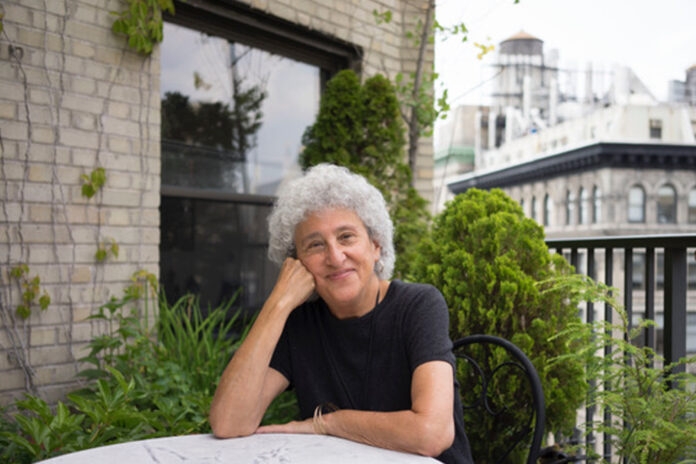
Marion Nestle, Ph.D., M.P.H., is an author, academic, and champion of the slow food movement. For nearly five decades, she has been advocating for healthier food policies and greater public awareness about the links between politics, food, and health. She just turned 87, but her commitment to food advocacy remains vibrant and strong.
In October 2022, Dr. Nestle’s 15th book was published: Slow Cooked: An Unexpected Life in Food Politics, a memoir that chronicles her childhood and journey into academia as a woman in a field dominated by men, all while highlighting her love of food and the importance of understanding the enormous influence for-profit food companies have in shaping food policy.
In this Q&A, Dr. Nestle talks about how she started out focused on nutrients but gradually shifted to the food politics issues that concern her the most, among them how marketing plays a crucial role in shaping our food choices. She also emphasizes the importance of buying real food, avoiding junk food, particularly sugar-sweetened beverages, and finding delicious ways to eat healthfully.
Wellness Letter: Your latest book is a memoir about your journey into studying food politics. How has your approach to nutrition, diet, and food changed over the decades?
Dr. Marion Nestle: My doctorate is in molecular biology, and I started out studying nutrition from a very biochemical approach. I was totally interested in nutrients. They’re fascinating—what they do, why we require them, what biochemical pathways they’re involved in.
In the first nutrition class I taught (in the 1970s), I was already talking about the politics of food. I used Frances Moore Lappé’s Diet for a Small Planet and some articles from the New York Review of Books written by a historian at Brandeis University, where I was at the time, on the parallels between the food and oil industries in causing harm to human health and the environment. And that was my very first class!
The University of California Press asked me at one point if I would do a collection of articles that I had written over the years to illustrate the trajectory of my views about nutrition and health. As it turns out, I didn’t have a trajectory. The articles that I wrote 40 years ago could have been written yesterday. The details might be different, but the principles are the same. The kinds of issues that concerned me then, concern me now.
WL: What are some of those issues?
MN: Eating healthfully. Eating so that you don’t destroy the planet. And the role of the food industry in trying to sell products no matter what harm those products might cause.
WL: You write about this turning point in your memoir, but can you summarize how you made the leap from being intensely focused on nutrients to a career examining food politics?
MN: From the beginning, I was interested in food politics. It seemed clear that you could not understand why people eat the way they do if you didn’t understand the way the political system works and how food marketing works. Marketing is meant to be invisible. You are not supposed to notice it, and most people don’t.
The turning point occurred when I attended a meeting at the National Cancer Institute in Washington, D.C., on behavioral causes of cancer, mostly cigarette smoking. I was the main diet speaker, but most others were anti-smoking researchers, physicians, or advocates. They showed slides of cigarette marketing from all over the world. I knew that cigarette companies marketed cigarettes everywhere, and I knew they marketed to children. Cigarette marketing was so ubiquitous I had never paid any attention to it.
I walked out of that meeting and turned to the other dietary speaker, Jane Brody of the New York Times, and said, “Jane, we should be doing the same thing for Coca-Cola. We should be paying attention to how food companies market to children.” And so I did. I started paying attention. Everywhere I went, I would take photos when I saw examples of food company marketing.
WL: And that’s when you began writing articles and books on food, marketing, and politics. How were your writings received?
MN: By the late 1990s, I had published a bunch of articles and I thought I could collect them into a book. That was Food Politics: How the Food Industry Influences Nutrition and Health. When the book came out, it got a strong reaction. I thought, “Well, all books get reactions.” I didn’t realize at first how unusual it was. In writing Food Politics, I thought I was just describing the obvious. But the idea that food companies are businesses selling something with profits as their first priority seemed revolutionary.
WL: Has the marketing around food changed over the past 20 years since Food Politics was published?
MN: The marketing issues are the same. Food companies, like any other corporations, have fiduciary responsibility to stockholders as their first priority. Their job is to sell products. They’re not social services or public health agencies. They are businesses with the goal of making money. Once you understand that, everything they do makes sense. It becomes clear why they oppose public health measures, focus on selling the junkiest foods to the largest number of people, and so fiercely oppose regulations.
WL: Surely some aspects of our food supply have changed for the better.
MN: Yes, they have. It’s now perfectly possible to eat healthfully buying foods at just about any grocery store in the United States—that’s actually been a big change. The food supply is much better. One example is the replacement of full-sugar sodas with flavored bottled water. The bottles are still a terrible environmental problem, but at least people are consuming less sugar.
WL: With all this in mind, what should the average person keep in mind when thinking about nutrition, diet, and food?
MN: Buy real food. Don’t buy junk food (what we are now calling ultra-processed)—or don’t buy very much of it. And avoid sugar-sweetened beverages. That’s it. There’s only one diet, and it works to prevent chronic disease as well as to protect the planet. Michael Pollan sums it up in seven words: “Eat food. Not too much. Mostly plants.” How you do that is up to you, but you really have loads of choices.
WL: Sounds simple. But food can be so personal and emotional. For example, many people who stop eating meat find it extremely challenging. Any tips on how to follow that advice?
MN: Advice to eat less meat—for reasons of health and the environment—does not necessarily mean eating no meat at all. It just means eating less of it. You don’t have to eat meat if you don’t want to. Lots of other foods, such as legumes, nuts, and quinoa, provide the same nutrients. Some people like plant-based alternatives, and they can help if people feel meat-deprived.
I’m fascinated by people’s personal relationships with food. Fortunately, there are an infinite number of ways of putting together diets that are good for human and planetary health. I want everyone to enjoy their food. Food is one of life’s greatest pleasures.
WL: What have you been eating lately?
MN: I follow my own dietary advice. I would never advise dietary practices I don’t follow myself. I happen to like salads, so given a choice, I’m likely to eat vegetables. I’m an omnivore and I eat meat, just not much. I prefer whole foods and generally avoid anything artificial—that’s one of my food rules.
WL: Do you have any practical advice for readers?
MN: Sure. Try to include some plant foods you like—vegetables, fruits, beans, nuts, grains—in every meal. Don’t buy a lot of ultraprocessed foods (which are industrially produced to make them irresistible, don’t look like the foods they were made from, and can’t be made at home because you don’t have the equipment or additives). Ultraprocessed foods are strongly associated with poor health and overeating and best consumed in small amounts, if at all. But enjoy what you eat! That matters a lot.