Part 1 of a 3-part series on product ‘expiration’ dates
With the cost of groceries still so high, no one wants to throw away food unnecessarily. But you also don’t want to eat something that will taste bad or possibly even make you sick. Most food packaging in the U.S. includes expiration dates that can provide information on whether the product is likely to be good, bad, or somewhere in between.
Surprisingly, much of this labeling is voluntary. Federal law requires only infant formula to carry an expiration date. Other products are covered by state law, and many states require only shellfish and dairy products to carry a use-by date. Most other product dating, if it exists, is put there voluntarily by the manufacturer.
It’s important to understand that—with the exception of baby formula and food—the date on a product is not truly an expiration date. A product is not automatically bad or spoiled once that date has passed. The date suggests something about quality, not safety.
There is, in fact, a lot of confusion about what all the dates on products mean, and the FDA estimates that about 20 percent of consumer food waste in this country is due to people not understanding food labeling and throwing away food that’s still good.
Learning to speak label
Here’s how to decipher the labeling and reduce your waste—good for both the planet and your finances.
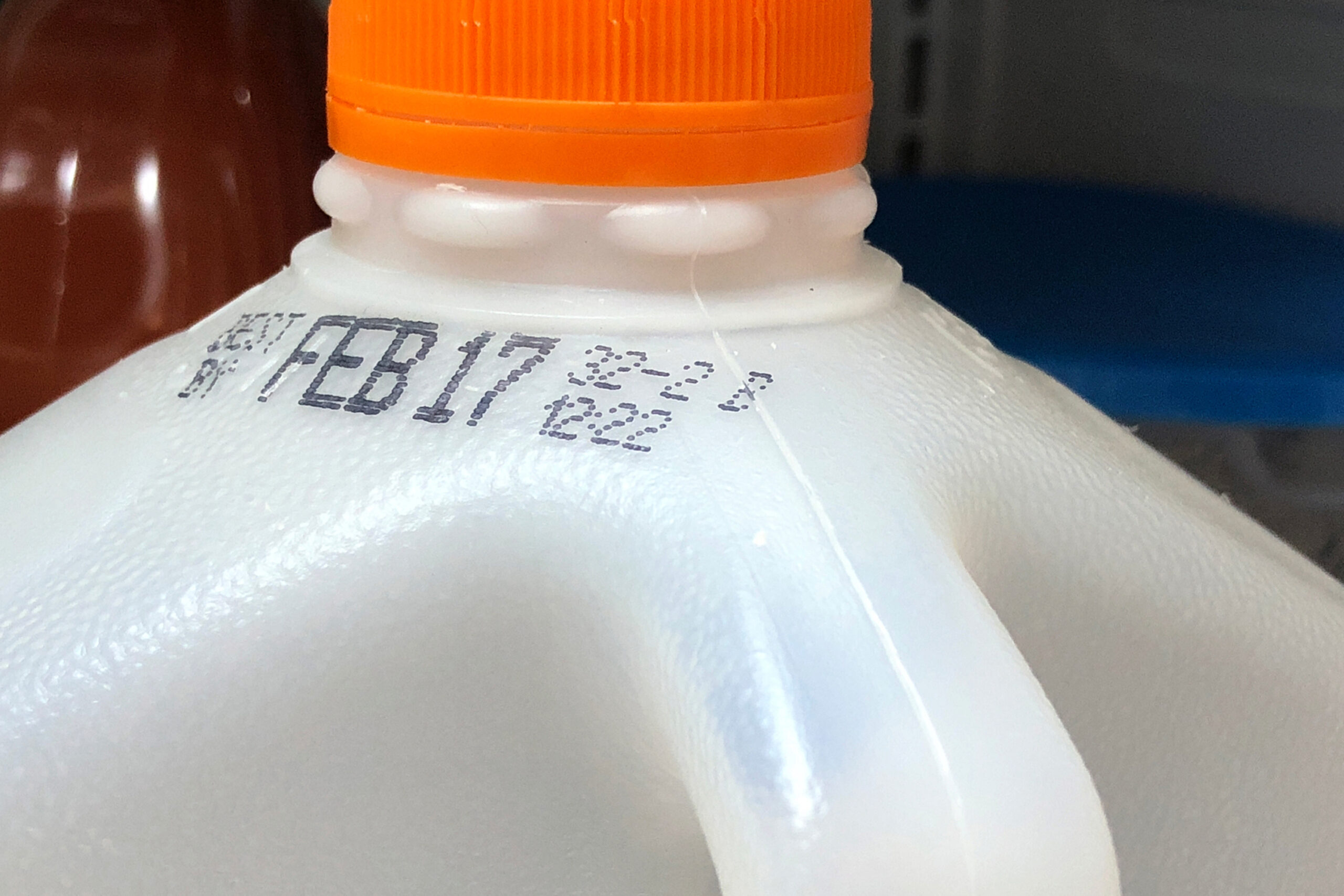
Sell by. This date simply suggests to grocery stores how long they should display a product for sale. It’s not a safety date, so don’t assume that a product needs to be trashed after the date has passed. Eggs and dairy products, for example, usually carry a sell-by date. When you’re shopping, check that the date hasn’t already passed (although grocery stores are usually good about rotating out old stock). Products with later sell-by dates will usually be in the back of the dairy case, so bypass the front if you know you won’t finish that gallon of milk quickly. Assuming you keep your milk in the refrigerator, it should last a week after the sell-by date. Eggs, if purchased by the sell-by date, can last three to five weeks in your fridge.
Use (or freeze) by. This phrasing suggests the last date that a product is at peak quality. Although a bit misleading, it is not an expiration date, and products are still usable even though the date has passed. However, since this wording is often used on meat, poultry, and shellfish, it’s a good suggestion—you don’t have much extra time, as these foods can spoil quickly.
Best by (or best if used by). This is the date-labeling phrase that the USDA recommends for food manufacturers and retailers. It has been shown to be the least confusing for consumers, conveying that a product does not expire after a given date. Foods may continue to be sold and can be used after this date has passed.
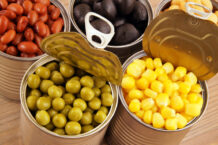
MFG/EXP. Canned goods often carry two stamps: a manufacturing date (MFG) and an expiration date (EXP). This type of labeling helps manufacturers rotate their stock and identify affected products in case of a recall. Cans may also contain a “best-by” date. Whether the label or stamp is a best-by or an expiration date, the contents are likely good long after that date has passed. Low-acid canned foods like meat, soups, beans, and vegetables will likely keep for two to five years past the best-by date, and high-acid foods like tomatoes and other fruits will be at their best for 12 to 18 months after that date.
How to be a smart consumer
No matter what the package says, here’s how to make sure the food and beverages in your kitchen are still safe and delicious.
- Start with your senses. A package date shouldn’t give you a false sense of security for a food that seems off. If you detect a bad smell, odd color, or visible mold, don’t eat it. But if the date has passed and the food has its usual appearance, go ahead and enjoy.
- Store your food wisely. Storage conditions can speed up the demise of a product’s quality—if kept on the kitchen counter or in a warm car, for example, food can spoil more quickly. Cans that are rusted, bulged, or dented could also indicate that the contents have been compromised, so throw them away.
- Take extra care with baby items. Infant formula carries a use-by date—which in this case is a true expiration date. Check the packaging before you buy formula in the store, and discard any expired formula that you have at home. In contrast, manufacturers are not required to put use-by dates on baby food. But if a use-by date is present, treat it like an expiration date. Tiny bodies are no place to take a chance on food that might be past its prime.
- Assume your chewing gum is fine. You might not want to know this, but gum doesn’t expire or go bad because it’s not really a food. It’s mostly made of plastic and contains almost no moisture, which is the main contributor to foods going bad. Old gum may lose some of its flavor or elasticity, but it won’t harm you.
- Know the shelf life of your liquor cabinet. Spirits (like vodka, gin, and rum) have such a high alcohol content that they really don’t go bad, even after they’re opened. (Two exceptions: flavored spirits should be consumed within six months of opening, and liquors that contain cream have a shelf life of about two years, whether unopened or opened and then refrigerated). Beer will go flat and wine will begin to taste like vinegar after they’re opened—although they’re still safe to drink. Unopened, beer can last several years depending on the type. The shelf life of wine depends on such variables as its vintage (the year the grapes were harvested), how it was produced, and how it is stored—but generally speaking, everyday wine typically lasts up to three years, while fine wine, when stored properly (such as in a wine cellar), can last years, even decades sometimes, and often improves with age.
BOTTOM LINE: The varying ways that food manufacturers can choose to date their products can be more confusing than helpful. And keep in mind that they don’t really have a vested interest in helping you realize that their product is likely usable for a long time—if you throw it out, you’ll just buy it again more quickly. So check the date, but follow your common sense. If a food is still appealing, it’s likely still good.