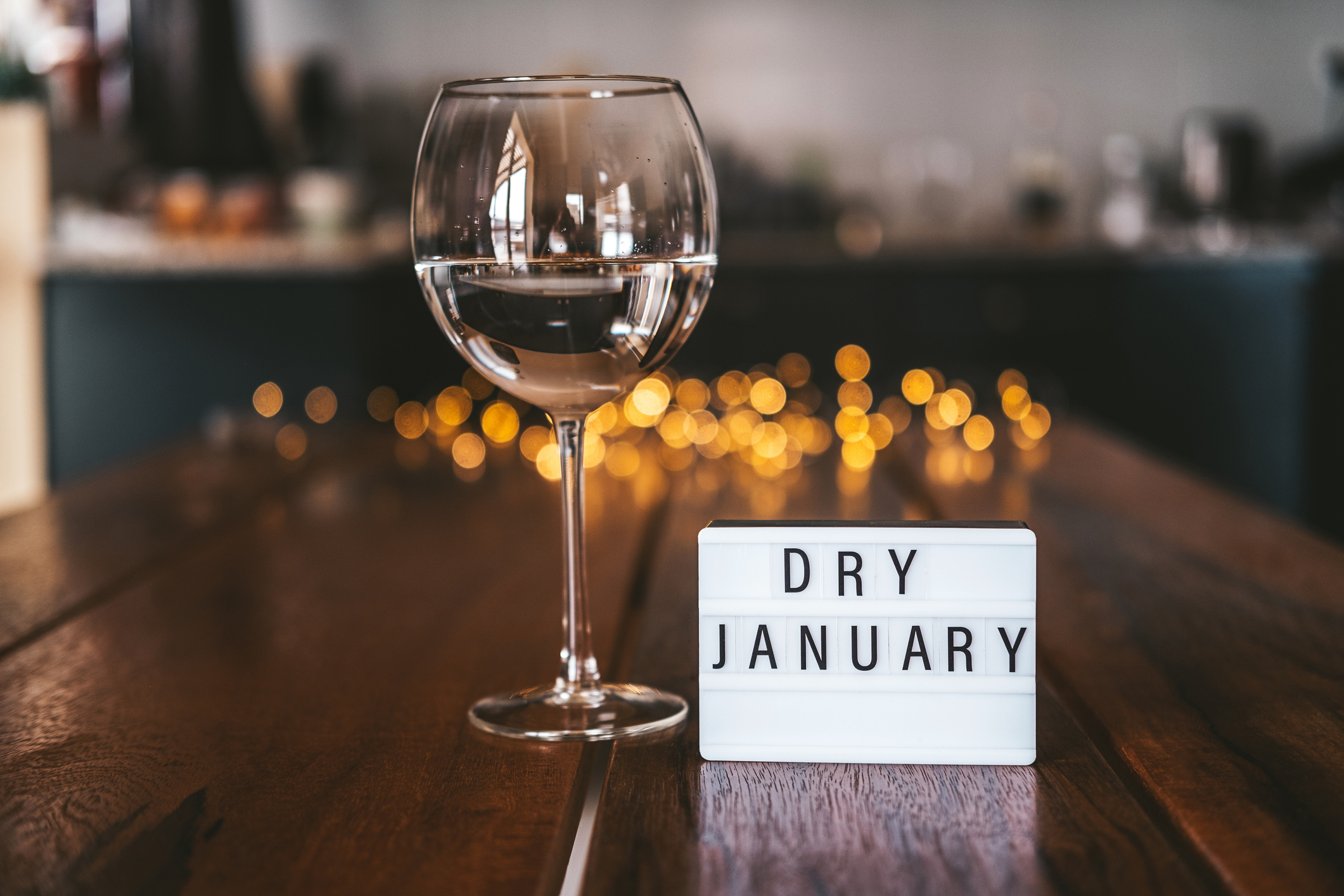
If you’re planning to take a break from alcohol this January (and possibly beyond), you’re not alone. The Dry January trend, which began as a campaign by the nonprofit Alcohol Change UK in 2013, has caught on in the United States as well. In 2019, 21 percent of American adults who drink abstained from alcohol in January, and that number rose to 35 percent in 2022.
Alcohol sales in the U.S. are big business—nearly $198 billion in 2022. And beverage companies are doing their best not to lose your business during January. Old and new products available in bars, on store shelves, and online don’t contain alcohol but do give you the taste and the social experience of beer, spirits, and cocktails. And sales of these substitutes were up by $295 million in January 2022.
Marketers refer to these products as the “better for you” category—but are they? And is it really necessary—or beneficial—to give up alcohol at all?
Why go dry?
Alcohol Change UK promotes Dry January as a “total body and mind reset.” They point to benefits like clearer skin, a mental health boost, better sleep, and financial savings. And after the stresses we’ve all endured over the past few years, a reset might be a good idea.
Since 2020, when Covid-19 drove us into our homes and away from our jobs and loved ones, some Americans have undoubtedly soothed their stress by pouring themselves a stiff drink—or two, or three. A 2023 study in the Journal of Addiction Medicine surveyed 557 adults about their alcohol consumption at three different points in 2020. Compared with February 2020 (before lockdowns went into effect), respondents consumed 36 percent more drinks per month in April and 38 percent more in November of that year. The percentage of respondents who exceeded drinking guidelines (see box) increased by 27 percent in April and 39 percent in November.
This overconsumption during the pandemic may be contributing to the uptick in people observing Dry January as life returns to near normal.
Alcohol, not so heart-healthy after all?
A growing amount of evidence—including a 2022 study in JAMA Network Open—suggests that no amount of alcohol is good for the heart. The study included more than 370,000 adults in the U.K. who consumed an average of 9.2 drinks a week. As previous studies over decades have often found, those who drank lightly to moderately had the lowest risk for heart disease, followed by abstainers. But when the researchers controlled for other lifestyle factors (such as exercise, smoking, and diet), any benefit from alcohol consumption was significantly reduced.
That is, light to moderate drinkers had healthier lifestyles, which likely accounted for their healthier hearts—rather than the alcohol. Unsurprisingly, heavy drinkers still had the highest heart disease risk, even when such lifestyle factors were accounted for.
Moreover, it’s indisputable that alcohol packs a caloric punch. The exact numbers vary, but a regular 12-ounce beer has about 150 calories, a 5-ounce glass of merlot 120 calories, and a 1.5-ounce shot of whiskey 115 calories; liqueurs, like coffee liqueur and crème de menthe, have more calories—155 to 185 per 1.5 ounces, respectively. The sugary mixers and juices used in common cocktails boost the calorie count even higher. And drinks served at bars and restaurants often contain more than a single serving of alcohol.
So whether you’re looking to cut back on alcohol for your overall health or just your waistline, it might be worth taking a careful look at some of the alcohol substitutes on the market.
New products, filling the void
Until recently, people abstaining from alcohol had only a few choices: soda, sparkling water, iced tea, or mocktails—usually sugary facsimiles of the real thing, like a Shirley Temple or virgin daiquiri. But as people reevaluate their alcohol consumption in January and beyond, companies are putting forth new products to make sure they still get a piece of your beverage budget.
These can range from non-alcoholic (NA) approximations of beer, wine, and even spirits; canned “mocktails” that are flavored with fruit juices or herbs and may be carbonated; and aperitifs that contain ingredients like probiotics, amino acids, and ginseng. Some mixer brands are even marketing themselves as standalone beverages—no alcohol required.
Consumers are taking notice of the increase in non-alcoholic beverages available in bars and liquor stores. From 2021 to 2022, sales of NA beer were up 21 percent, NA wine up 23 percent, and NA spirits up a remarkable 88 percent.
Is it really alcohol-free?
Whether you’re looking for something completely free of alcohol, or just something with a little less punch, the labeling in this group of products—referred to as no or low (NoLo) alcohol—can be hard to decipher. You’ll see words like “no,” “zero,” “free,” “low,” “light,” and “reduced.” Standards and definitions can vary around the world, but here’s a quick guide to knowing what those labels really mean in the U.S.:
- Non-alcoholic beverages. These products contain no more than 0.5 percent alcohol by volume (ABV). These are typically beers and wines that have either been fermented in the traditional alcohol process but stopped at an earlier point, or the alcohol has been removed later. You may see the words “no,” “zero,” or “free” on the labels (even though some may contain tiny amounts of alcohol).
- Alcohol-flavored non-alcohol products. These products typically have minimal amounts of alcohol or ingredients that taste like alcohol added to them to create a reasonable likeness of a spirit or premixed cocktail. They typically contain less than 0.1 percent ABV. The labeling here can vary widely—straight spirits alternatives may be called “zero-proof” or “non-alcoholic”; flavored or mixed varieties might use the terms “no-ABV spirit,” “canned mocktail,” or “sparkling beverage.”
- Artisanal fermented NoLo products. You may not recognize the category name, but you probably already know these beverages. They include kombucha, kefir, ginger beer, and birch beer. Although not considered alcoholic, they can contain up to 0.5 percent ABV.
- Low, light, or reduced alcohol. While these products may not officially qualify you for Dry January status, they do contain far less alcohol than traditional spirits. For example, vodka is 40 percent ABV, while several low-alcohol vodkas new to the market are 23.8 percent. When it comes to beers, “light” or “lite” refers to lower in alcohol (5 percent vs. 4.2 percent for one national brand) and therefore lower in calories. Traditional wine is usually between 13.5 and 14.5 percent ABV, while low-alcohol wines are typically around 6 to 11 percent ABV. But beware of words like “skinny”—they usually refer to reduced sugar and calories, while the alcohol content remains unchanged.
Other ways to cut back
Whether you’re looking to go completely dry or just a little less wet than usual, there are several other ways to tamp down your alcohol consumption:
- Request half the alcohol. If you’re at a bar, you can order up your own light cocktail. Half a shot in a vodka-and-club, for example, will still give you the taste with less of the buzz.
- Alternate alcoholic and non-alcoholic drinks. This practice—with the fun new name of tiger-striping—can leave you feeling better both the night of and the morning after.
- Stop stocking the liquor cabinet. It’s much easier to cut back when the bottles and cans aren’t calling to you in your own home.
- Meet friends at new places. If you’re often hanging out at a bar, you’re likely to drink more. So instead, spend time with friends by scheduling time at the gym, running errands together, or going for a walk.
BOTTOM LINE: It’s never a bad idea to cut back on alcohol consumption from time to time. If you reach the end of January and want to stay dry (or mostly dry), you may see health benefits. And if you decide that abstaining for 31 days was long enough, be sure to keep your consumption at or below the recommended levels going forward (see box).
The 2020–2025 USDA Dietary Guidelines for Americans recommend no more than one alcohol drink a day for women, two a day for men. (People over 65 should drink even less, as their tolerance is lower, and they feel the effects of alcohol more quickly—which could lead to falls or car accidents.) A drink is defined as 12 ounces of beer, 5 ounces of wine, or 1.5 ounces of 80-proof spirits.
Alcohol poses a variety of health risks, especially when consumed to excess. And some people should not drink at all, including pregnant or breastfeeding women; people who cannot keep their drinking moderate and are at high risk for alcoholism; those taking medications that interact with alcohol; and anyone who has to drive or operate machinery within the next few hours. People with uncontrolled hypertension, liver disease, high triglycerides, abnormal heart rhythms, peptic ulcers, sleep apnea, and certain other conditions should ask their doctors about the advisability of drinking.