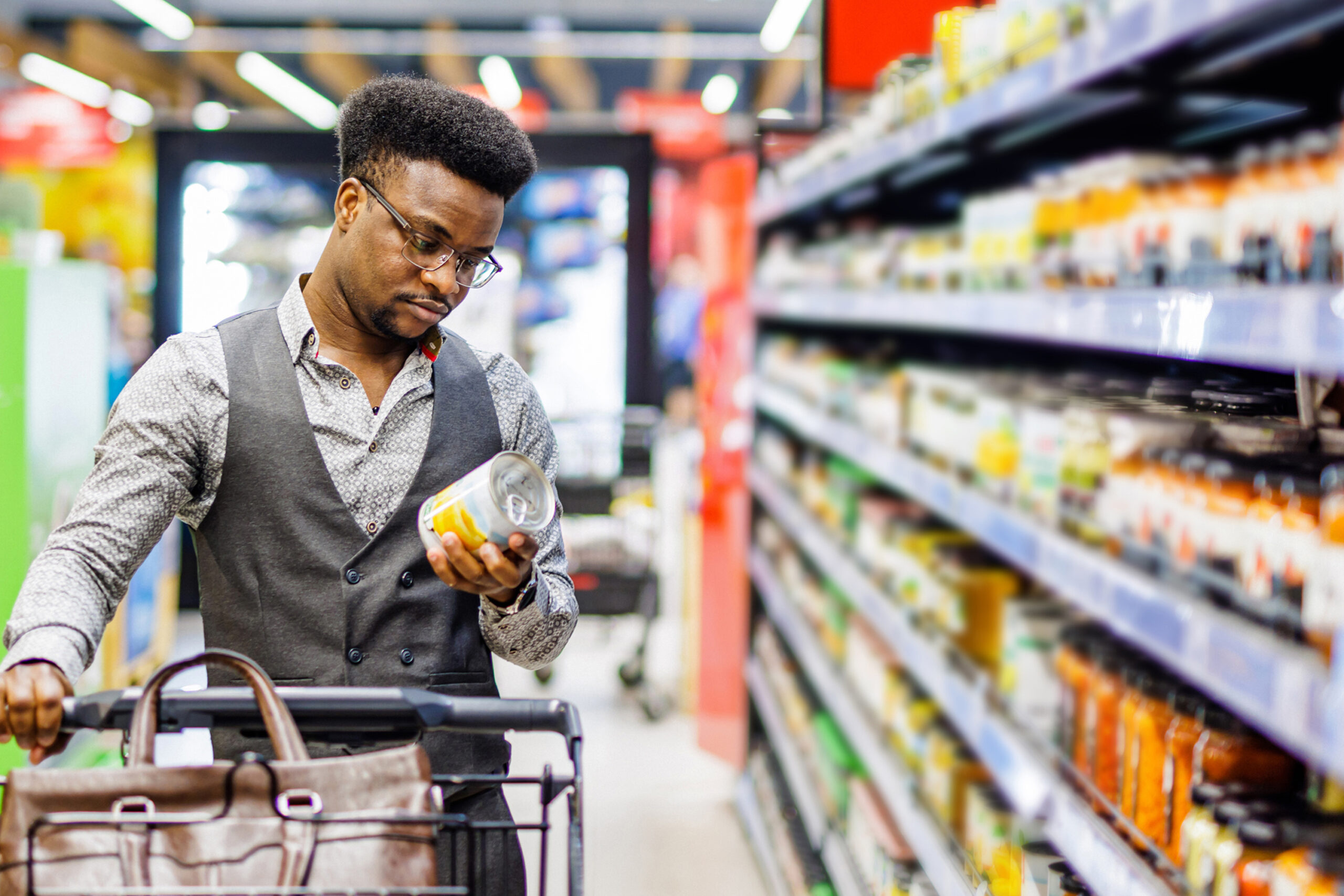
The price of nearly everything we buy has gone up significantly in recent years. But even though inflation has slowed and other items have become more reasonable, the cost of groceries can still be startling. Filling your cart with the same products costs 25 percent more overall than it did in 2019. And this sustained price hike is leaving even some of the most brand-loyal shoppers ready to try some alternatives.
Lots of people are moving away from brand-name products in favor of less expensive options. In fact, in 2023, 20 percent of items sold in grocery stores across the U.S. carried the store’s own name, rather than a national brand, according to the Private Label Manufacturers Association. That’s an increase of 34 percent from 2019.
Store-brand groceries have become big business. But do these products measure up, or should buyers beware?
What’s in a name?
Name brands, also called national brands, refer to the items you see advertised on television, in magazines, and online. These products are usually available in stores nationwide (like Heinz ketchup, Lay’s potato chips, and Purdue chicken). People often use the term “generic” to refer to alternatives to national brands, but most of us aren’t buying true generic items (traditionally something much more basic, like a large can with a white label that simply reads “corn”).
What we’re buying as alternatives to name brands are more accurately called store brands, which could carry either the retailer’s name or a private label created by the store. Some stores, like Wegman’s, simply brand their own products with the store name; others have their own labels that you wouldn’t necessarily recognize as a store brand, such as Target’s Good and Gather, Walmart’s Great Value, Costco’s Kirkland Signature, Acme’s Signature Select, and ShopRite’s Bowl & Basket.
Where do store-brand foods come from?
Some grocery chains produce their own branded items. But more commonly, stores are purchasing from an outside manufacturer. It could be a company that exclusively produces store brands, but it’s just as likely to be a large national-brand manufacturer (such as General Mills or Hormel)—meaning that your store-brand breakfast cereal, for instance, could be made by the same company that makes the brand-name version you know and love.
Why would companies create products that compete against each other? The manufacturer has already done the work of developing the product and paying for advertising to create brand awareness. So bringing a store-brand version to the market costs much less, and manufacturers pass some of those savings along to consumers. Whether you buy the national brand or the store brand, the same manufacturer may be reaping the benefit.
Same same or different?
Store brands still have some work to do in convincing customers that they deserve a spot in the shopping cart. A Purdue University survey in 2023 investigated brand beliefs by American consumers. A significant percentage of respondents thought that brand-name foods taste better than generic or store brands (51 percent for snack foods, 47 percent for canned and boxed foods, 62 percent for beverages, and 43 percent for fresh meat).
Another survey, conducted by Consumer Reports in 2022, found that 43 percent of Americans always (or almost always) remain loyal to national brands. And 33 percent of those surveyed said it’s because store brands don’t taste as good. But these respondents may want to rethink this assumption and give store brands a try: In a blind taste test of 70 products, a CR panel of experts rated 76 percent of them as high as (or higher than) the national brand.
Beyond taste, what about the safety and quality of store-brand items? They are required to meet the same minimum standards as national brands. Because they’re often from the same manufacturer, they may even be made with the same ingredients and according to the same recipe. Store brands must also follow the same Nutritional Labeling and Education law requiring clear and accurate information on the packaging.
All in all, store brands have come a long way over the years. As retailers have realized that shoppers care about more than just price, they’ve focused on other attributes like organic, gluten-free, and sustainable packaging. Stores may even create separate brands to emphasize these features, such as Safeway’s O Organics, Albertson’s Wild Harvest, and Kroger’s Simple Truth.
A money savings
There are real savings to be had by buying store-brand items over the kind that star in Super Bowl ads. The Consumer Reports survey found that 33 percent of people don’t believe the price of store brands is low enough to sway them, but the facts show a different reality. In 2022, the price gap between store-brand and national-brand foods, per unit, was $0.61 for fresh meat, $0.81 for milk, $1.18 for eggs, $1.58 for bread, $1.70 for fresh fruit, and $2.66 for frozen meat, poultry, and seafood.
BOTTOM LINE: If you’re on a food budget (as so many of us are), the differences in cost between store-brand and name-brand foods add up, and every little bit helps. With stores working hard right now to attract your precious grocery dollars, you might find a store-brand product that you like just as much as—or maybe even more than—the national brand, which makes it a win-win situation.