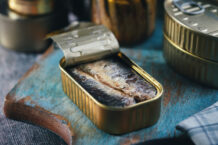
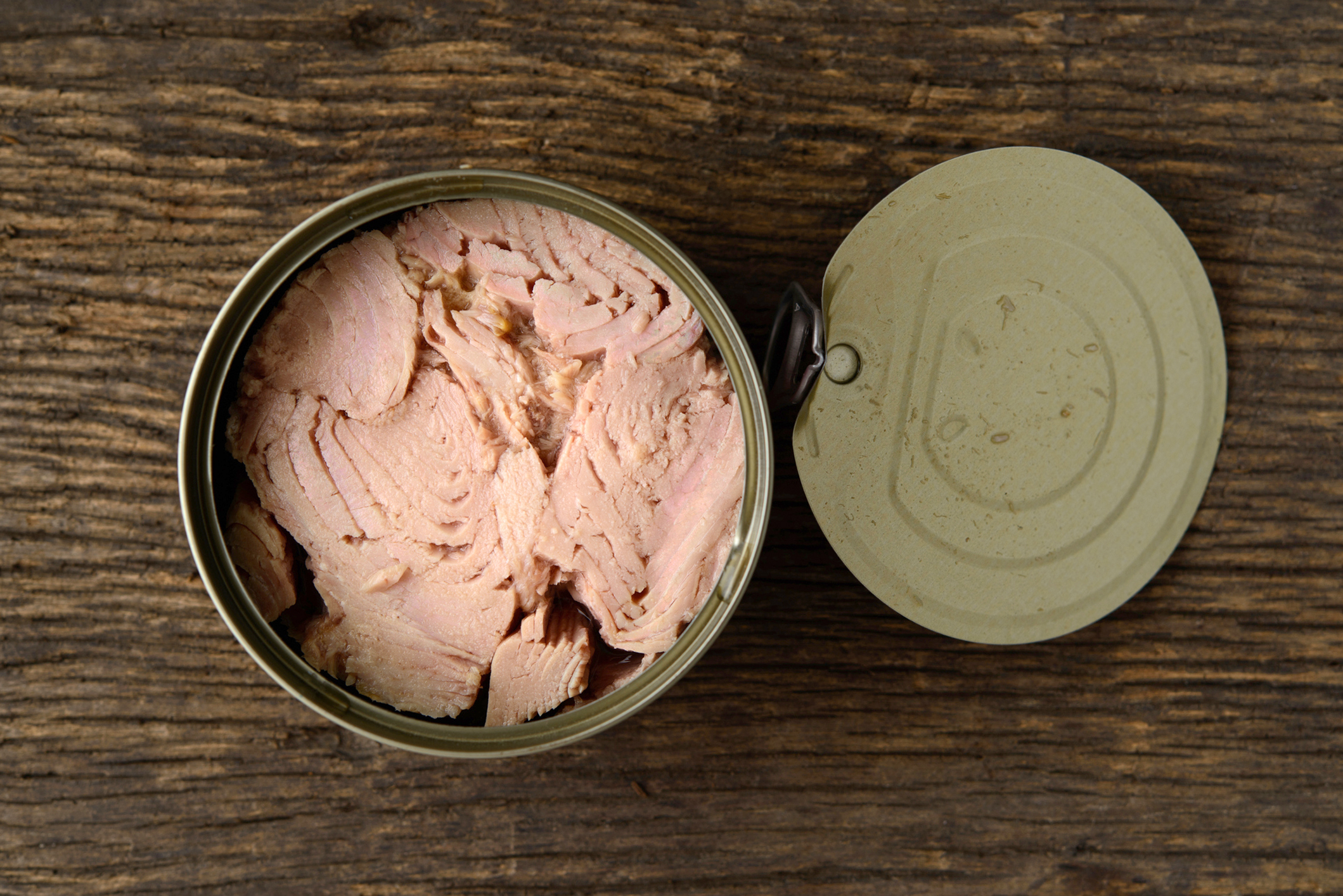
Health experts recommend eating fish on a regular basis, and canned varieties are a convenient way to do that. But some brands of canned fish come with an unwanted ingredient: heavy metals.
Those are the findings of a recent report from ConsumerLab, a company that independently tests the content of food and health products. The report, published in June, found that some brands of canned tuna and sardines are contaminated with significant amounts of mercury or arsenic—suggesting that people should limit how often they eat them. At the same time, brands also vary widely in their amounts of heart-healthy omega-3 fats.
If you’re a canned fish fan, here’s what you should know.
The facts on fish
First, there’s no need to be scared off from fish. It has a well-earned reputation as a healthy food, particularly varieties that are on the “oily” side. Unlike fatty cuts of meat, oily fish are low in saturated fat (which can raise blood cholesterol) and instead provide the omega-3 fatty acids DHA (docosahexaenoic acid) and EPA (eicosapentaenoic acid). Studies have linked diets rich in omega-3s to decreased risks of heart disease, stroke, age-related macular degeneration, and cognitive impairment, as well as better odds of “healthy aging.” That’s why dietary guidelines, such as those from the American Heart Association, recommend eating two servings of fish per week—preferably oily kinds like sardines, herring, mackerel, trout, and salmon.
It’s also well known, however, that fish can contain environmental contaminants. Among the most common is mercury, a metal that can harm early brain development. Because of that, the U.S. Food and Drug Administration warns that children younger than 12 and women who are pregnant or breastfeeding should avoid eating large predatory fish, such as swordfish, king mackerel (a larger species in the mackerel family), and shark. Those species commonly accumulate high mercury levels because they are long-lived and consume a lot of smaller fish.
But nearly all types of fish contain traces of mercury; arsenic, a carcinogen at high doses, is another common contaminant. And while the concentrations found in most seafood are generally not a health concern for adults, it’s still best to choose fish that likely have minimal levels of these heavy metals.
Putting brands to the test
For the new report, ConsumerLab bought and tested 22 canned tuna, salmon, mackerel, and sardine products, gauging their levels of four contaminants (mercury, arsenic, lead, and cadmium), and their DHA and EPA content. Here’s the good news:
- Canned salmon stood out from the pack. None of the four brands tested had measurable amounts of contaminants.
- None of the products had measurable concentrations of lead or cadmium.
- While mercury and arsenic were found in some non-salmon products, none had levels so high that they should be avoided altogether. And some brands were low in both metals.
Mercury in tuna
Canned tunas were the only type of fish that harbored mercury. But levels varied depending on the type of tuna and the brand. Albacore tuna (also known as “white” tuna) was most likely to have mercury contamination: Of six products tested, all had quantifiable amounts. Only two, however, had mercury concentrations that warrant caution, as per the FDA:
- Starkist Solid White Albacore Tuna in Water had a mercury level of 0.3 parts per million (ppm)
- Starkist Chunk White Albacore Tuna in Water had concentrations of 0.2 ppm
The FDA doesn’t define a “safe” level of mercury, but those levels fall within the range where the agency recommends limits for children and pregnant/breastfeeding women. In this case, that would mean no more than one weekly serving of the “solid white” product, and no more than two weekly servings of the “chunk white” variety.
There are no similar serving recommendations for other adults. But, as the U.S. Environmental Protection Agency points out, older adults with chronic health conditions may be more susceptible to adverse effects from eating contaminated fish. If you want to minimize your mercury exposure, there are other canned tuna options. ConsumerLab found that “light” tunas (yellowfin and skipjack varieties) contained minimal to no mercury. And for people partial to albacore, one brand—Wild Planet Albacore Wild Tuna—had only small amounts of mercury.
“Although contamination levels will vary somewhat from fish to fish, so long as a brand is sticking to a certain fishing method and region, results should be generally similar for a given type of fish,” says Tod Cooperman, MD, the founder and president of ConsumerLab. “It’s possible that the lower mercury level in Wild Planet is due to its claimed use of pole-and-line and trolling fishing methods, which catch younger, smaller tuna that have not accumulated as much mercury as larger, older fish.”
Arsenic in tuna and sardines
Arsenic, a natural element in the soil, water, and air, is present in many foods and drinking water. The risk of health effects depends not only on the amount ingested, but also on the type of arsenic. Inorganic arsenic is the more toxic form, with studies linking it to increased risks of cancer and other ills. Fortunately, arsenic found in food—including seafood—is usually the organic kind, which has not been tied to cancer. Still, about 10 percent of the total arsenic in seafood is the inorganic form. So choosing fish products with less arsenic is a good idea.
ConsumerLab found that while all canned tunas had some arsenic, light (skipjack and yellowtail) varieties had the lowest levels. Among albacore tunas, five of six were contaminated with at least 100 micrograms (mcg) of arsenic per serving (with Wild Planet Albacore Wild Tuna having the lowest levels); the same was true for three out of five sardine products. This is a potential concern because those products may contain upwards of 10 mcg of inorganic arsenic per serving; in California, foods that exceed that threshold must carry a cancer warning label. In other words, they’re not banned, but you might want to limit how much you eat. ConsumerLab recommends avoiding daily consumption.
Products with the most arsenic included:
- Kirkland Signature Albacore Solid White Tuna in Water (221 mcg)
- Starkist Chunk White Albacore Tuna in Water (204 mcg)
- Wild Planet Wild Pacific Sardines in Extra Virgin Olive Oil – Lightly Smoked (221 mcg)
Omega-3 fatty acids
Testing found a huge range in the amount of DHA/EPA across canned fish products—anywhere from 119 milligrams (mg) to a whopping 2,405 mg per serving. Overall, sardines and mackerel boasted the most omega-3s, while salmon products—particularly sockeye salmon—also provided hefty doses. Not surprisingly, canned tunas, which are relatively light in oils compared with the other fish, had the lowest DHA/EPA levels. But Wild Planet Albacore Wild Tuna had roughly double the amount of other tunas, at 859 mg (and, as noted above, was also low in both mercury and arsenic, making it a good pick all around).
There is no official U.S. recommendation for EPA or DHA, but many health organizations generally agree that consuming a combination of the two in the amount of 500 milligrams a day should be adequate for good health.
BOTTOM LINE: The full ConsumerLab report, with specifics on each brand tested and the company’s “top picks,” is available for paid subscribers—but you can catch a summary of it in this video. The main takeaway is that canned fish can absolutely fit into a healthy diet (choose low-sodium or no-salt-added versions if available). Besides their omega-3 content, fish are a good source of high-quality protein, as well as nutrients like vitamin D, B vitamins, and iron. To limit your exposure to mercury and arsenic, canned salmon and mackerel are top choices, while some brands of tuna (especially “light” kinds) and sardines fit the bill, too. Finally, remember to consider your overall diet: If you also eat fresh or frozen fish regularly, favor varieties that are typically low in contaminants. For more help in doing that, check out these resources.