If you have constipation, kiwifruit (often just called kiwi) may help keep you regular, according to a handful of promising studies. Chronic constipation affects about 10 to 20 percent of the general population, particularly people with irritable bowel syndrome (IBS) and the elderly.
A randomized controlled trial from the University of Michigan, published in the American Journal of Gastroenterology in 2021, compared green kiwifruit (two a day), psyllium (12 grams of Metamucil a day), and prunes (a.k.a. dried plums, 100 grams or about 12 prunes a day) in 75 people with chronic constipation (but no IBS) who had three or fewer bowel movements a week and other telltale signs such as straining and hard stool. Each of these “natural” treatments supplied 6 grams of fiber a day.
All three groups experienced an increase in weekly bowel movements over four weeks, along with less straining, while those in the kiwifruit and prune groups had the most improvement in stool consistency. The kiwi group also reported less bloating. Though there were no serious adverse events, abdominal pain resulting from treatment was least common with kiwi (and most common with psyllium), and participants reported less dissatisfaction with kiwi than with prunes and psyllium.
Some older research from Asia—where kiwifruit has long been used for gastrointestinal conditions—also supports this natural remedy for constipation. For instance, a 2010 study in Asia Pacific Journal of Clinical Nutrition found that eating two kiwis a day for four weeks decreased colonic transit time (that is, food moved through the digestive tract faster) and increased frequency of defecation in people with constipation-predominant IBS, as indicated in daily records kept by the participants. In another study, in that same journal in 2002, older people (over 60) who consumed kiwifruit for three weeks (one fruit per 66 pounds of bodyweight per day) had increased bulk and softness of stool and increased frequency of defecation, compared to when they ate a kiwi-free diet.
What about golden kiwifruit? One small study from New Zealand, published in the Journal of Nutritional Science in 2019, found that daily consumption of three gold-fleshed kiwis increased weekly bowel movements in adults with mild constipation—and was more effective than psyllium. In 2020, the same authors reported similar results in IBS-constipated individuals and found that eating the skin of golden kiwifruit may be additionally beneficial for gastrointestinal health.
As one of the authors of the 2021 American Journal of Gastroenterology study said in a podcast interview with the co-editors of the journal, medical treatments for constipation are not all that impressive; plus, there is some concern over the long-term safety of certain constipation medications, especially laxatives, and an increased desire among patients for nonpharmacologic or diet-based interventions. Psyllium and prunes are time-honored, classic approaches to constipation, but until this study, there had not been much research on kiwifruit for constipation in non-Asian populations.
The potential laxative effects of kiwifruit are likely attributed to its insoluble fiber (which has a high water-holding capacity that creates bulk) and its soluble fiber (which creates a lubricating effect). The fruit also has a digestive enzyme called actinidin not present in psyllium and prunes. This enzyme enhances gastrointestinal motility. And compared to prunes, which contain sorbitol (a fermentable carbohydrate that can notoriously cause gas, bloating, cramping, and diarrhea), kiwifruit may be gentler on the stomach because it’s low in fermentable carbohydrates. In fact, kiwifruit is considered a “low FODMAP food” (low in Fermentable Oligosaccharides, Disaccharides, Monosaccharides, And Polyols) and as such can be part of a low FODMAP diet, which can help manage IBS in many people with the condition.
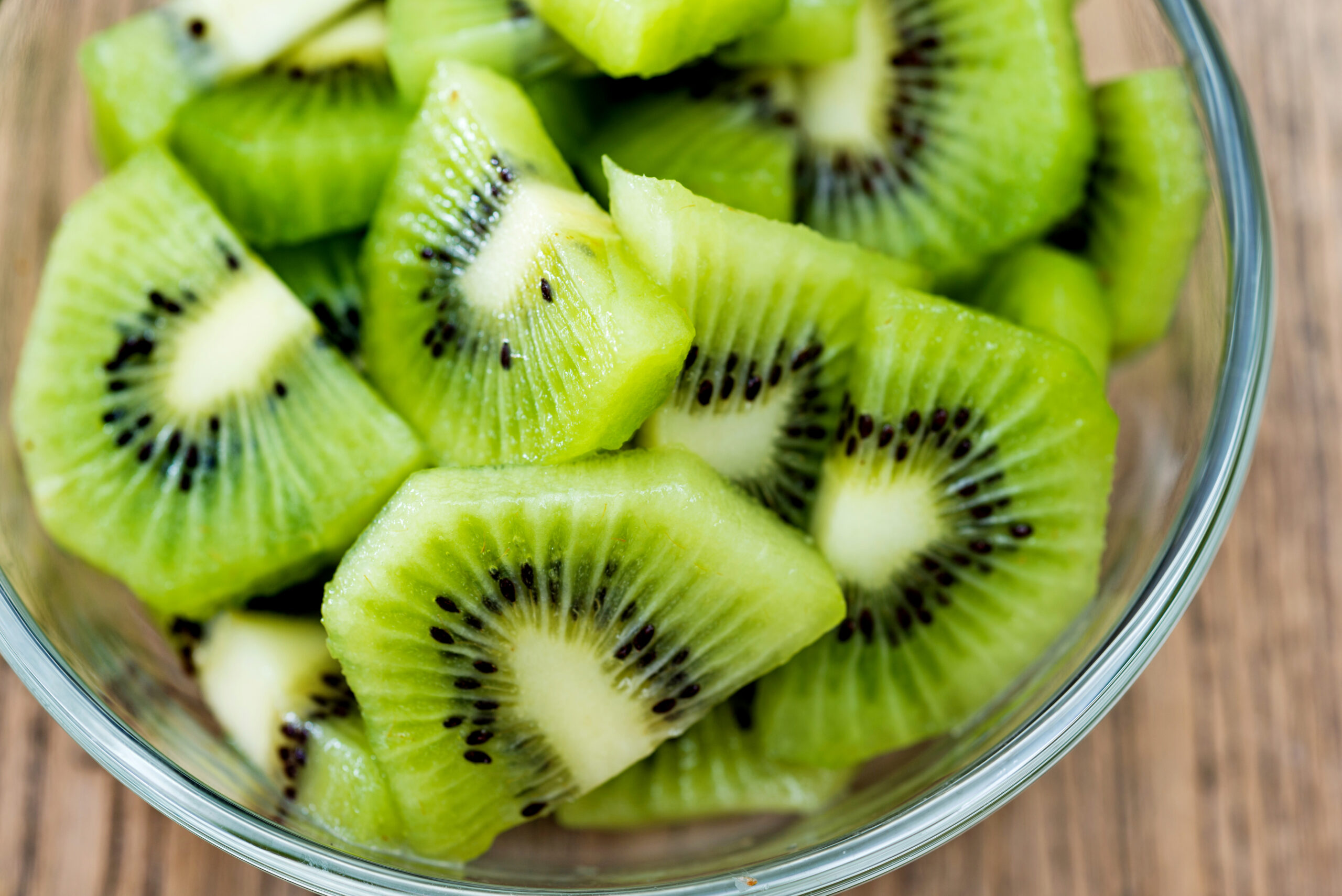
Originally called “Chinese gooseberry” in New Zealand before being renamed for the country’s native bird, the kiwi, kiwifruit has been described as tasting somewhat like a sweet and tart combination of strawberries and bananas. The more familiar green variety has brown fuzzy skin and bright green flesh with black seeds, while golden kiwifruit has smooth, edible skin and yellow flesh with fewer seeds and a more custard-like texture and sweeter flavor.
You can eat the nutrient- and fiber-rich skin of green kiwifruit, too, but you might want to rub off the fuzz first. Or, you can peel off the skin before eating or cut kiwifruit in half and scoop out the flesh. Use kiwifruit in salads, salsas, and smoothies.
Besides its fiber and other laxative-promoting substances, kiwifruit is rich in vitamin C and potassium and also provides folate, magnesium, and vitamin E, along with carotenoids and other potentially healthful phytochemicals.