
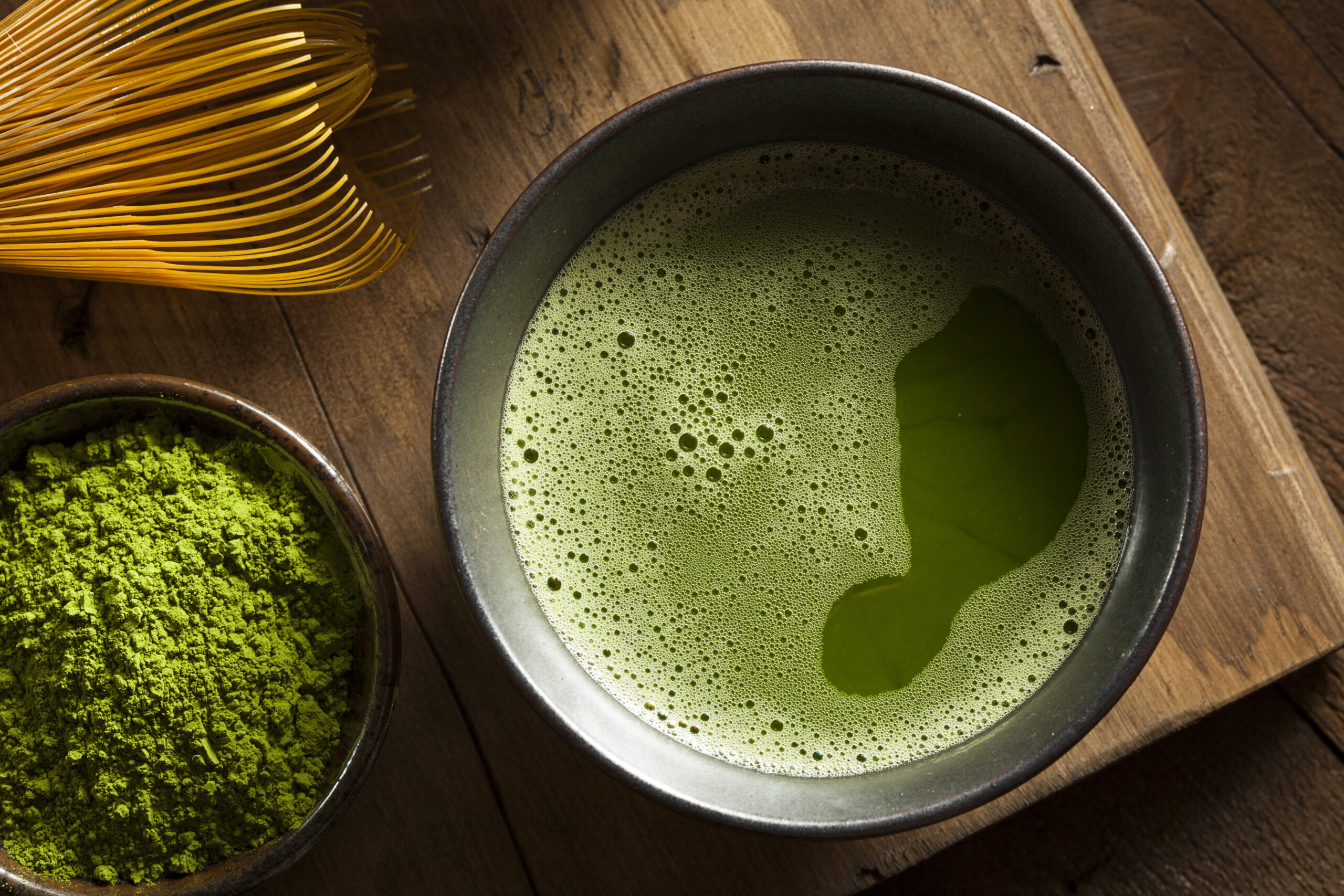
Matcha is everywhere these days, from bubble (or boba) tea shops and Starbucks to hundreds of online stores selling both the tea and the accessories used to prepare it. It’s even in ice cream, donuts, pudding, and cocktails. The hype also abounds, with purveyors touting matcha’s ability to “detoxify” the body and make you “shine bright like a diamond,” among other equally improbable or at least inflated claims. Researchers are more restrained, of course, but some limited studies have shown that matcha has potential health attributes that may help justify its (often considerable) price tag.
Matcha milieu
Matcha, the centerpiece of the traditional Japanese tea ceremony, is a type of green tea, and like black, white, and oolong teas, it comes from the Camellia sinensis plant. What sets it apart is that during a phase of the growing period, plants destined for matcha-making are covered, either directly or with a canopy, to protect the leaves from sunlight. This has the effect of increasing chlorophyll levels and imbuing the resulting tea with a distinct flavor and color.
After harvesting, the leaves are briefly steamed to prevent oxidation and laid out flat to dry. Once dry, the stems, veins, and other impurities are removed and the leaves are finely ground, resulting in a vibrant green powder described by one purveyor as having a “bright, vegetal, and slightly bitter taste, with notes of sweetness and umami.”
Unlike other types of tea, which are brewed from loose tea leaves or teabags, matcha powder is whisked into hot (not boiling) water and traditionally consumed in a small ceramic bowl called a chawan. Though “recipes” vary a lot, a commonly recommended serving is two grams of matcha powder (about one teaspoon) in six to eight ounces of water. A newer trend is to mix matcha with cold water and shake vigorously to make cold brew matcha. You can also add milk to make matcha lattes, hot or cold.
What makes matcha so special?
The unique way matcha is grown and processed enhances the formation of antioxidant compounds that are thought to be responsible for the tea’s purported health-promoting properties (see below). The way it’s prepared also increases the amount of these compounds that are actually consumed: Instead of drinking just the water in which tea leaves are brewed, you’re ingesting the entire leaf itself. A 2020 study in the journal Foods found that the highest antioxidant content in matcha was from the second and third harvests of the tea, rather than the younger buds.
Health benefits of green tea
Green tea has been the subject of much research over the years because it is a rich source of bioactive constituents, notably theanine, catechins (phenolic compounds that are also found in other edible plants, as well as chocolate/cocoa and red wine), and caffeine.
Research on the amino acid theanine suggests it may be helpful for relieving stress and enhancing cognitive function and sleep quality, while caffeine has been shown to improve cognitive and athletic performance, decrease pain perception, and possibly reduce the risk of liver disease, kidney stones, and neurodegenerative diseases such as Alzheimer’s and Parkinson’s.
Catechins are thought to be largely responsible for matcha’s purported anticarcinogenic, anti-inflammatory, and cardioprotective properties. Green tea—and matcha especially—is an unusually good source of epigallocatechin gallate (EGCG), a catechin with particularly potent antioxidant properties.
Matcha generally contains more caffeine than other green teas—about 40 milligrams in a typical two-gram serving of the powder (though that varies depending on the plant, brewing method, and other factors). By comparison, a typical cup of coffee has about 100 milligrams. Interestingly, the stimulating effect of the caffeine in matcha may be countered by the calming effect of theanine, resulting in what has been described as a state of “alert relaxation.”
Studies on matcha itself, more limited
Studies on the health benefits of matcha specifically are limited and largely inconclusive, according to the authors of a 2023 review of randomized clinical trials in Current Research in Food Science. Findings from several studies in the analysis suggest that matcha has the potential to slightly decrease stress and enhance attention and memory. In one small study from Japan, published in Nutrients in 2021, daily consumption of matcha for 12 weeks increased some measures of cognitive functioning.
Studies looking at matcha’s possible anticarcinogenic action in humans are too few to be able to draw meaningful conclusions, the review also noted. Three in vitro (test tube) studies of matcha’s effect on breast cancer cells were promising, and several animal studies found that matcha has a positive effect on various parameters of cardiometabolic health in the context of a high-fat diet, including the potential to help regulate blood sugar and improve LDL (“bad”) cholesterol levels. Remember, though, that what happens in a test tube or animal model may not be the same as what happens in the human body.
Tea over supplements
Green tea extracts (which contain concentrated tea compounds) have been implicated in numerous incidents of liver toxicity in the U.S., and the European Union (EU) recently enacted legislation restricting the amount of green tea extract allowed in food and dietary supplements. The culprit, ironically, is the same compound, EGCG, that makes green tea stand out in health attributes from other teas. The new EU rules require that green tea extracts contain no more than 800 milligrams of EGCG, with labels stating that daily consumption of that amount should not be exceeded.
Although matcha has more EGCG than other types of tea, it still contains far less than most extracts. ConsumerLab.com, which conducts independent testing of dietary supplements and foods, recently evaluated various green teas, including two matcha products, for EGCG content. The amount of EGCG in a typical two-gram serving of matcha powder ranged from 102 to 158 milligrams, allowing for several servings a day without exceeding the 800 mg/day that warrants concern.
If you are considering matcha, buy it from a trusted source to ensure that it is fresh (it should have a vibrant or deep green hue). While the highest (“ceremonial”) grade matcha can cost about $4 per typical serving, culinary grade matcha is more affordable for daily use—the difference being the season in which the tea is harvested, which affects the taste, color, and proportion of phytochemical levels. You can reserve ceremonial-grade matcha for making special cups of tea and use culinary-grade matcha for making lattes or mixing in other foods and baking.
BOTTOM LINE: Matcha is a particularly good source of various phytochemicals associated with cognitive health and other potential benefits. While it’s highly doubtful that the more outrageous claims for this tea will pan out, it can be a good addition to a healthful diet if you like it. But keep in mind that no amount of EGCG, theanine, or other health-promoting compounds in the tea can make up for the sugar, fat, and other unhealthful ingredients found in many matcha snacks and beverages (see box).
Don’t assume that snacks, desserts, and beverages that boast “matcha” in the name are healthful just because they contain this trendy ingredient. While matcha, a type of green tea made from the whole leaf, is rich in antioxidants and other potentially beneficial substances, it is increasingly being added to high-calorie, high-sugar, and high-fat foods.
For instance, the grande (16 ounces) Iced Matcha Lemonade at Starbucks has 27 grams (nearly 7 teaspoons) of sugar. Pocky Matcha Green Tea Biscuit Sticks contain 330 calories, 13 grams of fat (11 saturated), and 22 grams of sugar per 2.5-ounce, single-serving box. Matcha cookies, ice cream, and waffle cones typically have at least as many calories and as much fat as other flavors, with Häagen-Dazs Matcha Green Tea ice cream weighing in at 310 calories, 21 grams of fat (13 saturated), and 18 grams of added sugar per 2/3-cup serving. You can even find Matcha KitKats and matcha-infused truffle chocolates.
Be aware also that some powdered matcha products sold for making tea contain sugar, while some “sugar-free” ones may have sugar substitutes like erythritol. If you are selecting a matcha powder, read the labels to check for added sugar or other ingredients you may not desire in your tea.
If you want the flavor and potential health benefits of matcha without nutrition pitfalls, stick with the tea itself, which is made by whisking the green powder in hot water—or you can add sugar-free matcha powder to a fruit and yogurt smoothie, oatmeal, whole-grain pancakes, or other healthful foods.